Oven or Electric Roaster for Turkey: A Practical Comparison
An analytical comparison of using a standard oven versus an electric roaster for turkey, covering capacity, heat dynamics, browning, moisture, time, and cost to help home cooks choose the best method.


TL;DR: For turkey roasting, a standard oven generally delivers the most consistent browning and juiciness, while an electric roaster offers countertop convenience and faster preheating for smaller birds. In most homes, the oven remains the preferred method due to its versatility, but a roaster shines when space is tight or you’re cooking a smaller bird. Your choice should depend on turkey size, kitchen layout, and how hands-on you want to be.
Why the question matters
Roast turkey is a centerpiece in many homes, but the method you choose can swing juiciness, browning, and even food safety. According to Oven Cook Pro, the decision between using an ordinary oven or an electric roaster for turkey hinges on factors like turkey size, kitchen layout, and how hands-on you want the cooking process to be. The Oven Cook Pro team found that most cooks underestimate how heating dynamics change with different vessels. An oven relies on a larger cavity and air flow, while a countertop roaster concentrates heat in a smaller footprint, often shortening preheat times and reducing the need to juggle multiple pans. Understanding these differences helps you set realistic expectations for timing, texture, and ease of cleanup, and it helps you plan for leftovers, which are a staple of holiday feasts and Sunday roasts alike. In this article, we compare the two options side-by-side, with practical guidance you can apply tonight.
How an oven works for turkey
An electric oven creates heat with coils or a gas flame, circulating air and browning the bird from the outside. In conventional ovens, preheating ensures a stable environment; convection models use a fan to move hot air, improving browning and reducing cooking time by a moderate amount. For turkey, many cooks start at a high heat for crust development, then reduce to a steady moderate temperature to finish cooking without drying out the breast. Tips: use a rack and a sturdy roasting pan to promote air flow and even heat transfer. Monitor internal temperatures with a reliable thermometer; plan for resting time after you pull the roast from the oven to re-distribute juices. The Oven Cook Pro team emphasizes that the success of oven roasting hinges on consistent pan placement, avoiding overcrowding, and using a buffer pan to catch drippings.
How a countertop electric roaster works for turkey
Countertop electric roasters trap heat in a compact chamber with a domed lid, which can help retain moisture and speed up preheating. The interior design promotes a more closed cooking environment, which can lead to a faster finish for small to mid-size birds. Some models feature drizzle-safe roasting pans and built-in thermostats, making temperature control simpler for beginners. Because the footprint is smaller, air circulation is more dependent on the lid seal and pan depth; sizing the bird to the roaster’s cavity is crucial to avoid uneven exposure. The key takeaway is that roaster-specific browning patterns differ from a typical oven, so browning that looks perfect in a roaster might require slight adjustments when moved to a larger oven if you later roast larger turkeys.
Capacity and bird size: matching to bird
One practical constraint is bird size. A standard kitchen oven can accommodate larger birds, from midsize to whole turkeys that exceed the capacity of many countertop roasters. Electric roasters excel with smaller or mid-size birds and are ideal when you’re cooking for a tight space, such as a compact kitchen or a dorm-style apartment. When choosing, compare the bird’s weight with the oven or roaster’s stated capacity, and consider whether you’ll be stuffing the cavity, which affects fit. If you frequently entertain with big birds, plan for your oven, while keeping a roaster as a convenient backup for smaller gatherings.
Temperature and heat: oven vs roaster mechanics
Ovens rely on radiant heat from elements and convection fans (in convection ovens) to move hot air around the bird. This can produce deep browning on the skin and uniform cooking with careful rack placement. Electric roasters, by contrast, heat from a dedicated element around the cavity and typically maintain a steadier surface temperature, which can reduce hot spots. The trade-off is that roasters may require more patience for larger birds and may deliver slightly different browning patterns. To optimize both, preheat when appropriate, use a thermometer, and adjust time based on the bird’s size and shape.
Moisture retention and internal temperature management
Juiciness hinges on avoiding overcooking and allowing the meat to rest. The safe internal temperature for turkey is generally 165°F (74°C) as recommended by food safety guidelines, but carryover cooking can raise this after removing from heat. In a traditional oven, you can manage moisture with strategic basting and brining; in a roaster, the lid helps trap moisture, which can aid in a juicier breast on smaller birds. Regardless of method, shield the breast with foil if browning is ahead of schedule and monitor the legs and thighs for doneness to ensure even cooking across the bird.
Setup and positioning in the kitchen
Airflow is a principal driver of even cooking. In an oven, use a sturdy rack and a well-sized pan to promote convection currents around the bird. In a roaster, place the bird with the lid closed to maximize moisture retention, but be mindful of steam and steam-induced condensation on countertops. The choice of vessel affects how you arrange aromatics like onions, carrots, and herbs. The Oven Cook Pro guidance emphasizes keeping the roasting space uncluttered, using proper ventilation, and choosing fats or oils that promote browning without smoking.
Time, energy, and cost considerations
Time-to-table is a common concern. An oven can deliver consistent results, but may require longer preheating and more planning for large birds. A roaster can cut preheat times and reduce overall footprint, but may have limits on the bird’s size. Energy efficiency depends on bird size, cooking duration, and the electrical load of your equipment. For households evaluating overall value, think in terms of how often you roast turkey, how much countertop real estate you can dedicate, and whether you prioritize convenience or maximum control over browning and texture.
Cleaning, maintenance, and longevity
Cleaning a traditional oven involves wiping the interior after a long roast and cleaning racks and drip pans. Countertop roasters usually have a removable pan and rack that are easy to rinse, though some models have more limited accessory options. Longevity depends on build quality and ease of maintenance. If you cook frequently, a robust oven with well-sealed racks and a sturdy roasting pan can outlast a roaster with more limited versatility. In contrast, a roaster may require less heavy cleaning between uses, depending on how crudely the drippings are managed and the presence of a nonstick interior.
Practical cooking scenarios: family size and leftovers
For large families or frequent gatherings, the oven’s larger capacity makes it easier to roast a big turkey without compromising other side dishes. When feeding a smaller group or when kitchen space is at a premium, a countertop roaster provides a compact, predictable alternative with fewer moving parts. If you’re seeking simple, hands-off operation for holiday meals, a roaster may fit the bill for small- to midsize birds, while a traditional oven remains the gold standard for versatility and scale.
Comparison
| Feature | Oven | Electric Roaster |
|---|---|---|
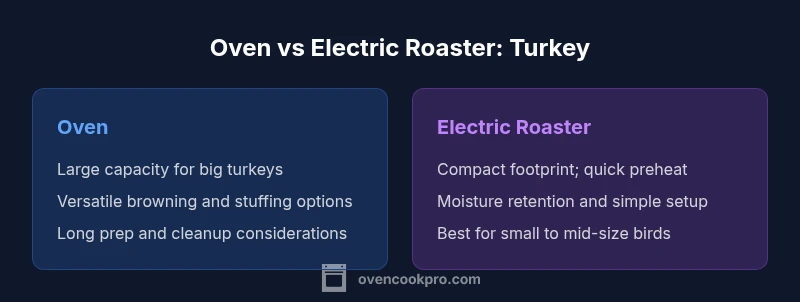
| Capacity (bird size) | Fits larger turkeys and allows stuffing largers volumes | Ideal for smaller to mid-size birds; limited for very large birds |
| Heat distribution | Radiant heat with air circulation; great browning with careful rack placement | Concentrated heat and moisture retention; consistent surfaces for smaller birds |
| Ease of use | More setup and oversight for large roasts; flexible timing | Simple use with fewer pans and shorter preheat times |
| Browning and moisture control | Excellent browning with conventional methods and pan drippings | Moisture retention from lid; browning depends on model and preheating |
| Footprint and storage | Requires more kitchen space but supports large cookware | Compact footprint; stores easily when not in use |
| Cleanup and maintenance | Cleans with drip pans, racks, and oven interiors; more components | Easier cleanup for small roasters; some models have nonstick interiors |
| Energy use and cost | Higher total energy for long roasts in large birds | Usually lower preheat energy; best for small/medium birds |
The Good
- Oven offers maximum capacity for large turkeys and stuffing options
- Electric roaster provides countertop convenience and faster setup
- Oven supports proven roasting techniques with broad recipe support
- Roaster minimizes kitchen clutter and preheat time for small birds
- Both options let you customize aromatics for flavor development
Drawbacks
- Oven requires more kitchen space and more careful timing for large birds
- Countertop roasters cap the bird size and may limit certain recipes
- Roasters can have uneven browning for very large birds if misused
- Cleaning multiple vessels can be more work for ovens during busy holidays
For most households, the traditional oven remains the versatile standard; a countertop electric roaster shines when space is tight or you cook smaller birds.
Choose the oven for versatility and capacity; opt for a roaster if countertop space is limited or you regularly roast smaller birds and want a simpler cleanup.
Questions & Answers
What size turkey is best for an electric roaster?
Electric roasters perform best with smaller to mid-size birds. Check the model’s capacity and compare it to your turkey’s weight. When in doubt, refer to the manufacturer’s guidelines and start with a shorter preheat and cook time to avoid overcooking.
Electric roasters work well for small to mid-size turkeys. Check capacity before buying, and follow the manufacturer’s timing guidelines for best results.
Can I roast a whole turkey in a standard oven instead of an electric roaster?
Yes. A standard oven offers the greatest flexibility for large birds and stuffing. Plan for longer preheat and roast times and use a rack and pan that promote airflow. Rest the turkey after roasting to maximize juiciness.
Absolutely. An oven handles large turkeys best; just manage preheat and resting to keep the meat juicy.
How can I ensure even browning in the electric roaster?
Choose a roaster with even heat distribution and a lid that fits securely. Do not overcrowd the cavity and consider rotating the bird or using a shallow roasting rack to encourage uniform exposure to heat.
Ensure the roaster heats evenly, don't crowd, and use a shallow rack to help browning stay uniform.
Is cleaning easier with a roaster or oven?
A countertop roaster often cleans more easily since the removable pan and rack are accessible. An oven requires more extensive cleaning, especially if drippings burn onto the walls. Always follow manufacturer cleaning instructions for longevity.
Roasters tend to be easier to clean; ovens may require more effort after big roasts.
What factors influence turkey juiciness?
Key factors include proper internal temperature, rest time, brining or seasoning, and avoiding overcooking. Use a thermometer and plan for carryover cooking after removing from heat.
Juiciness comes from proper temp, resting, and not overcooking. Use a thermometer and plan for carryover cooking.
Should I brine the turkey for oven or roaster methods?
Brining can improve moisture for both methods, but plan time accordingly. If time is short, use a dry brine to streamline prep and still achieve juicy results.
Brining helps moisture for either method; a dry brine is a quick alternative if you’re pressed for time.
Which method is more energy-efficient for turkey?
Energy use depends on bird size and cooking duration. In many cases, a roaster’s smaller footprint and shorter preheat can be more efficient for smaller birds, while ovens win for large turkeys.
Energy efficiency depends on size; roasters save some energy for small birds, ovens better suit large birds.
Can I use the same seasonings in both methods?
Yes. Most herbs, aromatics, and butter-based basting techniques work well in both methods. Adjust timing if you swap vessels to account for different browning patterns.
The same seasonings work for both; just adjust timing as needed.
Main Points
- Assess turkey size first; choose equipment accordingly
- Use thermometer guides to hit safe, juicy doneness
- Preheat appropriately and rest the meat for juiciness
- Consider countertop footprint for roaster convenience
- Balance browning control with moisture retention based on method