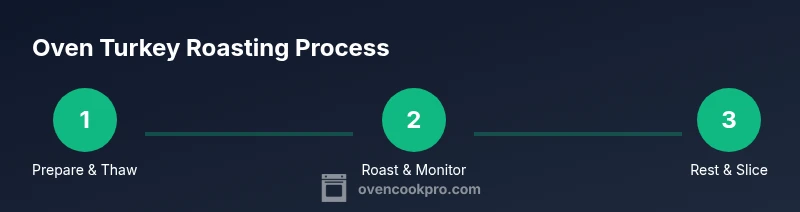
How to Roast the Perfect Oven Turkey: A Step-by-Step Guide
Learn to roast the perfect oven turkey with a practical, step-by-step method. From thawing and seasoning to doneness and carving, Oven Cook Pro guides home cooks to juicy, flavorful results every time.


With this guide, you’ll roast an oven turkey to juicy, evenly cooked perfection. You’ll prep thawed meat, a roasting pan, a thermometer, and seasonings, then follow a tested sequence for brining (optional), roasting at the right temperature, and a proper rest before carving. The process emphasizes safe handling and temperature accuracy for reliable results.
Why oven turkey matters
For many home cooks, the oven turkey is the centerpiece of holiday meals and weekend family dinners alike. A well-roasted bird delivers rich flavor, moist meat, and a savory aroma that fills the kitchen. According to Oven Cook Pro, success starts with planning: selecting the right-sized bird, thawing safely, and using a reliable thermometer to track doneness. The goal is to minimize dry breast meat while ensuring the thigh registers a safe temperature. In this section, we’ll explore how to set expectations, choose a bird, and map out steps that translate to predictable, delicious results. We’ll also cover health considerations such as avoiding cross-contamination and keeping hot foods at safe temps while serving.
The guidance here is designed for home cooks who want a consistent, repeatable result year after year. By focusing on temperature control, skin quality, and proper resting, you’ll elevate a routine roast into a crowd-pleasing centerpiece. Oven Cook Pro’s recommendations emphasize practical prep, precise time management, and clear doneness targets to reduce guesswork in the kitchen.
Choosing the turkey and safe thawing
The bird size matters for even cooking. For a 12- to 14-pound turkey, plan for 3 to 4 hours of roasting time in a conventional oven, plus time for resting. If you’re short on time, buying a smaller turkey or spatchcocking can reduce total cooking time. Thawing in the fridge is safest: allow roughly 24 hours for every 4–5 pounds. If you must thaw faster, submerge in cold water, changing the water every 30 minutes. Always pat dry before applying rubs to promote crisp skin. The quality of the meat—fresh versus previously frozen—also influences juiciness, so start with a quality bird from a reputable source.
Brining, seasoning, and stuffing considerations
Brining can help keep turkey juicy by absorbing moisture during the early hours. Dry brines are simpler and less messy: rub the turkey with salt and optional aromatics a day ahead and refrigerate uncovered or loosely covered. Wet brines add flavor but require extra time and careful rinsing before roasting. Season generously with salt, pepper, garlic, herbs, and a little oil or butter to promote browning. If you plan to stuff the cavity, ensure the stuffing is moist but not soggy, and check that it reaches 165°F inside; cooking a stuffed bird takes longer and benefits from tenting the breast if the skin browns too quickly.
Prep: dry skin, trussing, and oiling
Pat the turkey dry inside and out to remove moisture that would steam rather than roast. A light coating of oil or softened butter helps the skin crisp and browns evenly. Truss the legs to keep the shape compact and ensure the breast remains moist. Remove any giblets and pat the cavity dry; you can place aromatics like onion, lemon, and herbs in the cavity for gentle fragrance.
Roasting techniques: convection, rack height, and heat strategy
Conventional ovens work well with a two-zone approach: start at a higher temperature to brown, then reduce to finish. If you have a convection oven, you can lower the temperature by about 25°F to avoid over-browning. Position the rack so the turkey sits in the center of the oven; a rack tray elevates the bird and allows hot air to circulate. Use a roasting pan with a rack to lift the turkey out of drippings. Some cooks baste to distribute heat and moisture, but modern birds often stay juicy with minimal basting.
Temperature targets and doneness checks
The safest method to determine doneness is a meat thermometer. Aim for the breast at about 160°F and the thigh at about 175°F, then let carryover warmth bring the breast to 165°F as it rests. Insert the thermometer into the thickest part of the breast, avoiding bone. If you remove the turkey from the oven when the breast reads 155°F, you risk a drier result. Plan to rest the turkey for 20–30 minutes before carving to allow juices to redistribute.
Resting, carving, and serving
Resting is essential for juiciness. Keep the turkey loosely tented with foil to retain heat without steaming the skin. During resting, the internal temps continue to rise slightly, finishing the doneness. Carve the bird by removing the legs first, then the breast, and slice against the grain for tenderness. Serve with pan gravy made from drippings, roasted vegetables, and aromatics to enhance flavor.
Troubleshooting common issues
If the skin isn’t browning nicely, increase oven temperature for 5–10 minutes at the start or uncover the bird and let air circulate. If the breast dries out, consider a dry brine, lower roasting temperature, or a shorter initial high-heat phase. If you notice undercooked thighs, give it more time and check internal temps frequently. If you must roast a stuffed turkey, ensure the center of the stuffing reaches at least 165°F.
Flavor variations and gravy pairings
Customize with herb butter under the skin, citrus zest, garlic, or smoked paprika for different flavor profiles. Gravy, made from pan drippings, complements the turkey well. For cranberry relish, roasted vegetables, or a light gravy, balance richness with acidity. Leftovers can become soups, casseroles, or sandwiches.
Safety, storage, and cleanup after cooking
Always wash hands and surfaces after handling raw poultry. Refrigerate leftovers within two hours, or within one hour if the ambient temperature is above 90°F. Store sliced meat in shallow containers to cool quickly. Reheat to 165°F before serving. Clean all utensils and pans with hot, soapy water or in a dishwasher to prevent cross-contamination.
Final tips from Oven Cook Pro
According to Oven Cook Pro Team, the key to consistent results is practice and precise thermometry; use a probe thermometer and plan for resting. With patience and attention to temps, your oven turkey will become a dependable centerpiece for any meal.
Tools & Materials
- Roasting pan with rack(Choose a pan large enough for your turkey and a rack to elevate the bird for even browning.)
- Digital instant-read thermometer(Probe-style is preferred for quick temperature checks; ensure its range covers 160–180°F safely.)
- Oven thermometer(Useful for verifying the oven’s actual temperature if your oven runs hot or cold.)
- Kitchen twine(For trussing the legs to keep the shape compact and ensure even cooking.)
- Basting brush(Optional; helps apply butter or oil for extra browning.)
- Carving knife and cutting board(Sharp knife helps clean slicing; use a stable cutting board.)
- Paper towels(Dry the skin thoroughly to promote crispness.)
Steps
Estimated time: Total time: 2h 30m - 3h 15m
- 1
Choose, thaw, and prepare the turkey
Select the right size for your crowd and thaw safely in the refrigerator, allowing roughly 24 hours per 4–5 pounds. Remove giblets, pat dry, and prepare aromatics if you plan to stuff or flavor the cavity.
Tip: Plan thaw time early; a partially thawed bird cooks unevenly and can hinder browning. - 2
Pat dry, season, and brine if desired
Pat the skin dry to promote crispness. Apply a light coating of oil or butter, then season generously with salt, pepper, and aromatics. If brining, reserve extra time and ensure thorough rinsing and patting dry before roasting.
Tip: Dry brining is easier and reduces mess while delivering juicy meat. - 3
Preheat oven and set up roasting rack
Preheat to the target temperature (see doneness targets). Place the turkey on a rack in a roasting pan so air can circulate for even browning.
Tip: Preheating ensures the skin begins to brown promptly once the turkey enters the oven. - 4
Roast with a strategic heat plan
Start with a higher heat for browning, then reduce to finish. If using convection, lower the temperature by about 25°F. Monitor with a thermometer and adjust as needed to avoid scorching.
Tip: Basting is optional; many modern turkeys stay juicy without frequent basting. - 5
Check temps and rest
Pull when the breast is around 160°F and the thigh about 175°F. Let carryover cooking finish the job during a 20–30 minute rest under tented foil.
Tip: Resting redistributes juices; cutting too soon results in a drier slice. - 6
Carve and serve
Slice against the grain for tenderness. Serve with pan gravy and sides that balance richness with acidity.
Tip: Reserve pan drippings early; they form the base for a flavorful gravy.
Questions & Answers
Should I brine a turkey for roasting?
Brining is optional but can improve juiciness by adding moisture. Dry brines are simpler and effective, while wet brines require more time and careful rinsing before roasting.
Brining can help with juiciness, but it’s optional. A dry brine is a simple, effective option.
Do I cover the turkey while roasting?
Roasting uncovered promotes browning and flavor development. If the breast browns too quickly, loosely tent with foil to protect the skin while the rest finishes.
Roast uncovered for browning; tent with foil if needed to prevent over-browning.
How do I tell when the turkey is done?
Use a meat thermometer to reach about 160°F in the breast and 175°F in the thigh, then let carryover heat bring the breast to 165°F during resting.
Check with a thermometer; target 160F breast and 175F thigh, then rest.
Can I stuff the turkey?
Stuffing is possible, but it takes longer to cook. Ensure the center of the stuffing reaches 165°F. Consider cooking stuffing separately if easier.
Stuffing is fine but takes longer to cook; ensure it reaches 165°F.
Does convection help, and what temperature should I start with?
Convection can speed cooking and promote browning. If using convection, reduce the heat by about 25°F and monitor doneness with a thermometer.
Convection speeds cooking; lower the temp by about 25°F and watch the temps.
How should I store and reheat leftovers safely?
Cool leftovers quickly and store in shallow containers in the fridge within two hours. Reheat to 165°F before eating. Freeze portions for longer storage.
Cool and refrigerate leftovers promptly, then reheat to 165°F.
Watch Video
Main Points
- Plan thawing well in advance
- Use a thermometer to guide doneness
- Rest before carving for juiciness
- Convection requires temp adjustment
- Avoid overcrowding the oven and ensure proper drainage