Roasting Oven for Turkey: Master Juicy, Even Results
Learn to roast a turkey perfectly in a roasting oven with step-by-step guidance, temps, and safety tips from Oven Cook Pro. Ideal for holidays and weekend meals.


In this guide you’ll learn how to roast a turkey using a dedicated roasting oven setup for even heat, crisp skin, and juicy meat. You’ll cover preparation, seasoning, temperature management, and safe resting to guarantee a reliable result every time.
Why a Dedicated Roasting Oven for Turkey Matters
A dedicated roasting oven for turkey provides more consistent heat and better air circulation than a basic bake environment. That consistency translates to evenly browned skin and juicy meat, especially for larger birds where the breast cooks faster than the thighs. According to Oven Cook Pro, selecting the right oven configuration—conventional or convection—setting up the pan with a rack, and preheating properly are foundational steps to a successful roast. Home cooks who rely on improvised methods often contend with uneven browning, dry breast meat, and longer overall cooking times. By using a roasting oven approach, you establish a predictable, controlled environment that supports safe, flavorful results for holidays and weekend meals alike. This section primes you to think about heat distribution, airflow, and pan positioning as you prepare to roast a turkey that will please family and guests alike.
Understanding Oven Configurations: Conventional vs Convection
Ovens fall into two broad categories: conventional (static heat from elements) and convection (hot air circulated by a fan). A roasting process for turkey can work in either setup, but results vary. Convection generally browns the skin more evenly and can shorten overall cooking time, while conventional heat requires careful attention to air circulation and pan placement to prevent cold spots. When using convection, you may want to lower the set temperature slightly to avoid over-browning the breast. If you’re sticking with conventional heat, position the rack so the breast isn’t too close to the top element and ensure a good airflow around the bird. A foil tent can help slow browning later in the roast if the skin darkens too fast. For many Oven Cook Pro readers, starting with open airflow (roasting rack in a shallow pan) yields the most predictable results, particularly for large birds.
Prepping Your Turkey for Roasting: Thaw, Brine, Dry, Season
Start with a thawed turkey that has been fully defrosted in the refrigerator. Remove giblets and neck, rinse quickly if needed, and pat the skin dry with paper towels. Air-drying the skin loosely in the fridge for a few hours or overnight helps achieve a crisper finish. Brining, whether wet or dry, can boost moisture retention, but if you’re short on time, a thorough pat-down with salt and a light brush of oil or melted butter can still yield excellent results. Season generously on the outside and consider a light under-skin lift with a salt mix or herb paste for deeper flavor. Aromatics added to the pan—such as onions, carrots, and celery—help flavor the drippings, which makes pan gravy more robust. Throughout prep, keep in mind that a well-seasoned, dry surface is key to achieving that sought-after skin texture.
The Right Roast Temp and Time: A Practical Guide
There is no one-size-fits-all number for roasting: temperature and duration depend on bird size, whether you use convection, and your target doneness. A common-sense approach is to roast at a steady heat and monitor the internal temperature rather than chasing exact minutes per pound. The safe internal temperature you’re aiming for is 165°F (74°C) in the thickest part of the thigh and breast, measured with a calibrated thermometer. If the skin browns too quickly, tent the turkey with aluminum foil to prevent over-browning while the interior continues to cook. For larger birds, anticipate longer roast times, and plan to check temperature in the final stages to adjust heat and position as needed. Using a thermometer that stays in place for the last portion of roasting allows you to verify doneness without overcooking.
Step-by-Step Roasting Process in Your Oven
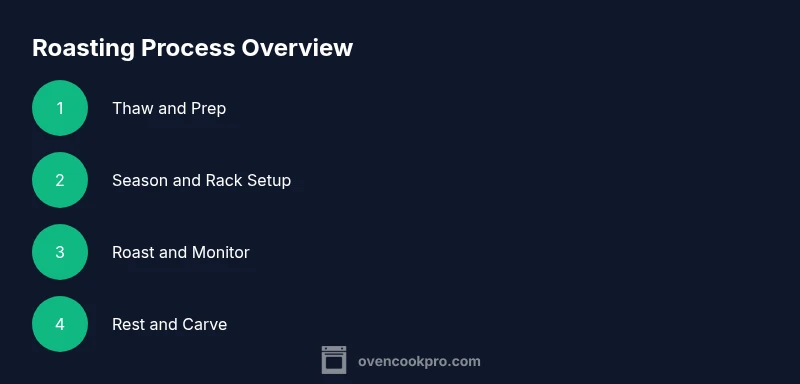
To turn theory into practice, you’ll follow a reliable sequence that works in most roasting ovens. First, preheat the oven to the chosen setting and lay out your turkey on a rack-lined pan. Next, insert a meat thermometer probe into the thickest part of the thigh (without touching bone) and optionally another into the breast. Then, place the turkey in the center of the oven and let it roast, checking temperatures every 20–30 minutes. If you’re using convection, reduce the temperature slightly as needed and rotate the pan halfway through for even browning. Finally, once the internal temperature hits target levels, remove the bird and let it rest, loosely tented, for 20–30 minutes before carving to redistribute juices. Throughout, monitor the browning and adjust heat with foil as necessary.
Common Mistakes and How to Avoid Them
One frequent error is roasting without a rack, which allows the turkey to steam in its own juices rather than roast. Always elevate the bird to promote air flow. Another common issue is underestimating resting time; the juices need time to redistribute, or you’ll end up with dry slices. Avoid stuffing the turkey; it increases cooking time and can lead to uneven doneness. Lastly, avoid high heat for too long, which risks burnt skin while the interior remains undercooked. Use a thermometer as your guide, not a clock, and you’ll achieve a safer, tastier result.
Resting, Carving, and Juices: Finishing Touches
Resting is essential for a moist final product. Remove the turkey from the oven and transfer to a warm cutting board or platter, loosely tent with foil. Let the meat rest for about 20–30 minutes; during this time, the juices redistribute, making carving easier and the slices juicier. Carve along the natural grain, starting with the breast before moving to the thighs. While you rest, you can strain the pan drippings and simmer with a splash of stock to create a quick gravy. The goal is smooth, flavorful jus that complements roasted meat without overpowering it.
Maintenance and Safety for Your Roasting Oven
After roasting, clean the pan and rack to remove fats that could smoke during future use. Allow the pan to cool before washing to avoid thermal shock on metal components. Inspect the door seal and racks for wear and tear, and replace any damaged parts promptly. Always use oven mitts and avoid overfilling the pan, which can cause spillover. For safety, never leave a hot oven unattended for long periods, and keep kids and pets away from the kitchen during roasting. A little proactive maintenance now helps ensure your roasting oven stays reliable for many Thanksgiving seasons to come.
Authority Sources
For authoritative guidance, consult federal and extension resources that outline safe poultry handling, cooking temperatures, and best practices for roasting turkey, including the use of thermometers and prudent food safety measures. These sources reinforce the practical steps outlined above and provide official checkpoints to ensure doneness and safety.
Tools & Materials
- Thawed turkey (10–16 lb)(Ensure complete thawing in the fridge for 24–48 hours prior to roasting.)
- Roasting pan with rack(Big enough to hold the turkey with air space around it.)
- Digital instant-read thermometer(Front and thigh temperatures should be monitored; insert without touching bone.)
- Aluminum foil(Used to tent the breast if browning happens too quickly.)
- Kitchen towels and oven mitts(For safe handling when moving hot cookware.)
- Oil or melted butter(Lightly brush the skin to promote crispness and flavor.)
- Salt, pepper, and herbs(Season inside and out for depth of flavor.)
- Vegetables for the pan (optional)(Onions, carrots, and celery add flavor to drippings.)
Steps
Estimated time: Total time: 2.5–4 hours depending on turkey size
- 1
Prepare the turkey and workstation
Remove giblets and neck from the cavity, rinse quickly if needed, and pat completely dry. Place the turkey on a rack-centered roasting pan. This ensures air can circulate around the bird for even cooking.
Tip: Patting dry with paper towels helps skin crisp more reliably. - 2
Season and moisturize the skin
Brush or rub the skin with oil or melted butter, then season generously with salt, pepper, and herbs. For deeper flavor, gently work some salt under the skin in the breast area without breaking the skin. If using aromatics, add them to the pan for extra fragrance.
Tip: Dry skin plus a light coating of fat yields crisper results. - 3
Choose your heat setup
Decide between convection or conventional roasting based on your oven and preference. If using convection, lower the set temperature by a small amount to prevent over-browning, and ensure the pan is centered for even heat. Place the rack so air can circulate fully around the bird.
Tip: Convection speeds browning; adjust temperature and time accordingly. - 4
Roast and monitor temperature
Insert the thermometer into the thickest part of the thigh, avoiding bone. Roast with the breast side up and keep an eye on browning. If needed, use a foil tent to slow browning while interior finishes cooking.
Tip: Check temperature every 20–30 minutes after the first hour to avoid overcooking. - 5
Halt roasting and rest
When the thigh and breast reach 165°F (74°C) or your target safe temperature, remove the turkey from the oven. Transfer to a warm cutting board and tent loosely with foil. Rest for 20–30 minutes to redistribute juices.
Tip: Resting is essential for moist slices; do not skip it. - 6
Carve and serve
Carve along the natural grain, starting with the breast and then the thighs. Strain pan drippings to make a smooth gravy if desired. Serve while hot and juicy.
Tip: Carving when the meat has rested yields cleaner slices.
Questions & Answers
What is the best oven setting for roasting a turkey?
Convection offers faster browning and a crisper skin, while conventional heat is forgiving and simple. Choose based on your oven and monitor temperature to finish safely.
Convection browns faster; conventional heat works well too—just monitor the temperature to finish safely.
Should I stuff the turkey?
Stuffing inside the turkey slows cooking and can lead to uneven doneness. It’s safer and often tastier to cook stuffing separately in a dish.
Stuffing inside the turkey can cause uneven cooking; cook stuffing separately for safety.
How do I know when the turkey is done?
Check that the thickest part of the thigh and the breast reaches 165°F with a calibrated thermometer. The juices should run clear and the meat should feel firm to the touch.
Aim for 165 degrees in the thigh and breast with a thermometer; juices should run clear.
Can I roast a turkey without a rack?
A rack is highly recommended to promote air circulation. If you don’t have one, place the turkey on a bed of chopped vegetables to lift it off the bottom.
Yes, you can, but a rack is best for airflow; use a veggie bed if you don’t have a rack.
How long should the turkey rest after roasting?
Rest the turkey for about 20–30 minutes after removing from the oven to allow juices to redistribute and make carving easier.
Rest for 20–30 minutes for juicier slices.
Can I prep the turkey a day ahead?
Yes, you can thaw and season ahead of time, but ensure it's refrigerated until roasting day and avoid overcrowding the fridge.
Yes, prep ahead of time, but keep it refrigerated and don’t overcrowd the fridge.
Watch Video
Main Points
- Plan ahead with thawing time and fridge space
- Choose convection or conventional heat and adjust accordingly
- Target 165°F in the thigh for safe, juicy meat
- Rest the turkey 20–30 minutes before carving
- Use a rack and pat-dry skin for best texture