Cooking Turkey in the Oven: A Step-by-Step Guide
Master oven-roasted turkey with this expert, step-by-step guide from Oven Cook Pro. Learn thawing, brining, roasting temps, thermometer checks, resting, and carving.


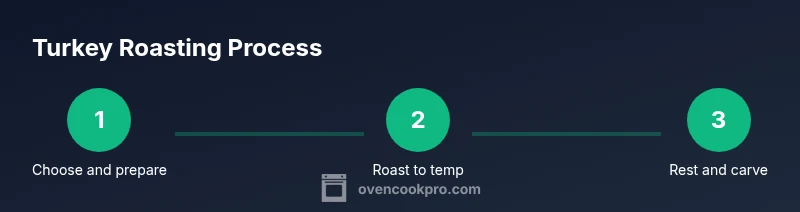
This guide walks you through cooking a turkey in the oven from start to finish, covering thawing, seasoning, roasting temperature, thermometer checks, resting, and carving. You’ll learn practical, safe techniques to ensure juicy meat and crispy skin for any holiday or weekend roast. By following these steps, you’ll master the cooking turkey oven process with confidence.
Choosing the Right Turkey and Preparation
Selecting the right turkey is the foundation of a successful cooking turkey oven experience. For a family-sized roast, aim for a 12- to 15-pound bird; smaller birds cook faster, while larger birds need more time and attention to avoid undercooked breast or dry legs. When cooking turkey oven-side, quality starts with proper thawing and drying. According to Oven Cook Pro, a fully thawed, patted-dry turkey browns more evenly and holds moisture better during roasting. Plan to roast to an internal temperature of 165°F (74°C) in the thickest part of the breast or thigh, and let the meat rest briefly after removing from the oven to retain juices. Throughout this guide, you’ll learn practical steps, measurement techniques, and safety practices that home cooks can apply to Thanksgiving or any weekend roast.
-
Prefer fresh birds when possible; if buying frozen, allow ample time for thawing in the refrigerator—roughly 24 hours per 4-5 pounds.
-
Bring the turkey closer to room temperature for 30-60 minutes before roasting to promote even cooking.
Prepping: Thawing, Brining, and Drying for Crisp Skin
A great turkey oven roast starts with proper prep. Thaw the bird safely in the refrigerator, allowing 24 hours for every 4-5 pounds. Quick thaw methods risk uneven cooking; plan ahead. After thawing, pat the skin dry thoroughly with paper towels—moisture on the surface inhibits browning. If you opt for brining, choose wet or dry brine based on schedule and skin preference.
-
A wet brine adds moisture but increases seasoning options; however, it requires extra drying before roasting.
-
A dry brine (salt and aromatics rubbed into the skin) improves moisture retention and creates crispier skin.
Place the turkey on a rack over a pan to air-dry in the fridge for 4-24 hours. This step enhances browning and texture.
Roasting Fundamentals: Temperature and Time Management
Roasting a turkey in the oven is a balance of heat, time, and airflow. A common starting point is 325°F (163°C) for many birds, but size and desired skin color influence the plan. Use a rack to lift the turkey off the pan so hot air circulates around the bird. For safety and consistency, begin checking internal temperatures after the first 1.5 to 2 hours, then every 20–30 minutes thereafter. The goal is 165°F (74°C) in the breast and thigh, with the thigh sometimes reaching 170–175°F (77–79°C) as the resting juices redistribute. If the skin browns too quickly, tent loosely with foil to protect the finish while the interior finishes cooking.
-
Use an oven thermometer to verify your preheat accuracy; ovens often run hot or cool without notice.
-
Avoid stuffing the cavity with raw ingredients; if you do, stagger stuffing timing and verify the center reaches 165°F.
Internal Temperature, Food Safety, and Resting
Internal temperature is the primary driver of doneness and safety. Use a reliable meat thermometer inserted into the thickest part of the breast and the inner thigh, avoiding bone. Target 165°F (74°C) in both locations, then remove the turkey from the oven and let it rest, loosely tented with foil, for 20–30 minutes. Resting allows juices to redistribute, resulting in juicier slices and easier carving. Do not rush this step, as pulling the bird early can yield dry meat. After resting, carve against the grain for maximum tenderness and even slices.
-
If you’re using a large bird, you may see carryover cooking raise internal temps a few degrees after removal; plan accordingly.
-
Keep a separate thermometer for the stuffing if you’ve cooked it inside; stuffing should also reach 165°F throughout.
Flavor Strategies: Herbs, Aromatics, and Optional Glazes
Enhance flavor with simple aromatics that infuse the meat without masking its natural turkey taste. Common options include onion, garlic, thyme, sage, rosemary, and lemon zest. Rub herbs under the skin for direct contact with the meat and place aromatics in the pan cavity for gentle steam. For a golden, glossy finish, consider a light glaze made from butter, maple, or honey brushed on during the last 15–20 minutes of roasting. If you brined, flavor choices should be more restrained to avoid oversalting.
-
Fresh herbs deliver brighter aroma; dried herbs are convenient but mellow.
-
Olive oil or melted butter helps the skin brown evenly and prevents sticking to the rack.
Common Mistakes and How to Fix Them
Even experienced cooks stumble into common turkey-roasting pitfalls. One frequent error is starting with a cold turkey straight from the fridge; this leads to uneven cooking. Another is overcooking, which dries the breast while the thigh remains underdone. A lack of air circulation around the bird can create soggy skin. If you notice pale skin browning too slowly, raise the oven temperature gradually in small increments and monitor tightly. Similarly, avoid opening the oven door repeatedly; it drops the oven temperature and prolongs cooking time. Finally, never rely on the bone as the sole indicator of doneness; rely on a thermometer for accurate results.
Authority Sources and Safe Practice
Reliable guidance comes from established food-safety authorities, including the USDA and culinary science resources. For practical guidance, consult government and university sources during your planning and execution. This section consolidates safety practices and temperature targets;
- USDA: Safe Minimum Internal Temperatures: Turkey should reach 165°F in the thickest part of the breast and thigh.
- Extension services from land-grant universities provide detailed roasting charts and brining guidance.
- Consumer safety organizations emphasize avoiding cross-contamination and proper handwashing throughout preparation and serving.
The Upside of Consistent Practice
Cooking turkey oven procedures become simpler with routine. Rehearsing the same process each time helps you anticipate time requirements and serving windows, reduces stress on holiday mornings, and enhances family meals. Over time, you’ll adjust brining, seasoning density, and resting time to your oven’s idiosyncrasies. The end result is a reliably juicy interior and a crisp exterior that makes a centerpiece memorable.
Tools & Materials
- Oven thermometer(To verify oven temperature for accurate roasting)
- Meat thermometer(Instant-read preferred; target 165°F for turkey thighs/breast)
- Roasting pan with rack(Allows air circulation for even browning)
- Basting brush(Optional for even glaze)
- Aluminum foil(Tent the turkey if browning too quickly)
- Carving knife(Sharp blade for clean slices)
- Kitchen twine(Truss the legs if desired for even cooking)
- Heat-resistant gloves(Protection when handling hot pans)
- Measuring spoons(For precise seasoning)
Steps
Estimated time: 2 hours 30 minutes
- 1
Prepare the turkey and equipment
Remove giblets if present and pat the bird dry with paper towels. Preheat the oven to the target roasting temperature (typically 325-350°F). Ensure the roasting rack sits in the pan before you begin.
Tip: Dry skin dries better on towels than under running water; pat thoroughly. - 2
Season and brine (if using)
Season under the skin and across the exterior with salt and your chosen aromatics. If using a brine, ensure the turkey comes out of the brine with adequate drying before roasting.
Tip: A dry brine can boost moisture without adding liquid; plan at least 24 hours if possible. - 3
Roast and monitor temperature
Place the turkey in the oven and monitor temperature after the first hour. Use a thermometer to verify when the breast reaches 165°F and the thigh reaches 165-175°F.
Tip: Avoid opening the oven door repeatedly; each opening drops oven temperature. - 4
Baste or glaze (if desired)
Basting is optional; it can add moisture and color but is not essential if you’ve dry-brined. Brush glaze in the final 15-20 minutes for a glossy finish.
Tip: If you brined, be careful with extra salt in the glaze. - 5
Rest before carving
Remove the turkey and tent loosely with foil for 20-30 minutes to redistribute juices. Carve against the grain for tender slices.
Tip: Resting time is critical for juicy slices; plan the timing accordingly.
Questions & Answers
What is the safe minimum internal temperature for turkey?
The USDA recommends cooking turkey to 165°F (74°C) in the thickest part of the breast or thigh. Check with a probe thermometer.
Cook the turkey to 165 degrees to be safe; use a thermometer to verify.
Should I brine or dry-brine a turkey?
Brining adds moisture; dry-brining with salt enhances flavor and skin crispness. Choose based on time and skin preference.
Brining adds moisture; dry-brining helps crisp skin.
How long does a turkey take to roast?
Roast times vary by size; a 12-15 lb bird typically takes about 2.5-3 hours at 325°F, plus resting.
Expect around 2.5 to 3 hours for a typical turkey, then rest.
Can I stuff the turkey?
Stuffing inside the turkey increases safety risk if not cooked to 165°F throughout. Prefer baking stuffing separately.
Stuffing inside cooks slowly; bake separately for best safety.
How should I rest and carve the turkey?
Let the turkey rest 20-30 minutes, then carve against the grain for clean slices.
Rest for 20-30 minutes, then carve.
Watch Video
Main Points
- Preheat and dry the turkey for crisp skin.
- Use thermometer targets to ensure safe, juicy meat.
- Rest before carving to retain juices.