Cooking Chicken Thighs in Oven: A Step-by-Step Guide
Learn how to roast chicken thighs in the oven for juicy, crispy skin. This Oven Cook Pro guide covers prep, temps, timing, and tips for perfect results every time.


With this guide, you will master cooking chicken thighs in oven for juicy, evenly roasted meat. You'll learn how to choose thighs, season boldly, preheat correctly, and cook to the safe internal temperature for tender results every time. By following a reliable step-by-step method, you’ll minimize flare-ups and uneven browning while preserving moistness.
Why cooking chicken thighs in oven yields reliable results
For many home cooks, the oven is the easiest way to produce consistently juicy chicken thighs. The fat in bone-in, skin-on thighs renders slowly as they roast, keeping the meat moist while the skin browns beautifully. According to Oven Cook Pro analysis, oven roasting balances heat transfer and moisture retention better than pan-searing alone, especially when you use a rack and proper spacing. In practice, this method delivers a crisp, golden exterior with tender, flavorful meat throughout. By understanding how heat, moisture, and surface drying interact, you can set expectations and choose between bone-in vs boneless and skin-on vs skinless to fit your meal plan. The result is consistent browning, minimal shrinkage, and a reliable baseline you can customize with seasonings or sauces.
Choosing the right thighs and prep
Start with bone-in, skin-on thighs for the best texture. If you prefer boneless, adjust the timing accordingly. Dry the surface thoroughly with paper towels; moisture on the skin inhibits browning. Salt the meat at least 15 minutes before roasting, or even up to 24 hours if you’re doing advanced meal prep (refrigerated). Patience and prep lead to a crisper finish. Optional marinade or dry rub can add flavor; avoid overly wet coatings which can steam the surface during roasting. Oven Cook Pro notes that patting dry and salt-time are critical levers for browning and depth of flavor.
Preheating, seasoning, and temperature targets
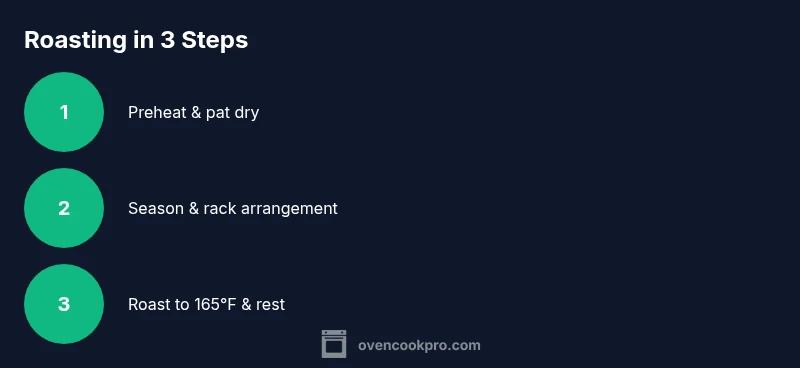
Preheat the oven to 425°F (218°C) for a crisp finish, or 400°F (204°C) if you’re cooking thicker thighs or a larger batch. Seasonings should stick to the surface—olive oil, salt, pepper, garlic powder, and paprika work well as a base. The goal is a dry surface that browns evenly. The safe internal temperature for chicken thighs is 165°F (74°C); however, many cooks aim a few degrees higher in the center to account for carryover cooking. Use a thermometer to verify doneness rather than relying on color alone. Oven Cook Pro’s guidance emphasizes surface dryness and accurate temps to avoid under- or overcooking.
Rack vs direct baking: best practices
Using a wire rack set on a rimmed baking sheet elevates the chicken and promotes air circulation around every side. This helps render fat and produce uniformly crisp skin without soggy bottoms. If you don’t have a rack, space the pieces with at least 1 inch between them on a lined sheet pan and rotate halfway through. Parchment or a silicone mat on the sheet reduces sticking and makes clean-up easier. The rack method also minimizes direct contact with rendered fat, keeping the skin crispier.
Timing, doneness, and resting
Roast bone-in, skin-on thighs for about 35–40 minutes; boneless thighs cook faster, usually 18–25 minutes depending on thickness. Check doneness with a thermometer; aim for 165°F (74°C) in the thickest part, then let the meat rest for 5–10 minutes to reabsorb juices. Resting is essential for moist meat, especially after a hot roast. If skin isn’t as crispy as you’d like, a quick 1–2 minute broil on high can finish the browning, but watch closely to prevent burning.
Common mistakes and how to fix
Common faults include overcrowding the pan, which leads to steamed skin, or starting with a cold surface that delays browning. Another mistake is skimping on patting dry or skipping salt-time, which reduces browning and flavor. To fix, do a quick dry, apply an even thin coat of oil, and ensure your oven rack is properly placed to promote heat exposure from all sides. If you notice uneven thickness, consider trimming to uniform pieces or cutting larger thighs in half to equalize cooking.
Flavor variations you can try
Experiment with lemon zest, fresh thyme, and crushed garlic for a bright, aromatic finish. A paprika-cumin blend adds a warm, smoky depth, while rosemary and cracked pepper bring a savory earthiness. For a tangy contrast, finish with a splash of white wine or a drizzle of honey-balsamic glaze after resting. These variations are easy to implement on any roast without compromising the fundamental roasting method.
Make-ahead, meal-prep, and refrigeration
Roast thighs in larger batches and refrigerate for up to 3 days. Reheat gently in the oven at 350°F (175°C) for 8–12 minutes or until warmed through, then broil briefly to refresh the skin. When planning make-ahead meals, consider storing the bones and skin separate from the meat for easier reheating and sauce pairing. Proper cooling and rapid refrigeration help maintain texture and prevent bacterial growth.
Oven Cook Pro verdict
The Oven Cook Pro team recommends using a rack-supported roast with dry surface prep, a hot oven (425°F/218°C), and a thermometer-driven check for best results. This approach consistently yields juicy, crispy skin and tender meat while giving you flexibility for flavor tweaks. For home cooks seeking reliability, this method remains our go-to baseline for cooking chicken thighs in the oven.
Tools & Materials
- Oven or convection oven(Preheat to 425°F (218°C) as baseline; use convection if available for faster browning.)
- Rimmed baking sheet(Catches drips and helps keep pan tidy.)
- Wire rack(Elevates thighs for even air circulation and crisp skin.)
- Meat thermometer(Target 165°F (74°C) in thickest part; verify with multiple spots.)
- Tongs(Turn thighs gently to avoid tearing skin.)
- Paper towels(Pat surfaces dry before seasoning.)
- Olive oil or other high-heat oil(Light coating to promote browning.)
- Salt and pepper(Season generously for depth of flavor.)
- Garlic powder, paprika(Optional flavor boosters.)
- Fresh herbs (rosemary, thyme)(Finish addition for aroma.)
- Parchment paper or silicone mat(Optional for easier cleanup.)
Steps
Estimated time: 40-50 minutes
- 1
Preheat oven and prep workspace
Set the oven to 425°F (218°C) and line your sheet with parchment or a silicone mat. While the oven heats, pat the chicken dry with paper towels and gather seasonings. Dry surfaces promote browning and crispness, which is essential for texture. Pro tip: a hot oven ensures rapid surface dehydration and browning early in the roast.
Tip: This establishes a strong browning foundation before the first minute of roasting. - 2
Pat dry and salt the meat
Thoroughly pat the thighs dry. Lightly salt on all exposed surfaces and let sit for 10–15 minutes if possible, then pat off excess moisture again before oiling. Salt-time improves flavor penetration and helps moisture retention during roast. Pro tip: salt-time can be done in advance for meal-prep advantages.
Tip: Even salt distribution is key to uniform flavor. - 3
Season and oil
Drizzle a small amount of olive oil and rub it over the surface of each thigh. Apply pepper and your chosen dry rub evenly. For extra depth, add garlic powder and paprika. Pro tip: coating should be light — too much oil can cause soggy skin rather than crisp browning.
Tip: A thin oil layer helps browning and flavor adhesion. - 4
Arrange on rack with space
Place the thighs skin-side up on the wire rack with at least 1 inch of space between pieces. This setup maximizes air exposure and even browning around the edges. Pro tip: rotate the pan halfway through roasting to ensure even heat contact.
Tip: Spacing prevents steaming and promotes crisp skin. - 5
Roast and monitor
Roast for 18–25 minutes (boneless) or 35–40 minutes (bone-in), depending on thickness. Use a thermometer to monitor; the target is 165°F (74°C) in the thickest part. Pro tip: begin checking a few minutes early if pieces are smaller or larger than average.
Tip: Don’t rely on color alone to gauge doneness. - 6
Rest and check again
Remove from oven and let rest for 5–10 minutes before serving. Resting allows juices to re-distribute and keeps the meat juicy. Pro tip: rest on a clean cutting board, not the hot rack, to prevent steaming the skin.
Tip: Resting is as important as the roast itself. - 7
Optional finish for extra crisp
If you desire ultra-crispy skin, switch to broil for 1–2 minutes, watching closely to avoid burning. Pro tip: keep the oven door slightly ajar or watch with a keen eye during broiling.
Tip: Broil is effective but risky—timing is everything. - 8
Serve or store
Slice or serve whole, with optional sauces or sides. Refrigerate leftovers within 2 hours and reheat gently to maintain moisture. Pro tip: store skin and meat separately if you plan to reheat to preserve texture.
Tip: Proper storage preserves flavor and texture.
Questions & Answers
Should I cook chicken thighs skin-side up or skin-side down for best results?
For crispy skin, start skin-side up. If the skin isn’t browning enough, briefly switch to broil for 1–2 minutes at the end, watching closely. Skin-down can help render fat more slowly, but skin-side up generally yields crisper results after resting.
Cook skin-side up for crispy skin, and finish with a quick broil if needed.
What temperature is best for roasting chicken thighs?
A hot oven around 425°F (218°C) is ideal for crispy skin and even browning. If you’re cooking thicker thighs or a large batch, you can drop to 400°F (204°C) to prevent over-browning while still reaching 165°F internal temperature.
Roast at 425°F for best browning, or 400°F for thicker pieces.
How long do bone-in vs boneless thighs take in the oven?
Bone-in thighs typically take about 35–40 minutes; boneless thighs finish faster, usually 18–25 minutes depending on thickness. Always confirm with a thermometer at 165°F in the thickest part.
Bone-in about 35–40 minutes; boneless around 18–25 minutes, check with a thermometer.
Can I cook chicken thighs from frozen?
Cooking from frozen is possible but not ideal. It increases total time and can lead to uneven doneness. If you must, extend roasting time and ensure the thickest part reaches 165°F.
You can cook from frozen, but expect longer time and check doneness carefully.
How should I store leftovers safely?
Refrigerate leftovers within two hours of cooking. Store in shallow containers for quick cooling and reheat to 165°F before eating. It’s best to use leftovers within 3–4 days.
Store promptly and reheat until hot all the way through.
Is overnight marinating helpful for chicken thighs?
Yes, marinating overnight can deepen flavor. Pat the surface dry before roasting to maintain browning, and keep the meat refrigerated during marination.
Overnight marinating adds flavor; pat dry before roasting for best browning.
Watch Video
Main Points
- Cook with a hot oven and dry surface for browning.
- Bone-in, skin-on thighs yield juicier, more flavorful results.
- Space pieces and use a rack to ensure even cook.
- Verify doneness with a thermometer and rest before serving.