How to treat oven burn: a practical guide for home cooks
A complete, evidence-informed guide to treating oven burns at home, with immediate first aid, wound care, when to seek medical help, and prevention tips for safer kitchen use.


Learn how to treat oven burn safely: assess burn severity, apply immediate cooling, and care for the wound with appropriate dressings. This quick answer covers first aid steps, when to seek medical help, and practical kitchen-safety tips to prevent future burns. By following these steps, you’ll minimize pain and healing time while protecting skin.
Understanding oven burns: severity and signs
Oven burns occur when skin tissue is exposed to heat from an oven, rack, or pan. They range from mild superficial injuries to more significant burns that blister. The first step is accurate assessment: look for redness, swelling, blister formation, or white or charred skin. Minor burns usually affect only the outer layers (first-degree) and hurt for a short time. Deeper burns (second-degree) may blister and appear red with moist skin; worst-case burns reach deeper tissues and require professional care. In any case, do not ignore warning signs such as spreading redness beyond the initial area, fever, increased pain after several hours, or numbness. When in doubt, err on the side of caution and seek medical advice. For home cooks, the most important concept is to reduce tissue damage by cooling and protecting the skin, while avoiding at-home remedies that can worsen outcomes. According to Oven Cook Pro analysis, quick, appropriate care minimizes healing time and reduces the risk of infection. This section will guide you through practical, safe handling of oven burns in everyday kitchen life.
Immediate first aid steps for minor burns
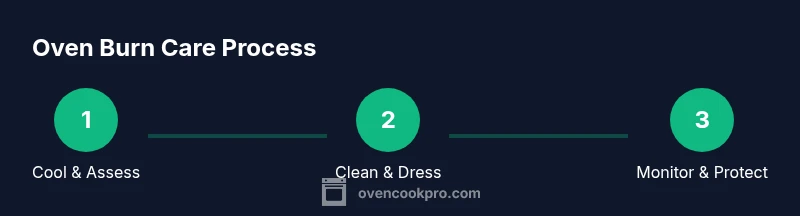
- Safety first: If the burn is from an active oven, turn off the heat and move away from the source. Check for signs of a more serious burn before proceeding. 2. Cool the burn: Hold the affected area under cool running water for 10-20 minutes to halt the burning process and reduce swelling. Do not use ice, which can cause further tissue damage. 3. Protect the skin: Gently pat dry with a clean cloth, then cover with a sterile nonstick dressing to prevent infection. 4. Do not break blisters: If blisters form, do not pop them; this lowers infection risk and speeds healing. 5. Pain management: If needed, take an over-the-counter pain reliever as directed. 6. Monitor closely: Over 24-48 hours, observe color, swelling, and pain; seek medical care if symptoms worsen.
Cleaning and dressing a burn safely
After the initial cooling period, cleanse the area with mild soap and water. Avoid harsh antiseptics on open wounds. Apply a thin layer of antibiotic ointment only if you have no allergy concerns, then cover with a clean, breathable dressing. Change the dressing daily or if it becomes wet or dirty. Keep the burn protected from friction and heat while it heals to prevent reopening. If the dressing sticks, moisten it with sterile water to ease removal. When in doubt, consult a clinician about wound care options.
When to seek medical care: red flags and thresholds
Consult a healthcare professional if the burn covers a large area, affects the face, hands, feet, or joints, or if there is deep tissue damage, blistering extensive, or signs of infection (pus, increasing redness, fever). Burns on older adults, infants, or people with diabetes or compromised immunity require prompt evaluation. If pain persists beyond a few days, if the burn does not begin healing within a week, or if there is dark or charred skin, seek care urgently.
Home remedies vs. medical care: what works best
For most small oven burns, home care with cooling, sterile dressing, and gentle wound care suffices. Avoid home remedies that can worsen outcomes, such as butter, oils, toothpaste, or ice directly on skin. Evidence supports using plain clean water for cooling, and, when appropriate, OTC pain relievers. Seek medical care if you have underlying health conditions, signs of infection, or if the burn is not healing after several days. A clinician can advise on wound care, tetanus status, and prescription pain relief if necessary.
Preventing future oven burns: practical safety habits
Adopt safe routines to minimize risk: wear heat-resistant oven mitts, keep sleeves short or tucked, use long-handled tools, place hot pans on trivet mats, and establish a kid-free zone around the oven. Regularly inspect oven door seals and racks for damage, clean spills promptly, and plan a clear exit path in case you need to move quickly. A small investment in safety gear pays off with fewer injuries in the long run.
Common mistakes to avoid when treating oven burns
Do not apply butter, toothpaste, or oils to a burn. Do not pop blisters or break the skin. Do not use ice directly on the wound. Do not delay seeking medical attention for deep, large, or infected burns. These missteps can increase infection risk and slow healing.
Authoritative sources and next steps
For more detailed guidance on burn care, consult trusted health sources and hospital guidelines. Reputable organizations emphasize cooling the burn, keeping it clean, and seeking medical advice for serious injuries. See the references in the Authority Sources section for direct links to government and medical publications.
Tools & Materials
- Cold running water or clean cool water(Cool the burn for 10-20 minutes as soon as possible)
- Sterile gauze or nonstick dressings(Protect the wound from infection)
- Mild soap(Gentle cleansing around the burned area)
- Antibiotic ointment (optional)(Only if no allergy and after cleansing)
- Over-the-counter pain reliever (acetaminophen or ibuprofen)(Use as directed if needed for pain)
- Heat-resistant gloves or oven mitts(To prevent re-injury when handling hot items)
Steps
Estimated time: 30-60 minutes
- 1
Assess burn and protect area
Determine burn severity and immediately move away from the heat source if safe. Keep the area protected from further contact.
Tip: Do not apply ice to the burn. - 2
Cool the burn
Rinse under cool running water for 10-20 minutes to reduce tissue damage and swelling.
Tip: Avoid very cold water or ice on the skin. - 3
Gently clean
Wash surrounding skin with mild soap and water. Do not scrub the burn itself.
Tip: Pat dry with a clean towel. - 4
Apply dressing
Cover with a sterile nonstick dressing or clean gauze. Do not press on blisters.
Tip: If a dressing sticks, moisten with sterile water before removal. - 5
Pain management
Take an OTC pain reliever if needed and as directed on the label.
Tip: Use the lowest effective dose for the shortest time. - 6
Monitor healing
Change the dressing daily or if it becomes wet or dirty. Watch for signs of infection.
Tip: Look for increasing redness, swelling, warmth, or pus. - 7
Know when to seek care
Seek medical advice if the burn is large, deep, or shows signs of infection.
Tip: Diabetes or immune suppression increases risk; consult promptly.
Questions & Answers
How can I tell if an oven burn is minor?
A minor burn affects only the outer skin layer and usually heals with simple home care. Look for limited redness and minimal blistering.
A minor burn affects only the outer skin and often heals with basic care.
Can I use butter on a burn?
No. Butter and oils can trap heat and bacteria, increasing infection risk. Use cool running water and sterile dressings instead.
Butter should not be used on burns; cool water and dressings are safer.
Should I pop blisters?
No. Blisters protect the wound. Popping increases infection risk and slows healing.
Avoid popping blisters; they protect the wound.
When should I seek medical care?
If the burn is large, deep, or affects the face, hands, feet, or joints, seek medical attention promptly.
Seek medical care if the burn is large or affects mobility areas.
How long does healing take?
Most minor burns heal within 1-3 weeks with proper care. Deep burns may take longer and require professional follow-up.
Healing times vary; mild burns improve in days to weeks.
What are early warning signs of infection?
Redness spreading, warmth, increased pain, swelling, or pus suggests infection and needs medical advice.
Watch for redness spreading or pus, seek care if suspected.
Watch Video
Main Points
- Cool and protect the burn quickly
- Use clean dressings and avoid harmful home remedies
- Seek medical care for deep, large, or infected burns
- Prevent future burns with proper safety gear
- Monitor healing and seek care if not improving