How to Stop Oven Fire: Safe Step-by-Step Guide for Kitchen
A practical, expert-driven guide on stopping an oven fire safely. Learn immediate actions, smothering flames, extinguisher use, prevention, and aftercare to keep your kitchen safe.


Learn how to stop oven fire quickly and safely. This guide covers immediate actions, how to smother small flames, when to call emergency services, and aftercare to prevent reoccurrence. It explains both electric and gas ovens, includes timing tips and equipment you’ll need, and emphasizes prioritizing personal safety above all.
What causes oven fires and risk factors
Oven fires can start from a variety of sources, and knowing the common triggers helps you respond quickly and safely. If you're wondering how to stop oven fire, the first step is recognizing the situations that most often ignite in home kitchens: excess oil or fat on food, food spills that burn near heating elements, overheated sugar or grease, blocked vents, and defective thermostat or power components in electric ovens. Gas ovens add another dimension: a gas leak, improper ignition, or a malfunctioning burner can ignite surrounding grease or paper. High-sugar marinades and roasting unattended for long periods also raise risk, especially when the oven is set to high heat for extended times. Children, pets, and clutter near the oven increase hazards. The best defense is prevention: clean spills promptly, keep flammables away, and set reasonable temperatures. Understanding these risk factors provides the context you'll rely on when you act fast to stop oven fire. According to Oven Cook Pro, proactive setup and awareness dramatically reduce the likelihood of a flare-up.
Immediate actions you should take (before anything else)
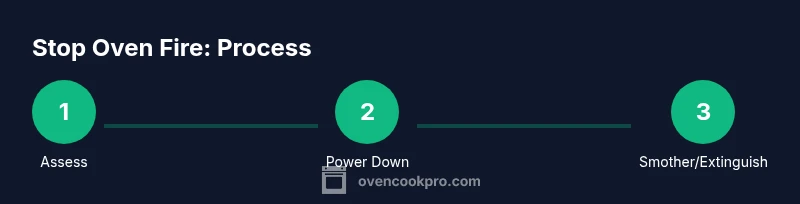
When a fire starts, time matters. Begin by assessing safety: if you can move away from heat and flames without risk, do so and alert others in the home. Call emergency services if the fire is spreading beyond a small, contained flame. If the flame is small and contained, you can begin to act while keeping yourself safe. Shut off the heat source at the oven control or at the circuit breaker for electric ovens, and if you can do so safely with a gas oven, turn off the gas supply. Do not open the oven door unless necessary, and keep children and pets away. Gather a nearby fire extinguisher if you are trained to use it. Have a plan to evacuate if smoke or heat becomes overwhelming. The goal is to stabilize the situation and reduce oxygen supply to the fire while protecting people. This early triage buys crucial seconds and reduces escalation.
Smothering a small grease flame safely
Small grease flames inside an oven can often be controlled without water. If the door is closed and you can do so safely, use baking soda or a metal lid to smother the flame by depriving it of oxygen. Wear heat-resistant gloves and maintain a safe distance. Do not attempt to extinguish flames with flour, sugar, or baking powders, which can worsen the situation. After applying a suppressive material, leave the door closed and monitor for reignition or smoke. If flames persist beyond a few seconds, prepare to evacuate and call for help. Smothering is effective for contained fires, but never put yourself at risk for the sake of a single flame.
When and how to use a fire extinguisher in the kitchen
If you are trained and the fire remains small, a kitchen-rated fire extinguisher (class ABC or K where appropriate) can be used. Remember PASS: Pull the pin, Aim at the base of the flame, Squeeze the handle, Sweep side to side. Stand at a safe distance and maintain a clear escape route. If the fire is growing or you cannot approach safely, evacuate and call emergency services. After discharge, wait for professionals before re-entering. Regularly check the extinguisher’s pressure gauge and service date so it’s ready when needed.
Safe methods to shut off heat for electric and gas ovens
Electric ovens: Shut off the oven at the control panel to cut power, then switch off the corresponding circuit breaker if safe to do so. Gas ovens: Turn off the oven burner knob, and if you can do so safely, close the gas shutoff valve. If you smell gas or suspect a leak, evacuate immediately and call emergency services. In all cases, prioritize a safe exit for everyone in the home and avoid any actions that could aggravate the fire.
What you should NOT do during an oven fire
Do not pour water on a grease fire; it can cause a dangerous steam reaction and spread flames. Do not open the oven door unless you must to check if flames are still burning, as this introduces fresh oxygen. Do not move flaming pans or racks, which can spill burning contents. Avoid improvising with powders or liquids not designed for fires, and never attempt to douse a fire with the oven still running. If in doubt, evacuate and call for help.
Investigating after a small oven fire: cleaning and prevention
Once the fire is out, inspect for heat damage, melted plastics, or scorched wiring. If there is any indication of structural damage, consult a professional. Clean up residue once the oven has cooled completely, wiping down interior surfaces with a damp cloth and mild detergent. Check for lingering odors and ensure proper ventilation. Document the incident for future reference, including date, time, and actions taken.
Preventive measures for oven safety: setup and maintenance
Preventing oven fires starts with proper setup. Keep flammables away, clean spills promptly, monitor racks and bakeware, and confirm your oven is level to avoid pan tipping. Regular maintenance includes checking door seals, thermostat accuracy, and vent blockage. If you use a self-cleaning cycle, understand door lock behavior and temperature extremes. Preheating should be purposeful, not prolonged, and you should never leave the kitchen unattended for extended preheat periods.
Special considerations for self-cleaning cycles, preheating, and door locks
Self-cleaning cycles can reach extremely high temperatures that may ignite nearby materials. Always remove combustibles from the vicinity and ensure the door is fully closed. For preheating, set the oven to the recommended target temperature and avoid leaving it running longer than necessary. Understand door lock behavior: if you suspect a stuck lock due to heat, do not force it and contact a professional. These features require respect and strict adherence to the manufacturer’s guidelines.
Emergency checklist you can print and post
- Know where the fire extinguisher is and how to use it (ABC/K). - Have a clear escape route and a family plan. - Do not open the oven door during a flame unless you must. - Power down the oven and gas supply if safe. - If fire grows, evacuate and call emergency services. - After the incident, inspect damage and consult a professional if needed.
Real-world scenarios and troubleshooting
Imagine you’re roasting a turkey at high heat and a flare erupts from the oven. First, turn off heat and close the door if safe, then use baking soda to smother or grab a fire extinguisher if trained. In a gas oven, switch off the burner and call for help if you smell gas. For frequent occurrences, look for overheating, oil residues, or clogged vents. In every case, prioritize safety and don’t take unnecessary risks.
How Oven Cook Pro supports safe cooking and future readiness
Oven Cook Pro emphasizes practical, evidence-based practice for home cooks. Our guidance combines immediate-fire response with prevention techniques rooted in kitchen safety research. From step-by-step actions to checklists and training tips, our resources aim to reduce risk and help families stay prepared. By understanding causes, you can better protect your home and loved ones.
Tools & Materials
- Fire extinguisher (ABC or kitchen-rated)(Keep accessible; ensure it's charged and within reach of the kitchen.)
- Baking soda(Stock a box near the oven to smother small flames.)
- Metal lid or baking sheet(Used to cover and smother flames without dumping liquid.)
- Heat-resistant oven mitts(Protect hands when handling hot racks or lids.)
- Phone within easy reach(Dial emergency services if the fire escalates.)
- Smoke detector in or near the kitchen(Ensure devices are functional and tested regularly.)
Steps
Estimated time: Total time: 5-15 minutes
- 1
Assess safety and alert others
Scan the scene for risks and warn anyone nearby. If you can do so without putting yourself in danger, move people to safety and grab a fire extinguisher if you’re trained to use it. This step sets up a controlled response rather than a chaotic rush.
Tip: If smoke is thick or you feel overheated, evacuate immediately instead of staying to fight the fire. - 2
Power down the heat source
Turn off the oven using the control panel. If you can do so safely, switch off the circuit breaker to remove power entirely for electric ovens. In a gas oven, close the knob to stop ignition while keeping doors closed to limit oxygen access.
Tip: Power isolation reduces re-ignition risk and buys you time to assess next steps. - 3
Close the oven door if safe
Keep the door closed to starve the fire of oxygen, provided you can do so without exposing yourself to heat or smoke. Opening the door can intensify flames. Monitor for signs of escalation from a safe distance.
Tip: Never slam the door; a controlled close minimizes shock to the flames. - 4
Smother small flames
If flames are small and contained, sprinkle baking soda or place a metal lid over the flame from a safe distance. Do not use water or any liquid to douse a grease fire inside the oven.
Tip: Cover the flame gradually; sudden airflow can cause flare-ups. - 5
Use a fire extinguisher if needed
If the fire persists or grows beyond containment, use a class ABC (or K where appropriate) extinguisher following PASS: Pull, Aim, Squeeze, Sweep. Stay alert and maintain a safe exit path.
Tip: Only attempt extinguisher use if you’ve been trained and there is a clear escape route. - 6
Evacuate if necessary
If flames spread, heat intensifies, or you cannot approach safely, evacuate the home and call emergency services. Do not re-enter until professionals declare it safe.
Tip: Before leaving, close doors behind you to confine the fire and protect other rooms. - 7
Inspect and plan aftercare
Once the area is safe, inspect for damage and plan cleaning. If the appliance shows signs of severe damage or smell of gas persists, contact a professional or the manufacturer.
Tip: Document the incident for insurance or service records.
Questions & Answers
Is it safe to use water on an oven fire?
No. Water can spread the fire and cause steam burns. Use a fire extinguisher or baking soda for small, contained flames.
Water is not safe for oven fires. Use extinguisher or baking soda only if the fire is small and contained.
Should I open the oven door to check the flames?
Opening the door introduces oxygen that can intensify the fire. Only open if you have a clear, safe path to exit and need to check the flame’s status.
Opening the door can fan the flames, so avoid it unless necessary and safe.
What should I do if smoke starts filling the kitchen?
Move everyone to safety, turn off heat sources, and ventilate if safe. If smoke is heavy, evacuate and call emergency services.
If smoke fills the kitchen, evacuate and call for help if it worsens.
What about self-cleaning cycles during a fire?
Do not run self-cleaning cycles during a fire. They can intensify heat and trigger door locks or damage. Call for help and ventilate.
Avoid triggering a self-cleaning cycle during a fire; call for help instead.
When should I call emergency services?
Call emergency services if the fire is spreading, you cannot safely contain it, or there is smoke and danger to occupants.
Call emergency services if the fire grows or you can't control it.
Can a home oven fire occur without oil or grease?
Yes. Electrical faults, flammable packaging near heating elements, or overheating can start fires even without oil.
Fires can start from electrical issues or overheating, not just oil.
Watch Video
Main Points
- Know the fire sources and act quickly.
- Prioritize safety; evacuate if the fire worsens.
- Use baking soda or a lid to smother small flames; avoid water.
- Power down heat, then consider extinguisher use if trained.
- Inspect and prevent for future safety.