How to Prevent Oven Fires: A Step-by-Step Guide
Learn how to prevent oven fires with safe prep, temperature control, and quick emergency actions. This comprehensive guide from Oven Cook Pro covers preheat, cleaning habits, and post-cook routines to protect your kitchen.


By following proven safety steps, you can dramatically reduce the risk of oven fires. Start with a clean oven, remove flammable items from the vicinity, monitor temperatures, and keep a fire extinguisher and baking soda nearby. This guide explains practical measures, from preheat habits to post-cook cleanup, so you can cook confidently while protecting your kitchen.
Understanding Oven Fires: Causes and Risk Factors
Oven fires are often preventable when you understand their common causes. According to Oven Cook Pro, the majority of oven-related incidents begin with something simple: a spill left to burn, a forgotten pan, or a wavering preheat routine. The Oven Cook Pro team found that unattended cooking increases risk significantly, while grease buildup on racks and heating elements can ignite at high temperatures. In this section, we explore how fires start, what heat sources contribute, and how typical kitchen layouts influence outcomes. You’ll learn how to identify high-risk moments during prep, preheating, and baking, so you can intervene early. Strategies include establishing clear zones around the oven, never placing paper towels or plastics in the vicinity, and choosing cookware with tight-fitting lids to minimize splashes and spills. Understanding the root causes helps you tailor prevention steps to your kitchen, whether you cook daily meals or occasional roasts.
Pre-Cook Safety Audit: Clearing Clutter and Flammables
A proactive safety audit before you turn on the oven is a simple way to cut fire risk. Start by removing papers, towels, plastics, and foil from the immediate area, and ensure handles and cords are out of the way. Keep a clear 12-inch radius around the oven and vent hood. Check that the oven rack is properly positioned and that you aren’t crowding the interior with oversized pans. This pre-check sets the stage for safe cooking and reduces chances of accidental ignition caused by stray ingredients or obstructed airflow. As you prepare, set out your safety tools (extinguisher, baking soda, oven mitts) so they’re ready if needed. The Oven Cook Pro team emphasizes that a quick, thorough audit saves time and prevents surprises mid-cook.
Temperature Control and Equipment That Help
Maintaining accurate temperature control is a cornerstone of prevention. Use an oven thermometer placed on the middle rack to verify the dial reading and adjust as necessary. Do not rely solely on the oven’s built-in thermometer or dial; calibrations can drift over time. Preheat only to the specified temperature for your recipe and avoid rapid temperature shifts which can cause grease or food to splatter and ignite. If you frequently bake at high heat, consider upgrading to a more precise thermometer or a smart thermometer that alerts you to deviations. The consistent use of proper equipment helps maintain safe cooking conditions and minimizes risk during long bake sessions.
Cooking Practices That Reduce Fire Risk
Smart cooking habits dramatically lower the odds of a fire. Avoid greases and oils near heating elements; use lids or splatter screens when possible. Place heavy, oven-safe pans securely on racks to minimize tipping. Do not overload bakeware or place foil directly on the bottom element where it can spark. Keep flammables like paper towels, parchment paper, and oven cleaners away from the hot zone. When broiling, monitor closely and keep a timer to prevent food from scorching. These practices create safer cooking environments and make it easier to respond quickly if something begins to burn. The guidance here aligns with general safety principles and practical kitchen routines for everyday meals.
Cleaning Habits That Prevent Fires
Residue from spills, oils, and sugar can ignite if allowed to bake onto the oven surfaces. Develop a routine: wipe spills after every use, and perform a deeper clean weekly to remove baked-on grease. Pay attention to the bottom of the oven, door gaskets, and the racks where crumbs accumulate. Use non-abrasive cleaners and a scraper for stubborn spots, being careful not to damage coatings. Regular cleaning reduces fuel for fires and improves overall oven performance. This section emphasizes a simple cadence you can maintain without professional help, keeping your oven safer and more reliable.
What to Do During an Overheat or Fire Event
If you notice smoke or a fire begins, act calmly and decisively. Turn off the oven heat and, if it is safe to do so, close the door to starve the flame of oxygen. Do not open the door if the fire is already growing, as this can feed the flames. Smother small grease fires with baking soda or use a properly rated fire extinguisher. If you cannot control the fire quickly, evacuate and call emergency services. It’s important to have a smoke detector in the kitchen and a practiced plan so everyone knows what to do. Oven Cook Pro analysis shows that prompt action and correct extinguishing technique are the most effective defenses against oven fires.
Safe Storage and Post-Cook Cleanup
After you finish cooking, allow the oven to cool completely before cleaning. Store flammable materials away from the oven and keep a dedicated, easily accessible kit of safety tools nearby. Clear the area of any towels, paper, or cardboard that could pose a risk during future cooks. Keeping a routine post-cook cleanup reduces residual ignition sources and maintains a safer kitchen environment. Finally, document any issues or unusual odors for future reference so you can adjust your safety practices as needed.
Building a Fire-Safe Kitchen Routine for Every Meal
Developing a consistent safety routine makes prevention automatic. Start by pairing pre-cook checks with a 5-minute safety review, then use a timer and thermometer to monitor progress. Maintain clean cooking surfaces, correctly stored cookware, and a visible safety kit. The routine becomes a habit that protects your home and families. The Oven Cook Pro team recommends adopting the full prevention protocol described here to minimize risk and cook with confidence. With steady practice, you’ll reduce the chances of an oven fire and improve overall kitchen safety.
Tools & Materials
- Fire extinguisher (ABC-rated)(Keep in kitchen within arm’s reach; check expiry annually and replace if needed.)
- Baking soda(For smothering small oven fires; never use water on grease fires.)
- Oven-safe gloves(Heat-resistant; use when handling hot racks or pans.)
- Oven thermometer(Place on middle rack to verify actual temperature; calibrate yearly.)
- Fire blanket(Helpful for smothering larger fires; keep within easy reach.)
- Smoke detector (kitchen area)(Ensure working batteries; not a substitute for extinguishers.)
Steps
Estimated time: 30-60 minutes
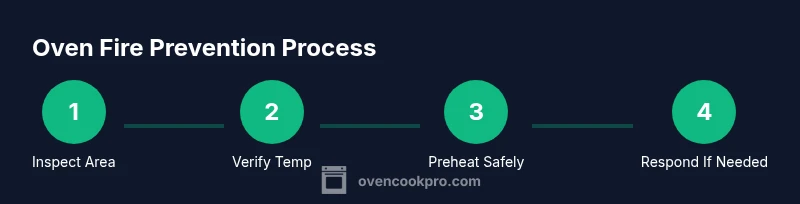
- 1
Clear area and inspect hazards
Before preheating, remove any paper, towels, plastics, or flammable items from around the oven. Check that cords are out of the way and the vent hood is unobstructed. This prevents accidental ignition from spills or absorbed heat.
Tip: Maintain at least 12 inches of clearance from heat sources. - 2
Verify temperature with a thermometer
Use a reliable oven thermometer on the middle rack and compare with the oven’s dial. If they disagree beyond 10-15 degrees, adjust settings or calibrate the oven.
Tip: Calibrate annually or after oven service. - 3
Preheat with purpose
Only preheat when you are ready to bake and avoid leaving the oven on empty. Set timers to remind you to add food promptly and monitor for unusual smells or smoke.
Tip: Never preheat and walk away for extended periods. - 4
Choose proper cookware and layout
Use well-fitting lids, avoid overfilled pans, and keep heavy pans centered on racks. Do not place foil under food or directly on heating elements; use foil on a tray if needed.
Tip: Distribute heat evenly to prevent hotspots. - 5
Monitor during cooking
Stay in the kitchen for most of the bake, especially for high-fat or sugar-heavy recipes. Use a timer and periodically check for signs of burning or smoke.
Tip: Set a secondary alarm for long cooks. - 6
Respond to signs of trouble
If smoke or flames appear, turn off heat, do not open the door unless you must, and smother small fires with baking soda or use a fire extinguisher. Evacuate if the fire grows.
Tip: Call emergency services if you cannot control the fire quickly.
Questions & Answers
What are the most common causes of oven fires?
Most oven fires start from unattended cooking, grease buildup on racks and heating elements, or flammable items near heat sources. Regular cleaning and vigilant monitoring reduce these risks.
Most fires happen when someone forgets the food or leaves grease near the heat. Clean regularly and stay attentive while cooking.
Is it safe to open the oven door during a fire?
Do not open the door if a fire is growing; opening it can supply more oxygen and intensify the flames. Turn off heat and use a safe extinguishing method if available.
If flames are small, turn off the heat and keep the door closed. Do not open the door if flames are spreading.
Should I use water to put out a grease fire in the oven?
Never use water on a grease fire. Smother with baking soda or use a properly rated fire extinguisher designed for kitchen fires.
Don’t pour water on a grease fire — smother it with baking soda or use a kitchen extinguisher.
How often should I clean my oven to prevent fires?
Regular quick cleans after spills plus a deeper clean weekly or biweekly helps prevent buildup that could ignite. Adjust frequency based on usage.
Clean after spills and do a deeper clean weekly to keep grease from building up.
What safety items should be near the oven?
Keep a Class ABC fire extinguisher, baking soda, heat-resistant gloves, and a fire blanket accessible near the oven for quick response.
Have an extinguisher and baking soda handy near the oven so you can act fast if needed.
What should I do if I smell gas in my kitchen?
If you smell gas, evacuate immediately without using electrical switches, call emergency services from outside, and ventilate if it’s safe to do so after evacuating.
If you smell gas, leave the area and call for help right away.
Watch Video
Main Points
- Clean surfaces and keep flammables away
- Trust thermometer data, not just dial settings
- Keep safety tools accessible and usable
- Never use water on grease fires
- Act quickly but calmly if a fire starts