How to Prevent Oven Smoke: A Home Cooks Guide
Learn how to prevent oven smoke with expert tips on preheating, cookware choices, ventilation, and cleaning. This step-by-step guide from Oven Cook Pro helps homeowners keep ovens safe, clean, and smoking-free.


This guide shows how to prevent oven smoke by identifying triggers like overheating, spills, and grease buildup, and by applying practical steps: preheat properly, use appropriate bakeware, maintain cookware, clean regularly, and ventilate. Follow these steps to reduce smoke, protect your kitchen, and extend your oven's life. This quick overview primes you for the deeper guidance below.
Understanding how to prevent oven smoke
Smoke from an oven typically arises from heat interacting with fat, oil, sugar, or food residues left on racks, drip pans, or the oven walls. Overheating, oil splatters, and sugary glazes can ignite or vaporize, creating smoke that spreads into the kitchen. The Oven Cook Pro team found that many smoke incidents happen when preheating too hot or cooking fatty foods on crowded racks without adequate ventilation. By addressing the root causes and establishing a routine, you reduce both smoke and the lingering odors that cling to oven surfaces. In this section you’ll learn the foundations: controlling heat, preparing cookware, and maintaining a clean oven interior.
- The role of residue: Even small amounts of grease can break down at high temperatures and smoke.
- Heat management: Most smoke arises when food cooks at temperatures higher than its tolerance or when airflow is blocked.
- Ventilation: A functioning hood or window improves air exchange and lowers smoke density.
This knowledge sets the stage for practical steps you can implement today, based on real-world cooking scenarios and standard safety practices. According to Oven Cook Pro, routine maintenance and correct preheating are the most impactful preventive measures.
Essential preheating practices
Preheating is not just a formality; it sets the stage for even cooking and reduces smoke caused by sudden temperature shocks. Start by setting the oven to the recipe's recommended temperature and allow the oven to come to heat before placing food inside. If your oven runs hot by more than 25 degrees Fahrenheit, consider calibrating it using an inexpensive oven thermometer; even reputable ovens can drift over time. Place the thermometer in the center rack for an accurate reading. Avoid preheating to maximum temperatures for routine bakes when not required. Quick preheats can trap bursts of hot air and burn off fats, creating smoke. Instead, aim for the stated target and wait for the indicator that the oven has stabilized. This practice is especially important when roasting meats, baking sugary desserts, or cooking fatty foods, where small variances can trigger smoke formation. According to Oven Cook Pro analysis, consistent preheating reduces smoke events by ensuring even heat distribution.
Cookware and bakeware: what to use to minimize smoke
Choosing the right cookware helps limit smoke. Glass and uncoated metal pans heat unevenly or trap juices that splatter. Dark nonstick coatings can overheat and emit fumes if run at high temperatures. Use shallow, wide pans when possible to promote air flow and quick evaporation of fats. Always avoid overfilling; liquids and sauces should be kept away from the oven walls. Lining pans with parchment paper or a silicone mat reduces direct contact with fats and sugars that would otherwise burn. If you bake with fatty ingredients, consider placing a sheet pan beneath to catch drips. Regularly check bakeware for scratches that can harbor residues. High temps plus poor seals equal more smoke. As the Oven Cook Pro team notes, cleaner and properly sized bakeware significantly lowers smoke risk.
Grease and spill management: cleaning before and after cooking
Grease and food residues are the primary culprits behind oven smoke. Before cooking, wipe down racks and drip pans with warm, soapy water and a nonabrasive scrub brush to remove built up residues. After cooking, while the interior is still warm, wipe away any splatters. A quick wipe prevents burnt-on film that later smokes during high heat. Use baking soda paste to tackle stubborn spots; a quick spray of white vinegar helps lift grease without harsh fumes. Keep microfiber cloths handy for dry wiping and avoid metal scrapers that can scratch enamel. Regular maintenance saves your oven from smoky sessions, preserves flavor, and extends the appliance life.
Temperature control and smoke prone foods
Some foods are more likely to smoke due to fat content, sugar, or marinades. Fatty roasts and high sugar toppings can carbonize at high heat, producing visible smoke. When cooking these items, lower the temperature slightly and increase cooking time for even browning. If a recipe calls for a high initial heat, start with the minimum recommended time at that temperature or switch to a higher rack position to reduce direct heat on the fat. Always monitor the oven and adjust if you see smoke. Keeping a close eye during the first 10 minutes prevents a smoky start. The Oven Cook Pro guidance emphasizes using accurate heat and avoiding dramatic temperature swings.
Ventilation and kitchen setup
Ventilation plays a big role in preventing smoke from filling the kitchen. Turn on the range hood or exhaust fan before you start cooking and keep a window cracked if possible. If you have a built-in hood with filters, clean or replace them regularly to maintain airflow. Keep your oven area clear of clutter that can trap heat and block airflow. Position cookware so steam and fumes can escape rather than pooling near the back wall. A well-ventilated kitchen reduces smoke density and helps maintain air quality during cooking.
Safe handling of smoke incidents
If smoke appears, act quickly and calmly. Move people and pets away from the kitchen, turn off the oven, and open windows to vent. Do not leave the oven running unattended. If smoke persists after turning off, call emergency services and evacuate. Do not open the oven door further as that could feed the fire. After the incident, inspect the interior for residue and consider cleaning the oven and range hood more thoroughly before resuming cooking.
Routine maintenance to prevent buildup
Set up a simple maintenance plan to prevent grease buildup that leads to smoke. Schedule a monthly wipe down of interior walls, racks, and drip pans, and a quarterly deep clean. Use a degreaser or baking soda paste for stubborn spots, then wipe clean. Replace hood grease filters as recommended by the manufacturer and check seals for leaks. Regular maintenance reduces smoke occurrences by maintaining airflow and temperature stability.
Authority sources and further reading
For deeper guidance, consult authoritative sources on oven safety and fire prevention. U.S. government and major safety organizations offer practical tips on maintenance and safe cooking practices: cpsc.gov provides home appliance safety resources. nfpa.org offers fire prevention guidance for kitchens. epa.gov provides guides on indoor air quality and ventilation. These sources complement the tips below and help you build a robust prevention routine.
Tools & Materials
- Oven thermometer(Place in center of oven to monitor true temperature)
- Non-abrasive degreaser spray(Safe for enamel; avoid abrasive cleaners)
- Microfiber cloths(For wiping interior and racks)
- Non-abrasive scrub brush(For racks and drip pans)
- Baking soda(For paste cleaning stubborn spots)
- White vinegar(De-greasing and deodorizing)
- Parchment paper(Line trays to minimize drips)
- Aluminum foil(Under racks to catch drips)
- Old towels or rags(For quick spills and cleanup)
- Ventilation source (range hood or fan)(Ensure airflow during cooking)
Steps
Estimated time: 45-60 minutes
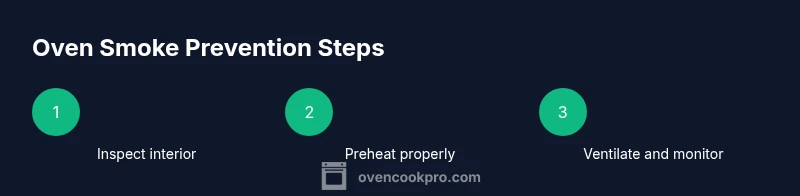
- 1
Inspect interior and clear spills
Begin by opening the oven and removing any heavy spills or burnt-on residue. Wipe the interior walls and racks with a damp cloth to remove loose debris. This reduces sudden smoke when heat rises.
Tip: A clean start prevents smoldering fats from creating smoke during the first minutes. - 2
Set target temperature and preheat
Preheat to the recipe’s specified temperature and allow the oven to stabilize before loading food. Use an oven thermometer to confirm accuracy.
Tip: If your oven runs hot, calibrate it to avoid overshooting temperatures that cause smoke. - 3
Choose bakeware and arrange racks
Select shallow, wide pans and avoid overcrowding racks. Place foods so fats and juices don’t pool near heat sources.
Tip: Line pans with parchment or use a silicone mat to minimize direct contact with fats. - 4
Line and manage fats
Use parchment paper or foil under trays to catch drips. Trim excess oils from meat and pat dry before cooking.
Tip: Dry surfaces reduce splatter that can burn and smoke. - 5
Ventilate during cooking
Turn on the range hood or open a window to improve air exchange and remove rising fumes.
Tip: Keep airflow steady for the first 10 minutes when heat is highest. - 6
Monitor and respond to smoke
Watch the oven during the initial phase; if smoke appears, pause cooking, turn off the heat, and ventilate before resuming at a lower setting.
Tip: If smoke continues, consider removing food and inspecting for burning residues.
Questions & Answers
What causes oven smoke during cooking?
Oven smoke typically comes from fat, sugar, or grease burning on hot surfaces, or from residues left on racks and pans that heat up and carbonize.
Oven smoke usually comes from fats or sugars burning on hot surfaces or from leftovers on racks heating up.
Is a smoky oven dangerous?
Smoke can indicate potential ignition or reduced air quality. It is a safety signal to stop cooking, ventilate, and assess residues before continuing.
Smoke can signal a fire risk or poor air quality, so shut off the oven and ventilate if you see it.
Can cleaning prevent oven smoke?
Yes. Regular cleaning removes grease and burnt-on residue that can smoke at high temperatures.
Regular cleaning removes grease that can smoke when heated.
Does preheating too long cause smoke?
Yes, overheating during preheat can start smoking, especially with residues present. Always preheat to the target and monitor.
Overheating during preheat can cause smoke; keep to the target temperature.
Are some foods more likely to smoke?
Fatty meats, sugary glazes, and marinades raise the risk of smoke if cooked at high heat.
Fatty or sugary foods are more likely to smoke at high heat.
How often should I clean my oven to prevent smoke?
Keep a monthly wipe-down schedule and perform a deeper clean occasionally to prevent buildup.
Clean monthly and deep clean periodically to avoid smoke buildup.
Watch Video
Main Points
- Preheat correctly to prevent smoke formation
- Use proper bakeware and avoid overcrowding
- Keep oven interior clean to minimize residues
- Ventilate effectively during cooking