How to Put Oven Fire Out: Safe, Step-by-Step Guide
Learn how to put oven fire out safely with practical, step-by-step guidance, essential precautions, and prevention tips from Oven Cook Pro.


Learning how to put oven fire out is essential for kitchen safety. In an emergency, first protect yourself and others, avoid water on grease fires, and act quickly using a metal lid, baking soda, or a class ABC fire extinguisher. If flames threaten to spread or you cannot approach safely, evacuate immediately and call emergency services. This guide covers practical steps you can take right now.
Immediate Actions to Take When You Suspect an Oven Fire
In emergencies, you must act quickly yet calmly. If you suspect an oven fire, your first objective is safety for yourself and others. According to Oven Cook Pro, the most common residential oven fires originate from grease buildup or electrical faults, and the safest response is to keep the door closed and to smother the flames rather than pouring water on them. If the fire is small and contained behind a door, you may attempt to smother it with a metal lid or baking sheet while wearing heat-resistant gloves. If flames threaten to spread or you cannot approach safely, evacuate immediately and call emergency services. Do not open the oven door during a fire inside the oven, as oxygen can feed the flames. If you decide to intervene, follow these principles: do not use water on a grease fire; cover flames with a metal lid or baking sheet; use a Class ABC extinguisher only if you can do so without risking ignition of surrounding materials. Prepare your family by designating a safe exit route and a meeting point outside the home.
This is part of how to put oven fire out safely and should be practiced as part of regular kitchen safety routines. Keeping a clearly marked exit path and a working extinguisher in the kitchen reduces scramble during a real incident, making it easier to execute the correct actions under pressure.
note):null,
Tools & Materials
- ABC Class Fire Extinguisher(Store in an accessible spot in the kitchen; ensure it is not expired.)
- Metal lid or baking sheet(Use to smother small flames with a firm, flat cover.)
- Baking soda(Keep a box handy for smothering small grease fires.)
- Oven mitts or heat-resistant gloves(Protect hands when handling hot cookware or lids.)
- Fire blanket (optional)(Useful for smothering flames on larger fires.)
- Phone to call emergency services(Dial emergency services if the fire escalates or you cannot control it.)
- Flashlight (battery-powered)(For visibility if smoke reduces lighting.)
- Smoke detector check(Test detectors monthly and replace batteries as needed.)
Steps
Estimated time: 10-30 minutes
- 1
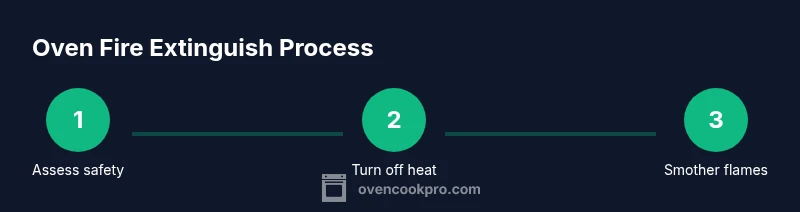
Pause and assess safety
Take a breath, clear the area, and quickly evaluate whether flames are contained and whether you can intervene safely. If you see large flames, heavy smoke, or feel heat approaching you, evacuate immediately.
Tip: If anyone is injured or conditions feel unsafe, prioritize evacuation and call emergency services. - 2
Turn off heat safely
If you can reach the oven controls without risking contact with flames, turn the oven off and, if applicable, switch off the electrical supply at the breaker panel after you’re clear of flames.
Tip: Do not attempt to move burning items; this can cause spillage or spread flames. - 3
Keep the door closed
Do not open the oven door. Opening can introduce oxygen and cause a flare-up. Keep the door closed while you assess your options.
Tip: Opening the door is the most common mistake that escalates small fires. - 4
Smother flames if safe
If flames are small and contained, gently cover them with a metal lid or a baking sheet, applying steady pressure to deprive the fire of oxygen.
Tip: Wear oven mitts and avoid sideways movement that could tip hot contents. - 5
Use a fire extinguisher if needed
If the fire is spreading or you cannot smother it safely, use a Class ABC extinguisher. Follow PASS: Pull, Aim, Squeeze, Sweep from a safe distance.
Tip: Stand back and keep others away while you operate the extinguisher. - 6
Evacuate if necessary
If the fire worsens beyond your ability to control, evacuate the home immediately and call emergency services from outside.
Tip: Meet at a predetermined outside location to ensure everyone is accounted for. - 7
Ventilate and inspect
Once the fire is out, ventilate the area to clear smoke, and inspect the oven for damage before reuse. If you’re unsure, contact a professional for assessment.
Tip: Document signs of damage and take photos for insurance or repairs.
Questions & Answers
What is the safest first move when an oven fire starts?
Prioritize safety and evacuate if flames are large or spreading. If safe, turn off the oven and attempt to smother small flames with a lid or baking soda. Always call emergency services if you can't safely control the fire.
Prioritize safety first; if flames are large, evacuate and call for help. If you can safely reach the controls, turn off the oven and smother small flames with a lid or baking soda.
Can I use water to put out an oven fire?
No. Water can cause grease fires to flare or spread. Use a lid, baking soda, or a Class ABC extinguisher if you can safely reach them.
No. Water can make the fire worse. Use a lid, baking soda, or a proper extinguisher if you can safely reach them.
Is it safe to open the oven door to check the flames?
Opening the door feeds oxygen and can intensify the fire. Keep the door closed unless you are certain it’s safe to open and do so quickly.
Opening the door can feed the flames, so keep it closed unless you’re certain it won’t worsen the fire.
What should I do after extinguishing the fire?
Ventilate the area, inspect for damage, and schedule a professional inspection if there was significant heat or smoke. Clean residues and replace any used extinguishing equipment.
Ventilate, inspect for damage, and consider professional inspection if there was significant heat or smoke.
Do gas and electric ovens require different handling for fires?
Gas ovens require turning off the gas supply if safe; electric ovens require cutting power. If there’s any doubt, evacuate and call emergency services.
Gas or electric, if in doubt, evacuate and call for help rather than attempting risky actions.
When should I call 911 or emergency services?
Call emergency services if the fire is spreading, you cannot safely control it within a short period, or anyone is injured.
Call emergency services if the fire grows beyond your ability to control it or someone is hurt.
Watch Video
Main Points
- Act quickly but stay safe
- Never use water on oven grease fires
- Smother small fires with a lid or baking soda
- Call emergency services if the fire grows
- Inspect and clean after any incident to prevent recurrence