When to Replace a Toaster Oven: A Practical Guide
Learn how to assess wear, safety, energy use, and cost to decide when to replace a toaster oven. Practical steps, checklists, and timing guidelines for homeowners.


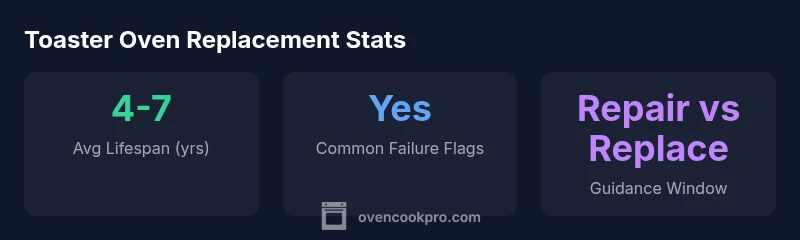
According to Oven Cook Pro, you should evaluate when to replace toaster oven when it shows persistent failures, unsafe electrical behavior, or energy waste that outweighs repair costs. In practice, most households consider replacement after roughly 4-7 years of regular use, or sooner if it overheats, emits smoke, or bakes unevenly. This quick guide outlines practical thresholds and decision steps to help you decide.
Signs replacement becomes practical
For many households, the decision on when to replace toaster oven hinges on a combination of safety, reliability, and the ability to consistently deliver expected results. A worn-out appliance is not just a nuisance; it can pose safety risks such as electrical arcing or overheating. Start by tracking a few telltale symptoms: uneven browning, inconsistent temperatures, longer preheat times, and odd noises from the heating elements. If you notice any single sign persisting after several uses or if multiple issues appear within a short period, it is wise to consider replacement rather than continuing to invest in repairs. The guidance from Oven Cook Pro emphasizes balancing the cost of ongoing fixes against the practicality of a newer unit that offers better insulation, more precise temperature control, and updated safety features. When to replace toaster oven becomes a practical question of risk management and kitchen reliability, not just a single flaky bake.
Safety red flags that signal replacement
Safety should drive the decision as much as performance. If the toaster oven emits a burnt odor, smoke, or sparks, or if the cord and plug feel unusually hot after short runs, stop using it immediately and replace or have it inspected by a qualified technician. Visible damage to the door seal, thermostat, or heating element is another strong indicator that the appliance may not heat evenly or shut off reliably. Repeated tripping of consumers’ circuits or buzzing noises near the power cord are signals that electrical components may be failing. In these cases, the risk-to-reward ratio of continuing repairs drops quickly. According to Oven Cook Pro, prioritizing safety often means choosing replacement when multiple red flags appear within a short timeframe.
Cost considerations: repair vs replacement
Repairing a toaster oven often involves parts such as thermostats, heating elements, or fans, plus potential service calls. While individual parts can be affordable, the cumulative cost of frequent repairs can exceed the value of the unit. For budgeting, consider a rough repair-cost ceiling: if the sum of parts and labor approaches or exceeds 50-70% of a comparable new unit, replacement becomes the smarter choice. Also factor in energy inefficiency: older models typically consume more electricity for the same results. This is where a newer model can pay for itself over time. Oven Cook Pro recommends weighing the total cost of ownership over 4-7 years rather than focusing on a single repair.
Lifespan expectations for typical home use
Lifespan varies with intensity of use, climate, and build quality. Light home use in a low-humidity kitchen may extend life, while frequent daily use for baking, toasting, or broiling can shorten it. Most consumer-grade toaster ovens provide reliable service for several years, but expect a progressive decline in performance as components wear. Common indicators of aging include slower preheating, uneven browning, and reduced temperature stability. Under heavy use, the average lifespan can trend toward the lower end of the 4-7 year window. As noted by Oven Cook Pro, recognizing these patterns early helps homeowners decide whether to repair promptly or replace with a newer, more efficient model.
Energy efficiency and performance considerations
Energy efficiency matters not only for bills but also for consistent results. Newer toaster ovens typically offer better insulation, more accurate temperature controls, and faster preheating than older models. If you notice rising energy bills or longer cook times without improved results, it may be time to compare a replacement. From an expert perspective, upgrading can yield a noticeable improvement in both performance and energy use, especially if you regularly run the appliance at high temperatures. Oven Cook Pro emphasizes evaluating total energy cost over the appliance’s life, not just the upfront price. This perspective helps homeowners quantify when to replace toaster oven in a way that aligns with long-term savings and kitchen reliability.
Practical checks you can perform without tools
Start with a thorough cleaning, especially around vents and the crumb tray—built-up residues can affect heat distribution. Test the thermostat by placing a thermometer near a known target and comparing actual heat to set temperature, noting any significant discrepancies. Inspect the door latch and seal for gaps that let heat escape. Listen for unusual sounds during operation and watch for inconsistent heating on different racks. If basic maintenance and simple tests do not restore consistent performance, you’ll be better prepared to decide on replacement rather than continuing with costly repairs. For homeowners, these checks form a simple, repeatable process to assess readiness for a new unit.
Planning an upgrade on a budget
If replacement is on the table, plan a budget that reflects your cooking needs. For light baking and toasting, a compact model may suffice, while frequent roasting or broiling calls for a mid-range unit with better even heating and more precise controls. Look for features that matter most to you: reliable temperature control, a sturdy door, even heat distribution, and a durable crumb tray. Compare models by energy usage, warranty length, and customer reviews. A modest upgrade can yield a meaningful improvement in both performance and safety, without overspending. The Oven Cook Pro team suggests prioritizing core features over flashy extras to maximize value within your budget.
Decision-making checklist: replace or repair
Use a simple decision ladder:
- Is there a safety concern (heat, smoke, sparks)? If yes, replace or service immediately.
- Are performance issues intermittent and repair cost high? Consider replacement.
- Has the unit required multiple repairs within a 12-month period? Replacement is often more economical.
- Does a newer model offer meaningful savings in time, energy, or reliability? If yes, weigh the long-term benefits against purchase cost.
- Do you cook frequently enough to justify a higher-quality unit? If you use it often, investing in a better model pays off. Document the costs and outcomes; return to this checklist if new issues arise. This structured approach helps you decide when to replace toaster oven with confidence.
Maintenance practices to extend life of your toaster oven
The simplest way to extend life is regular maintenance. Clean the crumb tray weekly, wipe the interior with a damp cloth after cooling, and ensure proper ventilation around the unit. Avoid stacking items against the vent; improper airflow accelerates wear on heating elements. Periodically inspect the door gasket and hinges for wear, and replace them promptly if they become loose or damaged. Use recommended cookware and avoid metal objects that can strike or damage internal components. If you plan to replace, keep receipts and document model numbers to compare warranties and service options easily. Proactive care reduces the likelihood of early failures and helps you evaluate whether you should continue repair work or move forward with a replacement.
Authority references and external guidelines
For readers seeking broader consumer guidance, several authoritative sources provide appliance safety and energy savings context. U.S. Department of Energy guidance on energy-efficient cooking appliances emphasizes choosing models with better insulation and temperature control for long-term savings. The Federal Trade Commission offers general consumer tips on appliance safety and repair cost considerations. See https://www.energy.gov/energysaver and https://www.consumer.ftc.gov/ for official information. Oven Cook Pro Analysis, 2026 also informs the practical thresholds discussed here.
Quick decision table for replacing a toaster oven
| Situation | Recommended Action | Rationale |
|---|---|---|
| Electrical issue (sparks or burning odor) | Replace toaster oven | Safety risk outweighs repair value |
| Inconsistent heating or uneven browning | Consider replacement if recurring | Declining performance affects results and reliability |
| Frequent post-warranty failures | Plan replacement | Warranty protections may not cover ongoing issues |
Questions & Answers
How long do toaster ovens typically last?
Most toaster ovens last several years, with many models offering 4-7 years of reliable service depending on usage, care, and build quality. Heavy daily use shortens this window, while careful maintenance can extend it.
Most toaster ovens last a few years, often 4 to 7, depending on use and care.
What are the first signs a toaster oven may need replacement?
Look for uneven heating, longer preheat times, frequent cycling on and off, unusual noises, or a burning smell. If these signs persist after cleaning and basic troubleshooting, it’s prudent to evaluate replacement.
Watch for uneven heat or odd noises that keep coming back.
Is it ever safer to repair rather than replace a toaster oven?
If a professional can reliably repair a specific fault at a reasonable cost and the unit still meets your needs, repair may be sensible. However, repeated issues or safety concerns usually favor replacement.
Repair can help if it’s a simple, safe fix and not repeated.
Do newer toaster ovens save energy?
Yes. Modern models typically improve insulation and temperature control, reducing wasted energy during preheat and cooking. If energy costs are a concern, comparing energy ratings can help justify replacement.
Newer models usually use energy more efficiently.
What should I consider when budgeting for a replacement?
Assess your typical cooking needs, desired features, and warranty terms. Set a realistic budget that prioritizes core features like reliable temperature control and safety, rather than premium extras.
Think about what you actually use most and pick features accordingly.
“A newer toaster oven with reliable temperature control and robust safety features can save time, energy, and frustration in a busy kitchen.”
Main Points
- Check safety first—replace if there are sparks, smoke, or hot components
- Weigh repair costs against replacement over 4-7 years of use
- Look for improved energy efficiency and reliability in newer models
- Use a structured checklist to decide, not just intuition
- Proactive maintenance can extend life but won’t fix fundamental failures