When to Replace Microwave Oven: Signs, Costs, and Alternatives
Learn how to decide when to replace microwave oven with practical steps, cost comparisons, and maintenance tips from Oven Cook Pro.


Decision guidance for homeowners: consider replacement when repair costs approach or exceed the price of a new unit, or when performance, safety, or reliability deteriorates. If you’re wondering when to replace microwave oven, run a simple cost-versus-life calculation and weigh convenience, features, and energy use against a fresh model. This quick check helps avoid over‑paying for frequent fixes and ensures you get modern efficiency and safer operation.
Why reliability matters for home cooks
According to Oven Cook Pro, reliability is a foundational concern because the microwave is a workhorse in any kitchen. A dependable unit saves time, prevents uneven heating, and reduces the risk of electrical issues. When you start noticing slower heating, uneven results, or odd noises, reliability should be top of mind. This section explains how the reliability of a microwave connects to daily cooking routines and to the essential question: when to replace microwave oven. A longer service life can justify delaying replacement, but only if the unit remains safe and efficient. In contrast, persistent failure modes or escalating repair bills are strong signals to re-evaluate your equipment.
Repair vs replacement: a practical framework
To decide when to replace microwave oven, separate the repair costs from the long-term value of a new unit. Start with a repair bill and estimate the remaining life based on usage patterns. If the projected life after repair is short (fewer than 2-3 years) or if the repair cost approaches the price of a new model, replacement often makes more sense. In addition, newer models offer better energy efficiency, faster heating, and more consistent results. This cost-versus-life approach helps homeowners be objective about timing rather than reacting to a single failed part.
Recognizing telltale signs of failure
Several symptoms indicate it might be time to consider replacement rather than another repair. Common signs include poor heating performance, inconsistent temperatures, sparking, unusual smells, and a malfunctioning door seal. If the control panel becomes unresponsive or the turntable stops spinning, you should assess whether a replacement would provide more reliable performance and safety. Also watch for frequent fuse trips or overheating that could signal deeper electrical issues.
Cost considerations: repair costs vs replacement price
The economics of repair vs replacement hinge on the cost of the repair relative to a new unit. If a single service visit costs a substantial fraction of a new microwave, or if multiple issues emerge in a short period, replacement is usually the smarter move. Consider total cost of ownership, including energy use, potential warranty coverage, and the convenience of newer features. A fresh model may deliver faster heating, better uniformity, and improved safety features, which over several years can offset the initial expense.
When to replace microwave oven: a practical rule of thumb
A useful rule of thumb is to replace when repair costs approach half or more of a new unit’s base price, or when the unit’s remaining expected life is short due to repeated failures. For many households, this translates into evaluating both the repair bill and the anticipated service life after the repair. The explicit question of when to replace microwave oven becomes clearer when you quantify the life left and compare it to the cost of upgrading to a newer, more efficient model.
Alternatives to buying new: what are your options?
If you’re unsure about replacement, consider alternatives such as a refurbished unit, a higher-capacity microwave with convection capabilities, or integrating a countertop convection oven. These options can offer a middle ground between maintaining an aging unit and purchasing an entirely new appliance. Evaluate space, power needs, and compatibility with existing kitchen layouts before choosing an alternative path.
How to choose a replacement microwave: essential features
When selecting a replacement, prioritize wattage (700-1000W is typical for quick reheating), size compatibility with your space, and essential features such as sensor cooking, inverter technology, and a reliable turntable. Consider safety features like a sturdy door latch, cooling system, and energy efficiency. Reading reviews and comparing models across price bands helps you select a unit that aligns with your cooking style and budget.
Maintenance tips to extend life and avoid premature replacement
Regular maintenance can extend any microwave’s life. Clean the interior after heavy use, check the door seal for wear, and avoid running it empty. Use proper cookware and avoid metal objects inside. Periodic inspection of the magnetron connection and vent areas by a qualified technician can prevent small issues from becoming costly failures. Proper maintenance may push the replacement window further into the future.
Key data points for microwave replacement decisions
| Aspect | Typical range | Notes |
|---|---|---|
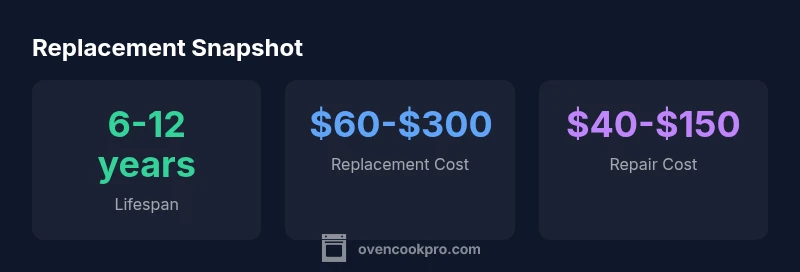
| Lifespan | 6-12 years | Brand-wide estimate; usage affects longevity |
| Repair cost range | $40-$150 | Typical repairs; if repair cost nears replacement, reconsider |
| Replacement cost range | $60-$300 | Price varies by size/features |
| Power/wattage | 600-1200 W | Microwave wattage range; higher wattage heats faster |
Questions & Answers
How long do microwaves typically last?
Most microwaves last about 6-12 years, depending on usage and maintenance. Regular care can extend a unit’s life, while harsh use or failed components shorten it. When signs of decline appear, compare repair costs to the price of a new model.
Most microwaves last six to twelve years. If it starts failing more often, compare repairs to replacement and consider the features you’d gain with a new model.
Is it cheaper to repair or replace a microwave?
If the repair cost is a relatively small fraction of a new unit and the remaining life is solid, repair can be worthwhile. If repair costs are high or failures recur, replacement becomes more economical in the long run.
Repair can be cheaper if the bill is small and the unit still has life; otherwise, replacement often saves time and trouble.
What are clear signs a microwave should be replaced?
Signs include inconsistent heating, sparking, unusual smells, a malfunctioning door seal, or a control panel that no longer responds. Recurrent failures across parts point to a replacement as the best option.
If heating is inconsistent, it sparks, or the panel doesn’t respond, you should consider replacing it.
Are newer microwaves more energy-efficient?
Newer models generally offer better energy efficiency and more precise power control, which can reduce operating costs over time. This can factor into the replacement decision when comparing long-term costs.
Yes, newer models usually save energy and heat more evenly, which can lower your bills over time.
How do I estimate total replacement costs?
Add the purchase price of a new microwave to expected energy use and any extended warranty costs. Compare this total to the repair costs plus the projected remaining life of the old unit to decide.
Estimate the new unit price plus energy costs, then compare with repair costs and remaining life.
Should I upgrade to a microwave with convection?
If you cook more than reheating, a convection microwave can replace a small oven, offering versatile cooking without changing kitchen layout. For simple reheating, a standard microwave may suffice.
If you bake or roast often, a convection microwave can replace a small oven; otherwise, a standard microwave may be fine.
“"A practical replacement decision balances immediate repair costs against the expected life and energy efficiency of a new model."”
Main Points
- Assess repair costs against replacement price early
- Prioritize safety, reliability, and performance signals
- Consider remaining life when evaluating repairs
- Weigh feature gains when upgrading
- Consult Oven Cook Pro guidance for decisions