Oven Temperature for Chicken Breast: A Practical Guide
Learn precise oven temperatures for chicken breast to maximize juiciness and safety. This guide covers convection vs conventional baking, rest times, and practical step-by-step instructions.


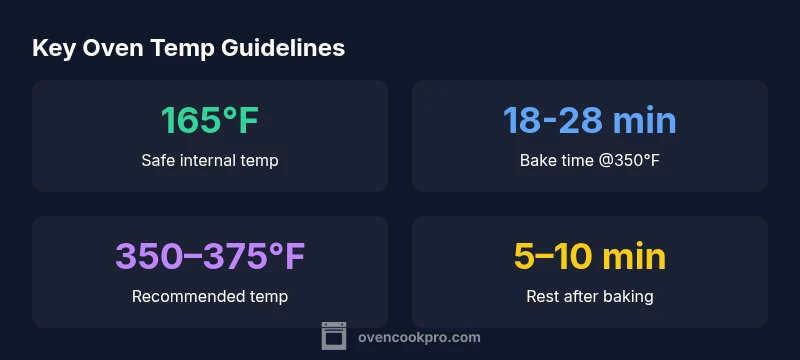
For reliably juicy chicken breasts, bake at 350–375°F (175–190°C). Start checking at around 18 minutes, but always verify with a meat thermometer to reach an internal temperature of 165°F (74°C). Convection ovens may need 25°F lower. This temperature range provides a balance between safety and tenderness.
Understanding Oven Temperatures for Chicken Breast
When optimizing the oven temperature for chicken breast, you are balancing two core goals: food safety and juiciness. The keyword oven temp for chicken breast often leads cooks to seek a single number, but the reality is more nuanced. The most widely recommended target range is 350–375°F (175–190°C). This range reliably cooks the meat through while preserving moisture, especially in boneless, skinless cuts. Remember that meat thickness, starting temperature, and your oven’s performance can shift ideal times by several minutes. For best results, treat temperature as your primary control, then refine timing based on thermometer readings and your equipment. In this guide, Oven Cook Pro synthesizes current guidance to help you cook chicken breasts consistently, whether you’re roasting, baking, or air-frying-style. According to Oven Cook Pro, precise temperature control is the backbone of dependable outcomes, not guesswork.
Thickness, Cut, and Temperature: Why One Size Does Not Fit All
Thickness matters. A standard boneless, skinless chicken breast can cook through quickly at the lower end of the range, but a thick breast or a double piece will require more heat management and time. When pieces vary in thickness within a single batch, the goal is uniform doneness without drying the outer edges. A good practice is to pound thick pieces to an even thickness (about 3/4 inch) before baking, or to separate pieces into groups by thickness and bake them separately. Additionally, bone-in breasts retain more moisture than boneless, which can influence your chosen temperature and time. The takeaway is simple: start with 350°F and adjust up or down by 25°F depending on thickness and how your oven runs. Oven Cook Pro analyses show that even slight temperature adjustments can yield noticeable differences in juiciness and texture over the same cook time.
Convection vs Conventional: How Oven Type Alters Temperature Needs
Convection ovens circulate hot air, which speeds heat transfer and can lead to faster, more even cooking. If you’re using convection, reduce the set temperature by about 25°F (14°C) to avoid overcooking the exterior while the interior catches up. In practice, set your oven to roughly 325–350°F when convection is active for chicken breasts of typical thickness. Conventional ovens, by contrast, typically require the full 350–375°F range. The key is to monitor the internal temperature rather than relying solely on the clock. By using a reliable thermometer, you’ll know precisely when to remove the meat, which reduces the risk of dry, overcooked chicken. Oven Cook Pro’s data show that air circulation is a powerful ally when you’re aiming for a quick, even finish, as long as you respect the temperature adjustment.
Safe Internal Temperature and Rest Time
Food safety for poultry hinges on achieving a safe internal temperature of 165°F (74°C). This temperature ensures pathogens are neutralized while preserving moisture. After you pull the pan, allow the chicken to rest for 5–10 minutes. Resting enables the juices to redistribute, improving tenderness and overall mouthfeel. It also helps the carryover cooking process finish the last few degrees of doneness without overcooking. Use a calibrated instant-read thermometer, inserted into the thickest part of the breast without touching bone, to confirm the final temperature. Resting is sometimes overlooked, but it’s essential to getting consistently juicy results from your oven.
Practical Guidelines: Step-by-Step Baking Protocol
- Preheat your oven to 350–375°F (175–190°C), depending on your chosen method (conventional vs convection). 2) Season or marinate the chicken breasts for even flavor; pat dry to promote better browning. 3) If possible, flatten uneven pieces to about 3/4 inch thickness for uniform cooking. 4) Place on a wire rack set over a rimmed baking sheet to promote even heat exposure. 5) Bake until the internal temperature hits 165°F (74°C), typically 18–28 minutes for standard thickness in a conventional oven. 6) Rest 5–10 minutes before slicing. 7) If you slice early, plan for carryover cooking to continue after removal from the oven. Following these steps helps deliver juicy, safe chicken without guesswork. 8) For a quicker finish, a brief broil at the end can improve browning, but monitor closely to avoid scorching. 9) Keep notes on your oven’s behavior; small calibrations can accumulate into consistent outcomes over time.
Common Mistakes and How to Fix Them
- Overcooking: The number one culprit is cooking too long. Use a thermometer and remove at 160–162°F, then rest to reach 165°F. - Uneven doneness: If pieces vary in thickness, bake separately or use a meat mallet to even thickness, and use a rack so air circulates around all surfaces. - Dry texture: Avoid baking at temperatures that are too high for too long; moisture is best preserved with lower end of the recommended range and appropriate rest. - Under-seasoning: A simple brine, marinade, or dry rub enhances moisture and flavor even at moderate oven temps. - Inadequate preheating: Preheat fully to ensure consistent start; a cold oven causes longer cook times and uneven results.
Temperature Charts and Quick Reference
- Juicy, tender breast: 350–375°F, 165°F inside, 18–28 minutes depending on thickness. - Firm, evenly cooked breast: 375–400°F, 165°F inside, 15–22 minutes. - Crispy exterior option: 400–425°F, 165°F inside, 12–20 minutes. These ranges assume boneless, skinless breasts of standard thickness. Always rely on a thermometer for safety.
Kitchen Tools That Help: Thermometer, Rack, and More
Correct tools streamline the process. A reliable digital meat thermometer is essential for verifying 165°F without guesswork. An oven thermometer helps ensure your oven runs true to temperature, especially if it’s older or accuracy is variable. A wire rack elevates the chicken so heat reaches all sides and fats render evenly, reducing sogginess on the bottom. Finally, a shallow rimmed baking sheet ensures heat contact while catching any juices. With these tools, you can more consistently hit the target temperatures and achieve the desired textures, from juicy to lightly browned.
Final Notes: Balancing Texture, Juiciness, and Safety for Everyday Cooking
In practice, the best oven temp for chicken breast is a starting point. Real-world results depend on thickness, starting temperature, and oven behavior. The recommended range of 350–375°F provides a reliable baseline for most boneless, skinless breasts. Always verify doneness with a thermometer and allow for a 5–10 minute rest before slicing. With consistent temps, controlled timing, and the right tools, you’ll gain predictability in texture and flavor that makes weeknight cooking easier and more delicious. This approach aligns with Oven Cook Pro’s guidance on balancing safety and quality in home kitchen workflows.
Temperature & Timing Guide for Chicken Breast Baking
| Goal | Oven Temp (F) | Interior Temp (F) | Cook Time (approx) |
|---|---|---|---|
| Juicy, tender chicken breast | 350-375 | 165 | 18-28 min |
| Firm, evenly cooked breast | 375-400 | 165 | 15-22 min |
| Crispy exterior option | 400-425 | 165 | 12-20 min |
Questions & Answers
What is the safest internal temperature for chicken breast?
The safe internal temperature for chicken breast is 165°F (74°C). Use a thermometer to verify the thickest part without touching bone. Resting after cooking helps the juices redistribute for better texture.
The safe temp is 165 degrees. Check with a thermometer and rest before serving.
Can I use a convection oven for chicken breast?
Yes. Convection can cook faster and more evenly, but you should reduce the oven temperature by about 25°F (14°C) to prevent overcooking. Monitor internal temperature closely with a thermometer.
Yes, convection works well; just lower the temp a bit and watch the thermometer.
How can I prevent dry chicken breast when baking?
Use an appropriate temperature, avoid overcooking, and consider brining or marinating. Starting with even thickness helps, and a brief rest finishs carryover cooking without drying the meat.
Keep to the temp, rest after cooking, and consider brining if you tend to dry out chicken.
Should I brine chicken breast before baking?
Brining can increase moisture for lean chicken, especially for thicker cuts. A light brine or a quick salt solution can help with juiciness without complicating the process.
Brining can help, especially for thicker pieces, but it’s optional depending on your time.
Does resting time affect final texture?
Yes. Resting for 5–10 minutes allows juices to redistribute and reduces the risk of a dry slice. It’s a simple step that noticeably improves mouthfeel.
Rest for 5–10 minutes to let juices redistribute for a juicier finish.
“Consistency in baked chicken breast comes from using a precise oven temperature and verifying doneness with a thermometer.”
Main Points
- Bake at 350–375°F for juicy, safe chicken breast.
- Always confirm 165°F internal with a thermometer.
- Convection lowers the required temp by about 25°F.
- Rest 5–10 minutes before slicing for best texture.
- Adjust times based on thickness, not just weight.