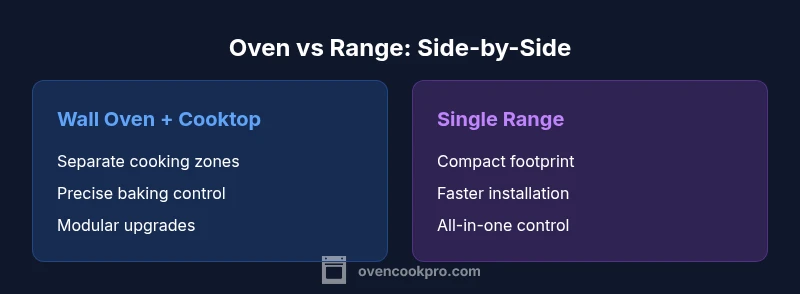
Oven vs Range: A Comprehensive Comparison for Home Cooks
A thorough, data-informed comparison of wall ovens with separate cooktops versus single ranges. Learn layout, performance, energy, cost, installation, and long-term value to decide whether an oven or range best fits your home kitchen in 2026.


TL;DR: When choosing between an oven or range, consider space, flexibility, and cooking习习 style. A wall oven with a separate cooktop offers precise temperature control and zoning, ideal for dedicated bakers and multitasking cooks. A single range saves space and simplifies installation, making it a practical choice for compact kitchens and quick meal prep. The best option depends on layout, habits, and budget.
Understanding the oven or range decision
Choosing between an oven or range goes beyond aesthetics. It shapes how you move through a meal, how you bake, and how you expand or reconfigure a kitchen in the future. In many homes the decision hinges on space, cooking frequency, and the desire for flexibility. A wall oven paired with a separate cooktop can deliver dedicated zones for baking and simmering, while a single range consolidates cooking tasks into one footprint for streamlined layouts. For homeowners evaluating an upgrade, the question is less about one “correct” answer and more about which setup aligns with your lifestyle, kitchen size, and budget. According to Oven Cook Pro, the choice often reflects how you balance precision with convenience, and how easily you can adapt your kitchen as needs evolve.
In this guide we examine the core differences, practical scenarios, and decision factors that help you decide between the two options. We’ll cover layout considerations, performance, energy use, installation demands, maintenance, safety, and long-term value. Throughout, we’ll use the phrase oven or range to frame the core trade-offs and keep the topic front-and-center for home cooks.
Layout and space considerations
Space matters when you compare an oven plus cooktop to a single range. A wall oven often requires a dedicated cabinet column or wall space, plus a separate surface for the cooktop. The result is a flexible layout that can be tailored to traffic flow, drawer storage, and seating zones. This separation also makes upgrades more modular: you can replace or upgrade either the oven or the cooktop independently if your needs change. By contrast, a range combines oven and cooktop into one bulky unit that typically sits in a standard base cabinet. Its footprint is predictable and compact—which can be a major advantage in small kitchens or open-plan spaces. The trade-off is less surface-area flexibility and fewer future remix options if you want to rework the kitchen’s focal point. In real homes, people prioritize whether they want a central cooking hub or a flexible, modular layout that can adapt to future kitchen renovations.
From a design standpoint, consider alcoves, plumbing and gas lines, ventilation requirements, and floor clearance. A wall oven may require wiring and gas routing (depending on model) that influences ceiling height, cabinet depth, and aisle width. Range installations require proper clearance around the cooktop for heat dissipation and safe clearance to cabinetry above the oven. In smaller kitchens, some homeowners choose a compact wall oven in combination with a separate compact cooktop or a slide-in cooktop for a balanced look. When you map the space, the goal is to minimize contention between cooking tasks while preserving a comfortable workflow. The oven or range decision therefore often comes down to how much flexibility you want to preserve in your kitchen layout.
Performance, temperature control, and baking results
When it comes to cooking performance, two questions dominate: how precisely you control oven temperature and how evenly heat distributes during baking. Wall ovens tend to deliver very consistent baking temperatures and can be calibrated to a precise degree. The ability to create separate zones with different temperatures on a wall oven/cooktop configuration is a bonus for bakers or cooks who want to bake multiple items concurrently without temperature creep. Ranges, especially gas ranges, excel in providing rapid heat response and a strong boil, which makes them well suited to tasks that require quick temperature changes. Some cooks also report better keeps-welow browning control with ranges when used in high-heat searing or broiling scenarios. The choice between oven or range can hinge on your most frequent cooking tasks: if you bake bread, pies, and pastries often, a dedicated oven might yield more consistent results; if you frequently boil, fry, or sear, a range’s immediate heat may deliver better day-to-day performance. In all cases, temperature accuracy and preheat behavior vary by model, fuel type (electric vs gas vs dual fuel), and calibration procedures. Oven Cook Pro’s analysis highlights the importance of matching the appliance’s performance profile to your typical menus and batch sizes.
Controls, features, and user experience
Control interfaces differ meaningfully between the two configurations. Wall ovens often come with advanced programming options, multi-rack baking modes, and separate electronic controls for oven and cooktop, which can streamline multitasking. Ranges tend to feature synchronized controls for the burners and oven, with a single interface that some users find simpler. For households that value automation, self-cleaning cycles, programmable timers, and even smart connectivity can tilt the decision toward a wall oven setup or toward a range depending on the brand’s ecosystem. If you bake frequently, you might prefer the flexibility of a separate oven with their own dedicated temperature controls and racks. If you cook most meals on one burner while the oven is warming, a range can offer an efficient, all-in-one experience. It’s essential to evaluate how much you rely on features like child lock, safety shutoffs, and notification alerts, and how these integrate with your existing kitchen workflow.
Energy efficiency and operating costs
Energy efficiency informs long-term operating costs and environmental impact. Wall ovens and ranges can both be efficient when chosen with energy-conscious models and proper capacity planning. In many cases, a dual-fuel configuration—gas cooktop with electric oven—provides a balance of fast heat for boiling and precise, evenly heated baking. On the other hand, all-electric wall ovens paired with induction cooktops can maximize efficiency during heavy baking sessions. It’s important to compare energy ratings, insulation quality, and preheat times rather than relying on nominal oven size alone. Over the long term, the key cost factors include numerous cycles per week, electricity or gas prices in your area, and maintenance of seals and insulation. Oven Cook Pro analyses emphasize evaluating energy efficiency ratings alongside your typical cooking patterns to estimate true operating costs for oven or range setups.
Installation and electrical vs gas requirements
Installation considerations vary depending on whether you pick a wall oven plus cooktop or a single range. Wall ovens generally require dedicated wiring and a robust support cabinet, along with gas line routing where applicable. Cooktops need ventilation planning that aligns with hood specifications. A range can simplify installation because it combines all functions into a single appliance and might reduce the number of separate clearances required in a kitchen island or peninsula. Gas ranges must have gas supply and proper venting; electric ranges require dedicated 240V circuits. The installation complexity and the associated code requirements influence both the upfront cost and the time needed before you can use the appliance. In many homes, the choice between oven or range is guided by the existing electrical and gas infrastructure and whether the kitchen can accommodate a dedicated wall oven column in addition to the range location.
Maintenance, reliability, and longevity
No kitchen setup is maintenance-free, but the maintenance burden differs between configurations. Separate components—an oven plus a cooktop—mean you may service each part independently, potentially lowering downtime if a single component needs replacement. A single range simplifies some service tasks because there is one main unit to diagnose, but a failure can affect both functions at once. Durability often correlates with build quality, door seals, racks, and insulation, so choosing models with proven reliability and accessible replacement parts matters. Regular cleaning, calibration checks, and vent hood compatibility help preserve performance, regardless of configuration. Oven Cook Pro’s long-range guidance stresses that longevity depends on model quality, usage patterns, and how well you maintain door seals and burners, not solely on whether you bought a wall oven or a range.
Safety, ergonomics, and usability for home cooks
Safety considerations are central to any oven or range decision. For households with children or elderly cooks, features like ergonomic door height, latch safety, auto shutoff, and cool-to-touch surfaces can make a big difference. Range designs often place heavier, larger units at floor height, which can impact loading and unloading for shorter users. Wall ovens placed at mid-to-high levels can reduce bending but require careful cabinet design to avoid reaching over hot burners or racks. The ergonomics of control placement, handle reach, and the ability to pre-heat and monitor from a safe distance all influence everyday usability. In real kitchens, practicality—like the ability to clear spills quickly or to access pans comfortably—often tips the balance toward one configuration over the other, even when performance specs are similar.
Real-world cooking scenarios: baking, roasting, and multitasking
Most people use ovens for baking and roasting; ranges dominate for sautéing, boiling, and high-heat cooking. A wall oven’s consistent temperature is ideal for bread, desserts, and large roasts, while a single range excels at searing steaks, boiling pasta, and performing quick meal prep. Some households adopt a hybrid approach: a wall oven for precise baking and a separate powerful range for daily cooking. Multitasking is where the oven or range decision becomes especially relevant—do you often run a casserole in the oven while you simmer sauces on the stove? The practical outcome is that the right choice often aligns with your typical weeknight meals, weekend baking projects, and how much you value simultaneous cooking tasks.
Cost considerations and total cost of ownership
Total cost of ownership for oven or range includes purchase price, installation, energy use, maintenance, and potential replacement cycles. Wall ovens along with separate cooktops can carry higher upfront costs, but they may offer better resale value and longer-term flexibility for renovations. A single range generally costs less to purchase and install, with simpler maintenance but potentially higher incremental upgrade costs if you want to replace one function later. In many homes, the decision factors include upfront budget, expected kitchen renovations, and the importance of being able to upgrade components independently in the future. When evaluating, compare models by energy efficiency, expected repair costs, and availability of replacement parts over a typical 10- to 15-year life cycle. Oven Cook Pro Analysis, 2026 emphasizes thinking about maintenance costs and the likelihood of upgrades when calculating the total cost of ownership for oven or range configurations.
When to choose a wall oven plus separate cooktop
If you bake often, run a multi-dish routine, or want precise, adjustable cooking zones, a wall oven with a separate cooktop offers the best long-term flexibility. This arrangement also allows independent upgrades—you can replace a faulty oven or a failing cooktop without discarding the other. It’s ideal for larger kitchens or open-plan layouts where the oven column can be placed away from the main prep area, improving workflow. If you have tall or awkward storage spaces, this configuration may help you optimize cabinet design while preserving an elegant, professional look. The separation also makes it easier to customize hood height and ventilation around each area for better efficiency.
When to choose a single range
A single range shines in compact kitchens and for cooks seeking straightforward operation. The all-in-one footprint minimizes cabinet depth and simplifies installation, typically reducing upfront costs and legal permitting. Ranges can deliver strong performance for everyday cooking, are familiar to many households, and offer a cohesive interface between burners and oven. If you’re short on space or want a minimal maintenance approach, a range is often the most sensible choice. Additionally, ranges are frequently favored by buyers who prioritize quick boil times on the burners and practical, no-fuss controls during busy weeknights. The key is to align the choice with your cooking patterns, space constraints, and desired upgrade path for the future.
Comparison
| Feature | Wall oven + separate cooktop | Single range (oven + cooktop in one unit) |
|---|---|---|
| Footprint and layout | Requires dedicated cabinet space for oven column + separate cooktop surface; flexible placement within kitchen | Compact footprint; all-in-one unit fits smaller spaces and simpler layouts |
| Cost and value | Higher upfront cost; potential for modular upgrades over time | Lower upfront cost; simpler installation but potentially fewer upgrade options |
| Temperature control and baking performance | Precise temperature control; zoning possible; excellent for baking | Strong heat and fast response; good for quick meals but may offer less control for precise baking |
| Maintenance and repairs | Separate components allow targeted repairs; outages can be isolated | Unified unit may simplify servicing but a single failure can affect both functions |
| Energy efficiency | Depends on model; dual-fuel options can optimize efficiency | Efficient when matched to model type; often similar operating costs per cycle |
| Best for | Serious bakers, larger kitchens, and flexible layouts | Compact kitchens, straightforward use, and budget-conscious buyers |
The Good
- Allows dedicated baking zone with precise control
- Offers flexible kitchen layout and future upgrades
- Independent replacements can lower downtime
- Potentially higher resale value for premium wall-oven configurations
- Better multitasking with separate oven and cooktop surfaces
Drawbacks
- Higher upfront cost and more complex installation
- Requires more space and cabinet planning
- Maintenance may involve multiple components
- Longer project timelines for custom installations
Wall oven plus separate cooktop generally offers superior baking control and layout flexibility, while a single range wins on space, simplicity, and upfront cost.
Choose wall oven plus cooktop if you bake often and want modular upgrades. Opt for a range if tight space, a simpler install, or a tighter budget are your priorities.
Questions & Answers
What is the primary difference between an oven and a range?
An oven is a dedicated baking chamber, often paired with a separate cooktop. A range combines both oven and cooktop in a single appliance. Your choice depends on layout, baking needs, and how you use multiple cooking zones.
The main difference is separation versus all-in-one design. If you bake a lot, you may prefer a dedicated oven; if you want a compact setup, a range might be better.
Is a wall oven more expensive to install than a range?
Typically yes, because a wall oven often requires additional cabinet work, wiring, and possibly a separate cooktop. Installation complexity varies by home and local codes. Compare quotes that include electrical and ventilation work.
Wall ovens usually require more upfront work, but installation costs depend on your kitchen’s layout and local requirements.
Are there energy efficiency benefits to choosing one over the other?
Energy efficiency depends on model, fuel type, and usage. Dual-fuel options can optimize efficiency for heavy baking, while induction-equipped cooktops paired with electric ovens can minimize energy waste.
Energy efficiency depends on the model and usage patterns, not just the configuration.
Can I add a wall oven later if I buy a range now?
Yes, in many cases you can retrofit by adding a wall oven later, but it may involve significant cabinet modification and wiring. Plan for future expansion during initial kitchen design.
You can upgrade later, but it may require substantial remodeling depending on your kitchen.
What safety features should I look for in these appliances?
Look for auto shutoff, child lock, cool-to-touch surfaces, and sturdy door latches. Ventilation compatibility and proper hood venting’re essential for safe operation in either setup.
Prioritize safety features like auto shutoff and child locks for peace of mind.
Which setup is better for a small kitchen?
In tight spaces, a compact range often wins for footprint, ease of installation, and cost. A wall oven with a narrow cooktop can also work if space permits and layout supports it.
For small kitchens, a compact range often works best, unless you can fit a wall oven column with a compact cooktop.
How does maintenance differ between the two options?
Separate components may require servicing individually, while a single range consolidates maintenance. Regular cleaning and seal checks help both configurations perform better.
Maintenance varies by model, but regular upkeep matters for both setups.
Main Points
- Prioritize baking frequency to guide the choice.
- Plan floor space before selecting a configuration.
- Compare energy options and preheat behavior across models.
- Expect higher upfront costs with wall-oven setups.
- Seamless maintenance may favor ranges in small kitchens.