Oven and Stove Combo: A Practical Guide for 2026
Explore how to choose, install, and use an oven and stove combo. Compare built-in vs separate units, assess space, cost, and maintenance with expert guidance from Oven Cook Pro.


For most homeowners, an oven and stove combo offers space efficiency and streamlined controls, but the choice depends on kitchen layout, performance needs, and budget. In this guide, we compare built-in combos with separate appliances to help you decide which setup suits you best. According to Oven Cook Pro, these combined units save space in small kitchens and simplify installation, but may limit upgrade paths and repair options.
What is an oven and stove combo?
An oven and stove combo refers to a single appliance footprint that houses both a cooking oven and a stovetop or range in one integrated unit. This design is popular in spaces where wall space is at a premium or where designers want a seamless, built-in look. The term also covers built-in wall ovens paired with a drop-in or slide-in cooktop, as well as compact island units that tuck under cabinetry. For homeowners, the primary appeal is a cohesive aesthetic and potentially simpler maintenance paths since a single brand and model line governs both functions. When evaluating an oven and stove combo, it’s important to assess reliability, control layout, door alignment, and the quality of heat distribution in both the oven and the burners. From the Oven Cook Pro perspective, the appeal of a combo lies in space savings and predictable performance, especially in kitchens with a strict footprint or unique island configurations.
The keyword to keep in mind is balance: the goal is to maximize usable space without compromising basic cooking tasks like baking performance, browning on the grill, and safe handling of hot surfaces. In practice, you’ll encounter variations such as built-in wall ovens with separate gas or electric cooktops, single-fuel versus dual-fuel configurations, and models with smart features that integrate timers, probes, and preset modes. Understanding the basic architecture helps you compare models more effectively when you navigate product specs and real-world reviews.
For most households, the decision hinges on where you cook, how much you cook, and how much you value a unified control surface. As you weigh options, keep in mind that a true oven-and-stove combo may require professional installation and careful ducting or venting planning, particularly in retrofit projects. It’s not just about looks; it’s about reliability, serviceability, and how easily you can repair or upgrade components in the future.
valuesUiNoteInvalidReasoning
Comparison
| Feature | Oven and stove combo (single unit) | Separate oven + range (two appliances) |
|---|---|---|
| Installation complexity | Lower (single installation) | Higher (two units + alignment) |
| Footprint/space | Compact footprint | Larger footprint in most kitchens |
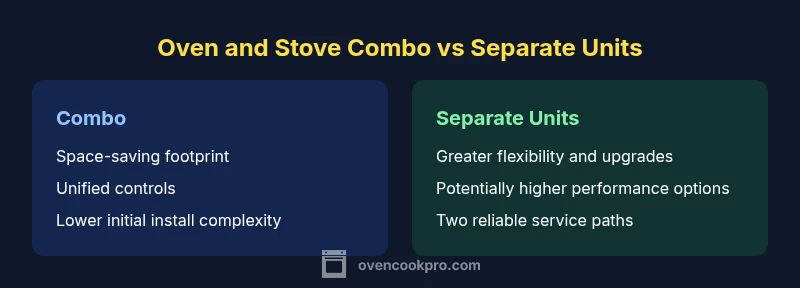
| Upgrade flexibility | Limited upgrade path | Flexible upgrades (independent units) |
| Repair access & parts | Single service path | Two service paths (oven + range) |
| Control interface | Unified panel (one interface) | Separate interfaces (dual controls) |
| Energy efficiency | Comparable efficiency by model | Potential for optimized pairing (depending on models) |
| Best for | Small spaces, built-in look | Larger kitchens, layout flexibility |
The Good
- Space-saving footprint ideal for small kitchens
- Unified design and simple control layout
- Often easier to install in a compact footprint
- Cohesive aesthetic with other built-in appliances
Drawbacks
- Limited upgrade paths and service options for specific components
- May provide fewer high-end performance options for chefs
- Resale: some buyers prefer traditional separate appliances
Separate ovens and ranges generally win on flexibility and performance; combos excel where space and cohesive design matter most.
Choose a combo when you need maximum space efficiency and a clean integrated look. Opt for separate units if you value upgrade paths, specialized performance, and easier service.
Questions & Answers
What is an oven and stove combo?
An oven and stove combo is a single built-in footprint that combines an oven and a cooktop or range. It’s designed to save space and create a seamless kitchen look. Performance varies by model, so compare heat distribution, temperature accuracy, and control interfaces carefully.
An oven and stove combo is a single built-in unit that combines oven and cooktop. It saves space and creates a seamless kitchen look; check heat distribution and controls when choosing.
What are the main advantages of a built-in combo?
The primary benefits are space efficiency, a cohesive aesthetic, and often simpler installation in compact kitchens. Many models also integrate smart features for timers and presets, improving overall usability.
Key benefits are saving space, a unified look, and easier installation in small kitchens with some models offering smart features.
Are there downsides to choosing a combo over separate appliances?
Yes. You may face limited upgrade options, potential repair constraints, and fewer high-end performance configurations. If one component fails, you might need a broader service visit for the whole unit.
Downsides include fewer upgrade options and possibly tougher repairs since components are integrated.
Can a combo unit be upgraded later?
Upgrading is usually more constrained with a single-unit combo. If you expect evolving needs, consider dual-appliance setups that let you upgrade the oven or the cooktop separately.
Upgrading a combo is often limited; better to plan for future flexibility with separate appliances.
What installation considerations should I plan for?
Plan for venting, electrical or gas supply alignment, and cabinetry fit. A professional installer helps ensure safe installation and optimal performance.
Ventilation, utility connections, and cabinet fit are key; hire a pro to ensure safe installation.
Is a combo worth it for a gourmet kitchen?
For many gourmet cooks, precision and flexibility trump space savings. Separate high-end ovens and ranges often offer better control, thermal stability, and upgrade paths.
For gourmet cooking, separate units usually deliver more control and precision, though a well-chosen combo can suffice in tight spaces.
How do I compare models effectively?
Start with size, fuel type, temperature accuracy, and control interface. Check reviews for real-world performance, and verify service availability in your area.
Compare size, fuel, temperature accuracy, and controls; read reviews and confirm service options.
What maintenance should I plan for?
Follow the manufacturer’s cleaning schedule, avoid harsh chemicals on seals, and schedule regular professional checks. Proper maintenance extends appliance life and saves energy.
Maintain with regular cleaning and periodic professional checks to extend life and efficiency.
Main Points
- Assess your kitchen space before choosing a single-unit vs dual-appliance setup
- Prioritize models with reliable temperature control and consistent heat
- Consider installation complexity and venting requirements
- Factor in maintenance and potential future upgrades
- Balance aesthetics with practical needs and budget