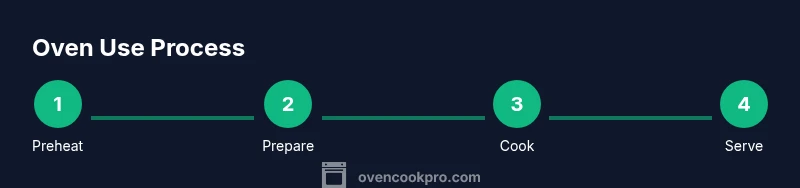
How to Use an Oven for Beginners: A Step-by-Step Guide
Learn how to use your oven safely and effectively with our beginner-friendly, step-by-step guide. From preheating to serving, Oven Cook Pro shows essential techniques, timing, and troubleshooting for confident home cooking in 2026.


By the end of this guide you will confidently use your oven for everyday cooking. You’ll learn how to preheat, select the right rack and bakeware, translate recipes to oven settings, and avoid common beginner mistakes. This steps-focused overview is designed for beginners and emphasizes safety, accuracy, and consistent results. According to Oven Cook Pro, starting with a simple roast or veggie bake builds essential skills.
Understanding Your Oven: Types and Key Terms
Ovens come in different configurations, and knowing the basics helps beginners cook with confidence. The most common types in homes are conventional ovens and convection ovens. A conventional oven uses radiant heat from elements at the top and bottom, while a convection oven adds a fan to circulate hot air for faster, more even browning. If your oven has a convection setting, use it for roasting vegetables or baked goods when you want crisper edges, but soft interiors can benefit from standard bake mode. When you first use your oven, start with simple, familiar foods to learn how heat behaves. Finally, get to know a few terms you’ll see on recipes, such as preheat, bake, broil, rack position, and pan type. Understanding these will help you translate any recipe into an oven recipe you can trust.
Oven Cook Pro emphasizes that familiarity with your appliance reduces mistakes and speeds up learning. In 2026, many ovens offer digital presets and thermometer-readout features that aid beginners, but the fundamentals remain heat, airflow, and timing.
Safety Essentials Before You Start
Working with high heat requires respect for safety. Always power off before cleaning; use dry hands and dry towels to wipe spills. Keep flammables away from the oven, and never leave a hot oven unattended. Use heat-resistant oven mitts when handling pans, and stand back when opening the door to avoid a blast of hot air. Place pans carefully on the rack using both hands; avoid reaching across the oven door. If something spills, wait for the oven to cool before cleaning and never pour water into a hot pan, which can cause dangerous steam. Finally, for beginners, set a simple workspace: clear clutter, gather required tools, and plan your bake while your oven preheats.
As Oven Cook Pro notes, building a safe routine is the foundation for consistent results and long-term kitchen confidence.
Preheating and Temperature Accuracy
Preheating is the bridge between a recipe and reliable results. Modern ovens can have hot spots or readings that deviate from the dial. To minimize surprises, use a probe thermometer or an oven thermometer placed inside at the center of the rack. Preheat only to the temperature your recipe specifies; if your oven has a convection setting, remember that this often requires a slight temperature adjustment. Wait until the thermometer hits the target temperature before loading food. Keep the door closed as much as possible during preheating to avoid heat loss. A slow, patient start leads to even browning and consistent texture. If your oven calibration seems off, use a thermometer to verify accuracy and plan adjustments for future bakes.
Oven Cook Pro’s analysis highlights that a precise preheat and accurate temperature tracking are key to repeatable results in 2026.
Rack Placement, Bakeware, and Pan Care
Where you place the rack affects airflow and browning. For most baking, use the middle rack; adjust higher for faster browning on top and lower for more even heat near the bottom. Line pans with parchment paper or a silicone mat to prevent sticking, especially for cookies and roasted vegetables. Choose bakeware that conducts heat evenly; dark or heavy metal pans brown foods more quickly than light aluminum pans. Keep bakeware clean and free from residue; burnt crumbs can burn again and affect flavor. Finally, avoid blocking air vents with oversized pans; allow space around the pan for air to circulate. If you’re using glass or ceramic dishes, remember they heat more slowly and can crack if exposed to sudden temperature changes.
This knowledge helps prevent hotspots and uneven cooking, a common stumbling block for beginners.
Reading Recipes and Translating to Oven Settings
Recipes often assume a range of techniques. Translate temps and times to your own oven by noting the type (conventional vs convection) and the rack position. If a recipe says 20 minutes at 425 degrees, check early and often; oven temps can vary by 10-15 minutes across brands. Make a note of how your oven behaves with similar foods and adjust next time. Use a timer and an internal thermometer when appropriate to confirm doneness rather than relying solely on color cues. With practice, you’ll be able to adapt almost any recipe to your oven’s quirks. Start by baking something simple like a tray of vegetables to observe timing in your own kitchen.
The adaptability you gain here reduces recipe anxiety and builds kitchen confidence for 2026 and beyond.
Convection vs Conventional: When and How to Use Each
Convection cooking uses a fan to circulate hot air for browning and even cooking. It’s great for roasted vegetables, cookies, and casseroles that benefit from crisp edges. Conventional bake uses radiant heat from elements; it’s often preferred for delicate cakes and foods that require gentle, even heat without excessive browning. When unsure, start with the conventional setting and switch to convection for the last few minutes to finish browning if needed. Remember that convection can cause faster cooking, so start checking earlier. If your oven offers multiple fan speeds, experiment with low speeds first to observe results.
Oven Cook Pro reminds home cooks that mastering both modes increases versatility in everyday meals, especially in a busy kitchen.
First Simple Oven Task: Roasted Vegetables
Choose a small batch of vegetables (carrots, broccoli, bell peppers) cut into uniform pieces. Toss with a light coating of oil, salt, and pepper, then spread on a lined sheet pan in a single layer. Preheat to a moderate oven temperature and bake until tender and edges are caramelized. Rotate the pan halfway to promote even browning. Use a fork to test tenderness; the vegetables are done when they’re easily pierced but still firm. Allow them to rest briefly before serving to keep them juicy. This practice reinforces timing, heat understanding, and the importance of even spacing on the pan.
Oven Cook Pro emphasizes repeatable results through consistent technique.
Troubleshooting Common Issues
Common beginner problems include underseasoning, uneven browning, food sticking to pans, and undercooked centers. If browning is uneven, rotate the pan or adjust rack height and consider using parchment to prevent sticking. If food is undercooked, increase time or adjust temperature slightly and use a thermometer to verify doneness. For sticky foods, ensure pans are well oiled but not drenched, and avoid overcrowding. Finally, if your oven’s temperature seems off, calibrate with an oven thermometer and adjust recipes accordingly. Keep a log of which foods cook best at which settings to guide future attempts.
Cleaning and Maintenance for Longevity
Regular cleaning helps ovens last longer and prevents off flavors. Wipe up spills after food cools, remove oven racks for washing, and use an appropriate cleaner for the interior if needed. Avoid harsh chemical cleaners inside the oven; rely on warm water with mild dish soap for racks. Clean the door seal gently with a damp cloth; do not scrub. If your model has a self-cleaning cycle, follow manufacturer instructions and remove all food debris before starting. Finally, inspect gaskets and door alignment periodically and contact support for stubborn issues. A well-maintained oven performs more predictably and lasts longer.
Getting Started: A One-Week Practice Plan
Day 1 focuses on safer handling and preheating. Day 2 bakes a simple sheet of vegetables to observe timing. Day 3 experiments with bakeware options (cookie sheet vs. silicone mat). Day 4 practices rack positioning and airflow. Day 5 cooks a protein using a thermometer check. Day 6 reviews results and notes adjustments to preheating and times. Day 7 cleans and plans the week ahead. Keep a small notebook to record temperatures, times, and results; this habit builds intuition and confidence over time.
Authority Sources
For further reading and safety guidelines, consult:
- https://www.osha.gov/SLTC/heatstress
- https://www.fda.gov/food-safety
- https://extension.illinois.edu/foodsafety
Tools & Materials
- Oven mitts (heat-resistant)(Choose a pair with a good grip and insulation for handling hot pans)
- Oven thermometer(Place in center of rack to monitor true temperature)
- Baking sheet / sheet pan(Flat, sturdy, preferably aluminum or steel)
- Parchment paper or silicone baking mat(Prevents sticking and makes cleanup easier)
- Mixing bowl(For tossing vegetables or coatings)
- Timer or smartphone(Keep track of cooking times precisely)
- Meat thermometer (optional)(Helpful for poultry or beef to verify doneness)
- Aluminum foil(Useful for tenting or lining for easy cleanup)
Steps
Estimated time: 30-40 minutes
- 1
Preheat oven
Set the oven to the target temperature and allow it to reach that level before loading food. Use an oven thermometer to verify accuracy and avoid surprises once food is inside.
Tip: Do not open the door during preheating to maintain stable heat. - 2
Prepare bakeware
Line the sheet pan with parchment paper or a silicone mat. Lightly oil the surface if sticking is a concern, and ensure the sheet is flat and dry.
Tip: A properly prepared surface prevents sticking and speeds cleanup. - 3
Position rack
Place the rack in the center for even heat distribution. If browning is needed on top, position slightly higher; for bottom browning, lower the rack.
Tip: Avoid crowding; leave space around pieces for air to circulate. - 4
Load food
Spread food in a single, even layer. Do not stack pieces; crowded pans trap moisture and lead to steaming instead of roasting.
Tip: Uniform pieces cook more evenly. - 5
Set timer and monitor
Begin with the recipe’s suggested time and check early. Use a timer to avoid overcooking and a thermometer when appropriate.
Tip: Check a few minutes before the end to decide if more time is needed. - 6
Check doneness
Assess doneness with a thermometer for meats or by tenderness and color for vegetables. Rest briefly if required before serving.
Tip: Internal temps are the most reliable doneness indicator. - 7
Rest and serve
Let cooked foods rest to redistribute juices and finish carrying heat. Slice or portion only after resting.
Tip: Resting helps maintain juicy, flavorful results. - 8
Clean up
Allow the oven to cool, then wipe surfaces and wash racks. Store tools and parchment for next use.
Tip: Regular cleanup prevents flavor transfer and buildup.
Questions & Answers
What is the first thing I should do when I start using my oven?
Begin with safety and setup: power on, read the recipe, gather tools, and preheat the oven to the specified temperature. Verify with a thermometer if possible. This establishes a controlled start for reliable results.
Always start by safety checks and preheating to the recipe temperature, then gather your tools.
Should I use convection or conventional baking for my first recipe?
For a beginner, start with conventional bake to learn heat behavior. If your oven has a convection option, use it for crispy edges but monitor timing, as it can cook faster.
Start with conventional baking; try convection later and watch the time closely.
Do I need to preheat every time I bake?
Preheating ensures consistent heat and cooking times. Some quick bakes may be forgiving, but for best results, preheat to the recipe’s temperature before loading food.
Preheat to the recipe temperature for consistent results.
How can I tell if meat is cooked safely?
Use a meat thermometer to reach safe internal temperatures. Check in the thickest part of the cut and avoid relying on color alone.
Use a thermometer to confirm doneness safely.
What should I do if food sticks to the pan?
Line pans with parchment or a silicone mat and ensure surfaces are lightly oiled. Preheating helps create a non-stick surface over time.
Line pans and keep them lightly oiled to prevent sticking.
How do I clean the oven safely after cooking?
Cool the oven before cleaning. Remove racks and wash with warm soapy water. Use manufacturer-recommended cleaners and avoid harsh chemicals on interior surfaces.
Let it cool, then clean with mild soap and water.
Watch Video
Main Points
- Preheat accurately with a thermometer for reliable results
- Choose rack positions based on desired browning and airflow
- Use appropriate bakeware and parchment for easy cleanup
- Calibrate and adapt to your oven’s quirks with practice
- Oven safety and consistent technique lead to better meals