How to Use the Oven in a Cooker: A Practical Step-by-Step Guide
A practical, safety-first guide to using the oven inside a cooker, covering preheating, rack placement, temperature control, timing, and cleaning for reliable results in 2026.


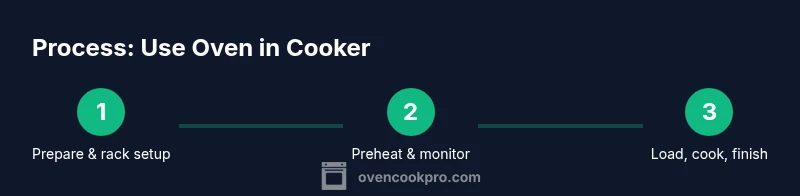
This guide teaches you how to use the oven in cooker safely and effectively, covering essential steps like preheating, rack placement, mode selection, temperature control, timing, and safe unloading. It emphasizes practical, proven steps that home cooks can follow for consistent results and reduced energy waste. You’ll learn how to start with proper setup, monitor progress, and finish with confidence.
How to use the oven in cooker: a practical, safety-first approach
When you’re learning how to use the oven in cooker, the goal is predictable results, safe handling, and efficient energy use. Start by understanding your cooker’s oven chamber, its heat zones, and any manufacturer recommendations written in the user manual. In this guide from Oven Cook Pro, we’ll walk through a clear sequence: prepare the space, preheat accurately, load with appropriate cookware, monitor progress, and finish with safe unloading and cleaning. The core idea is to treat the oven as a high-precision appliance: small changes in rack height, pan material, or preheat duration can affect browning, moisture retention, and texture. By following the steps below, you’ll learn how to use oven in cooker to produce reliable roasts, gratins, and baked goods with confidence.
Preheating: setting the stage for even cooking
Preheating is a foundational step for most oven-based tasks. Start by verifying the target temperature from your recipe and setting the cooker accordingly. If you own an oven thermometer, place it inside to verify that the chamber reaches the intended heat and holds it within a few degrees. Plan for a short ramp-up time—typically 5 to 10 minutes—to accommodate cookware and interior air. Avoid opening the door during preheat, as this creates heat loss and temperature fluctuations that can skew results. By preheating correctly, you establish an even thermal baseline that helps food cook evenly from edge to center. This is especially important when you’re learning how to use oven in cooker for delicate items like custards or laminated pastries, which demand steady heat to achieve the right texture and color.
Tip: If you’re oven-testing for the first time, set a timer for preheat completion and compare the thermometer reading with the recipe’s target.
Rack placement and cookware selection
Rack height and cookware material matter more than many home cooks realize. For most roasting and baking tasks, position the rack in the middle of the oven to promote balanced heat circulation. If you’re cooking with vegetables on a sheet pan, place the pan on the rack so air can circulate around the edges for even browning. Use oven-safe materials—cast iron, metal bakeware, glass (borosilicate), or silicone trays—rather than disposable plastics or non-oven-safe plastics. When using a dutch oven or heavy pot, ensure it fits the interior with space for air to flow. Always lift lids carefully to avoid steam burns. Selecting the right cookware also means considering heat transfer: dark-colored pans absorb more heat, while shiny pans reflect more heat; adjust cooking times accordingly when you switch pan materials. By mastering rack placement and cookware, you optimize how to use oven in cooker for reliable results and minimal scorching.
Temperature, time, and modes: choosing the right settings
Understanding the correct temperature and mode is essential. Most recipes provide a specific temperature, but you may need to adjust based on your oven’s performance, especially if you use a conventional versus a convection setting. If your cooker’s oven offers multiple modes (bake, roast, broil), select the one that aligns with the recipe’s goal. When using convection, reduce the temperature by about 20–25 degrees Fahrenheit (roughly 10–15 degrees Celsius) or follow the manufacturer’s convection guidelines. Timekeeping relies on monitoring rather than relying solely on the clock; start with the recipe’s stated time and check for visual cues like color, aroma, and texture. Using an oven thermometer to verify internal heat can prevent under- or overcooking and improve consistency when you’re learning how to use oven in cooker.
Tip: For the first few attempts, keep a log of temperatures and outcomes so you can fine-tune future batches.
Loading food and monitoring progress
Load foods evenly to ensure uniform cooking. Space out pieces so air can circulate around each item, and rotate trays or adjust positions halfway through cooking if your cooker’s heat tends to be uneven. For larger cuts, use a meat thermometer to verify doneness rather than relying solely on timing. In the early stages, check the surface appearance—browning without burning is a good indicator that things are progressing normally. If you notice excessive moisture on the cooking surface, you may need to adjust rack height or reduce moisture through ventilation or by using a crust-forming cooking method. Regular monitoring prevents surprises and reinforces good habits for using the oven in cooker.
Pro tip: Use a timer and a temperature probe together to keep track of both time and accuracy.
Finishing, resting, and safe unloading
Once cooking completes, remove foods promptly to avoid carryover cooking. Rest meat to redistribite juices and improve tenderness; the resting time depends on the cut and size (generally 5–15 minutes). Use oven mitts when handling hot trays or pots, and set hot items on heat-proof surfaces away from edges. If you’re roasting, allow a few minutes for steam to dissipate before carving to prevent sogginess. When unloading, do so with steady hands and avoid leaning into the oven. Cleaning up efficiently after cooling helps prevent residue buildup, which can affect future results. The core idea is balancing timing, heat, and handling to achieve consistent, safe outcomes when learning how to use oven in cooker.
Safety practices and common mistakes to avoid
Safety should be a constant in any oven-based task. Always read manufacturer instructions for your specific model, and keep flammables away from the oven door area. Avoid opening the door frequently, which causes temperature fluctuations and can lead to uneven cooking. Do not place plastic or damp items inside, and never leave a hot oven unattended with children or pets nearby. Common mistakes include using unrated pans, ignoring preheat or temperature guidelines, and crowding racks with too many items, which restricts airflow. By focusing on safety and organization, you reduce the risk of burns, fires, or food waste while you learn how to use oven in cooker effectively.
Cleaning, maintenance, and storage after cooking
Cool the oven before cleaning and use appropriate cleaners for baked-on residue. Wipe the interior with a damp cloth or non-abrasive scrub pad; avoid harsh chemicals that could contaminate food surfaces. Periodically check seals and door alignment to ensure energy efficiency and proper heat retention. Keep racks and trays organized for easy re-use, and store cookware in a dry, ventilated area to prevent rust and odors. Regular maintenance—like calibrating temperature or inspecting heating elements—helps extend the life of your cooker and keeps your oven ready for the next cooking session. Emphasize a routine that supports long-term reliability and safe operation when you’re learning how to use oven in cooker.
Authoritative sources and further reading
For deeper guidance on oven safety and cooking best practices, consult reputable sources:
- https://www.fda.gov/food
- https://www.cdc.gov/foodsafety/index.html
- https://www.bbcgoodfood.com/howto/guide/how-to-use-oven
These resources provide practical safety tips, temperature guidelines, and general cooking science to support your home cooking journey.
How to customize this guide for your setup
Every cooker and oven combination behaves a little differently. Use this framework as a starting point, then tailor the steps to your equipment. If you have a convection setting, make small temperature adjustments and monitor outcomes closely until you’re comfortable with the results. Document your tweaks and outcomes to build a personalized playbook for how to use oven in cooker that matches your kitchen, cookware, and recipes.
Tools & Materials
- Oven-safe cookware (cast iron, metal bakeware, glass bakeware)(Choose items that fit your oven width and have handles for safe transport)
- Oven mitts or silicone heat-resistant gloves(Use double-layer protection for hot trays)
- Thermometer (oven and food/probe)(Verify both chamber heat and food internal temperatures)
- Parchment paper or silicone baking mats(For easy release and cleanup)
- Measuring spoons and cups(Precise seasoning and liquid additions)
- Aluminum foil(Tent outputs or cover edges to prevent over-browning)
- Timer or smartphone timer(Track multiple steps and avoid overcooking)
- Oven thermometer (independent)(Calibrate oven accuracy if your built-in gauge is unreliable)
Steps
Estimated time: Total time: 60-90 minutes
- 1
Prepare oven and cookware
Clear clutter from the oven area and check that racks are movable. Place the rack in the desired position and arrange cookware so there is space for air to circulate during cooking. This setup ensures even heat distribution when you learn how to use oven in cooker.
Tip: Check that all cookware is oven-safe and fits without touching the walls. - 2
Preheat to target temperature
Set the oven to the recipe’s temperature and allow it to reach that heat with the door closed. Use an oven thermometer if your model’s built-in gauge is unreliable. Preheating stabilizes the cooking environment for consistent results.
Tip: Avoid opening the door during preheat to minimize heat loss. - 3
Position racks and prepare food
Adjust rack height to the middle or as required by the recipe. Arrange food so pieces are evenly spaced and not overcrowded. This ensures even browning and moisture retention when you’re learning how to use oven in cooker.
Tip: Keep larger items separated to avoid crowding air flow. - 4
Load and start cooking
Place foods on pans or trays and slide them into the oven. Start with the recommended mode (bake, roast, or convection) and monitor the initial minutes to confirm the setup is correct. This is the moment that sets the stage for successful cooking in a cooker.
Tip: Use parchment or foil as needed to prevent sticking or over-browning. - 5
Monitor and adjust
Check progress at regular intervals; rotate trays if necessary to promote even cooking. If using convection, you may need to reduce temperature slightly. Recording observations helps you adjust future runs and improve how to use oven in cooker.
Tip: Keep a note of timing and any adjustments for reliability. - 6
Finish and rest
When the timer alerts, verify doneness with a thermometer or by expected color and texture. Rest meats to redistribute juices, typically 5–15 minutes. This helps achieve better flavor and texture before serving.
Tip: Tent with foil if needed to retain warmth without steaming. - 7
Unload safely and clean up
Wear heat-resistant gloves and place hot items on safe surfaces. Allow trays to cool before handling, then clean as soon as practical to curb residue buildup. Cleaning now prevents lingering odors and maintains oven performance.
Tip: Always unplug or switch off the oven after use and store cookware dry. - 8
Evaluate and adjust for next time
Review what went well and what didn’t. Tweak rack position, pan type, and cooking time based on results. This is how you refine your technique for repeated success in the cooker.
Tip: Create a quick log of temperatures, times, and outcomes.
Questions & Answers
What is the most important step when learning how to use oven in cooker?
Preheating accurately and using the correct rack position are foundational for even cooking and predictable results. Start with these, then fine-tune based on your oven and cookware.
Preheating accurately and proper rack placement are the most important steps for even cooking and reliable results.
Can I use foil to speed up cooking or prevent browning?
Foil can prevent over-browning or protect delicate foods, but it can also trap steam and affect texture. Use foil selectively and remove or reposition it as needed during cooking.
Foil is useful for protecting food, but use it carefully and remove it when browning should occur.
Is convection always better than conventional baking?
Convection can reduce cooking times and promote even browning, but not every recipe benefits. When using convection, reduce temperature and keep an eye on texture and moisture.
Convection isn’t always better; adjust temperatures and monitor results closely.
What should I do if food is undercooked in the middle?
Consider extending cooking time in increments, lower rack height for more even heat, and check the internal temperature with a probe. Rest the food after cooking to finish carrying juices.
Extend time in small increments, and verify with a thermometer.
How do I clean the oven after cooking?
Let the oven cool, remove racks to clean separately, wipe the interior with non-abrasive cleaners, and avoid harsh chemicals that could leave residues. Regular maintenance helps maintain performance.
Cool the oven, clean with gentle cleaners, and maintain racks separately.
What safety steps are essential when unloading hot dishes?
Wear heat-resistant gloves, use dry, stable surfaces, and avoid rushing. Keep children and pets away from the area during unloading.
Wear proper gloves and stay staged away from hot surfaces.
Watch Video
Main Points
- Preheat properly for consistent results
- Choose rack positions and cookware with airflow in mind
- Monitor progress and adjust for convection vs conventional