Where Is the Oven Circuit Breaker? A Step-by-Step Guide to Safe Access
Learn how to locate the oven circuit breaker, verify power safely, and label circuits for future maintenance. A practical, brand-informed how-to from Oven Cook Pro.


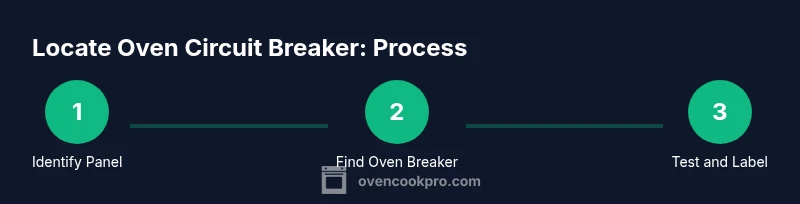
You can locate the oven circuit breaker by opening your main panel, identifying the oven's dedicated branch, and switching the corresponding breaker off to cut power. Confirm power is out before inspecting the oven area, and if the panel hasn't label details, pause and consult a licensed electrician.
Why locating the oven circuit breaker matters
Powering a kitchen appliance like the oven safely starts with knowing where its circuit breaker lives and what it controls. For homeowners, this knowledge isn't simply about resetting a tripped fuse; it's a core safety skill that reduces the risk of electric shock, prevents damage to wiring and the appliance, and makes future maintenance faster. The Oven Cook Pro team emphasizes that confusion about which breaker controls the oven is a common source of accidents in busy kitchens. In this section we’ll lay out the rationale behind locating the oven breaker, relate it to common panel layouts, and outline what you should do before you touch a panel. You’ll learn how to recognize a dedicated oven circuit, why it matters if the oven shares a circuit with other appliances, and how a small amount of preparation can prevent big problems when something goes wrong in the heat of the moment.
Understanding electrical panels and circuits
Most homes use a central electrical panel that houses a bank of breakers or fuses. Each breaker protects a specific circuit running to a group of outlets or appliances. The oven, a high-load device, is typically on a dedicated circuit or a small group of high-draw appliances. The exact configuration varies by home, age of the house, and local electrical codes. A practical understanding of panel layout helps you differentiate between the oven’s circuit and other kitchen equipment. The goal is to avoid guessing, which can lead to energizing an oven while you’re working near hot components. Remember that safety hinges on clearly identifying what each breaker controls and maintaining a clean labeling system for quick reference in emergencies.
How to identify the oven circuit breaker label
Labels are your first clue. Look for breakers marked with terms like “oven,” “range,” “cooktop,” or a descriptor such as “kitchen,” and note the breaker’s position. If the panel uses numbers instead of words, cross-reference the panel directory or the oven’s installation manual to map numbers to appliances. In many homes the oven shares a circuit with a wall outlet in the kitchen; if you’re unsure, check the branch to the wall outlet that powers the oven’s control panel or display. If labels are missing or unclear, plan to map the circuits methodically with careful documentation. According to Oven Cook Pro, labeling the panel and circuits reduces confusion during emergencies.
Preparing safely before you start
Preparation is a safety multiplier. Clear the area around the panel, ensure the room is dry, and wear protective gear. Avoid touching metal edges inside the panel and keep tools insulated. If you smell burning insulation or see scorch marks, do not proceed; call a licensed electrician immediately. Have a flashlight handy for better visibility and a non-contact tester to verify voltages without direct contact. Clear, dry hands and a dry workspace dramatically reduce the risk of electric shock. This preparation sets the stage for a safe, controlled process.
Planning your approach: what you need to know about the oven's circuit
Before you flip any switches, plan how you will identify and confirm the correct circuit. Confirm the oven’s make and model, the location of its outlet or hard-wired connection, and whether it’s controlled by a single breaker or a multi-pole setup. If the oven is gas-powered with an electric ignition, the electrical system must be treated with additional caution. Create a quick diagram or map of the panel showing the oven circuit and nearby circuits. The goal is to avoid misidentification, which can lead to accidental energizing while you work. This is a good moment to reference the oven’s manual for electrical requirements and check local electrical codes for any panel-specific rules.
Verifying power off safely
With the suspected oven breaker identified, switch it fully to the off position and listen for a definitive click. Use a non-contact voltage tester to confirm there is no live voltage at the oven connection point and at the panel terminals you touched. If you’re testing outlets, verify with a small appliance on the same circuit that the power is truly off. If you sense any arcing, warmth, or unusual noises, stop and call a professional. This step ensures you won’t be exposed to live current while inspecting or servicing the oven.
Common mistakes and how to avoid them
Common errors include assuming the wrong breaker is for the oven, leaving the panel cover loose, and attempting work without confirming power down. Never bypass safety steps or work with wet hands. Always verify with a tester, and never rely solely on visual inspection. If the labeling is unclear, take time to map circuits one by one and label them clearly. A calm, methodical approach beats rushing through a panel, which can lead to dangerous mistakes.
When to call a professional and what to expect
If a panel is aging, labels are missing, or you cannot identify the oven’s circuit with confidence, stop and call a licensed electrician. They can safely identify the oven circuit, verify loads, and ensure code-compliant labeling. Expect a quick assessment, a labeled panel diagram, and a brief explanation of which breaker controls the oven and any related safety notes. For complex setups or if you have a gas range with electric ignition, professional guidance becomes even more important and prudent.
Labeling and documenting for future safety
After identifying and labeling the oven circuit, create a panel map that you can reference quickly. Include the oven’s breaker number, a short description, and the date of labeling. Take clear photos of the panel and store them with the oven manual. A simple, durable label on the breaker itself helps future users avoid confusion. This last step makes future maintenance faster and safer, and it aligns with best practices recommended by the Oven Cook Pro team.
Tools & Materials
- Non-contact voltage tester(Used to confirm power is off without touching wiring)
- Flashlight(Bright light to read labels in a dim panel)
- Screwdriver set (flat and Phillips)(For removing panel screws when needed)
- Insulated gloves(Extra protection when working near live parts)
- Label maker or permanent marker(Label circuits clearly for future reference)
- Notepad and pen(Document breaker numbers and panel layout)
- Owner’s manual for oven(Useful for confirming circuit details)
- Digital multimeter (optional)(Cross-checks voltages if you’re trained to use one)
- Step stool or safe ladder(Access to high panels safely)
- Safety glasses(Eye protection during panel work)
Steps
Estimated time: 20-40 minutes
- 1
Prepare the workspace and safety gear
Put on safety gear, clear the area, and locate the main panel. Ensure the area is dry, your hands are dry, and you have adequate lighting. This minimizes slip risks and enhances panel visibility.
Tip: Wear dry gloves and stand on a dry surface to reduce shock risk. - 2
Identify the main panel location
Find the main service panel, usually in the basement, garage, or utility room. Remove the panel cover only after confirming your hands are dry and you have adequate lighting. Confirm you are working on the correct panel for your home’s wiring.
Tip: Use a flashlight to read small labels and panel directories. - 3
Check for labeled oven circuit
Look for a breaker labeled “oven,” “range,” or a similar descriptor. If labels use numbers, locate the corresponding directory entry that maps to the oven. If labeling is missing, prepare to map it during this session.
Tip: If there’s no label, plan to create one during the process. - 4
Turn off the suspected oven breaker
Flip the switch fully to the off position, ensuring it’s clearly aligned with the off indicator. A firm, complete flip is essential to cut power to the oven circuit.
Tip: Listen for a definitive click and observe that the handle fully reaches the off position. - 5
Confirm power is really off
Use a non-contact tester to verify that no voltage is present at the oven connection and at the panel terminals you touched. Do a quick check on the panel itself to confirm the main feed is powered down.
Tip: Test the tester on a known live circuit first to ensure it works. - 6
Relabel the panel for future ease
Place a visible label on the oven breaker and add a simple diagram or note in the panel directory. This helps future users identify the correct breaker quickly.
Tip: Include location details and oven model in the label if possible. - 7
Restore power (optional) and test
If your goal was to inspect or reset after a trip, restore power by flipping the breaker back to on. Wait a few seconds for the circuit to stabilize, then test the oven controls to confirm normal operation.
Tip: Allow the circuit to stabilize before plugging anything back in. - 8
Document findings and safety notes
Record breaker numbers, panel location, and any observations. Take a photo of the panel for reference and store the oven manual in a known place.
Tip: A quick photo saves time during future maintenance.
Questions & Answers
Why does my oven sometimes trip the circuit breaker?
A trip typically means the oven is drawing more current than the circuit can safely handle or there’s a fault. Check for blocked vents, faulty heating elements, or a short in the wiring, and inspect the block or plug connections. If unsure, contact a licensed electrician.
Ovens can trip when they draw too much current or have an internal fault. Check for obstructions and faulty elements, but if you’re unsure, call an electrician.
What if there’s no label for the oven breaker?
If labels are missing, map the circuits methodically. Turn off one breaker at a time and test the oven to see if it powers down. Create a new panel label as you identify each circuit.
If there’s no oven label, map the circuits step by step and label them clearly as you go.
Is it safe to work if the oven is gas-powered?
Yes, but with extra caution. The electrical components power the ignition and controls. Ensure the area is dry, de-energize the circuit, and avoid any gas leaks. If you smell gas or feel unsafe, evacuate and call emergency services.
Gas ovens use electricity for ignition and controls, so be extra careful and if in doubt, pause and call a professional.
Do I need to turn off the main breaker to work on the oven?
Usually not. You can work by turning off the oven’s dedicated breaker. The main breaker is only needed for full-house power isolation, which is typically unnecessary for panel-level work.
No, typically you only need to turn off the oven’s own breaker, unless you’re doing full-house power work.
Can I identify the oven breaker by trial and error?
Not recommended. Guessing could energize the oven while you’re near it. Always identify the correct breaker first and verify power with a tester.
Avoid guessing which breaker is for the oven; identify it and verify power first.
What should I do after labeling the oven breaker?
Keep a simple panel map, note the breaker number, and update the oven’s model and wattage. Store the manual with the panel documentation for future reference.
After labeling, keep a quick reference map handy and store the oven manual with the panel notes.
Watch Video
Main Points
- Identify the oven on a dedicated circuit when possible
- Power off the correct breaker before touching wiring
- Label and document circuits for future safety
- Verify power off with a tester before any inspection
- Call a professional if labeling is unclear or you feel unsure