What Fuse Is Needed for an Oven: A Practical Guide
Discover the correct fuse/breaker sizing for ovens, how to determine the right dedicated circuit, and essential safety steps. Expert guidance from Oven Cook Pro.


There isn't a universal fuse rating for ovens. Most electric ovens require a dedicated circuit and an appropriately rated breaker (often 40-50A for ranges; smaller wall ovens may use 20-30A). Because fuses and wiring vary by model and local code, check the oven's manual and consult a licensed electrician for your installation.
What fuse is needed for an oven: core electrical requirements
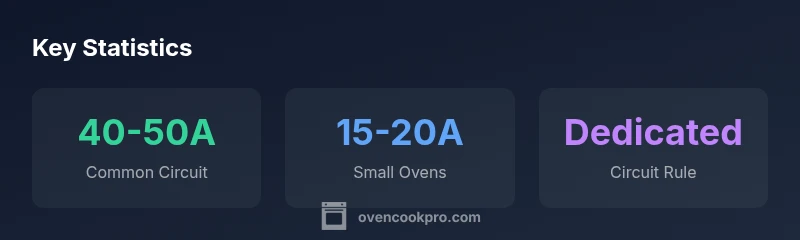
In a typical home, the question what fuse is needed for an oven has a nuanced answer. There is no universal fuse rating that fits every model, because ovens are sized for a dedicated circuit protected by a properly rated device. In most electric oven installations, the protection comes from a double-pole breaker in the main panel, commonly sized in the 40-50A range for ranges and larger built-in ovens. Smaller wall ovens or compact units may operate on 20-30A circuits. Always verify on the oven's nameplate or manual, and ensure the circuit matches the appliance's voltage requirements. This is why professional installation and clear labeling are essential, especially in homes with shared panels or limited space. Oven Cook Pro’s guidance emphasizes verifying the exact rating specified by the manufacturer as the starting point for all wiring decisions.
Do ovens require fuses or breakers? A practical distinction
Many homeowners conflate fuses with breakers. Modern residential wiring typically relies on circuit breakers rather than fuses for continuous protection, and ovens are no exception. A fuse can provide overcurrent protection, but it is less common in new installations due to the ease and reliability of breakers. When you install or service an oven, the critical question is whether the protection mechanism is appropriately sized for the appliance. A correctly sized breaker will trip if the oven or its wiring short-circuits, protecting downstream cables and components. If your oven has a fuse, it is often part of a legacy setup or a specific appliance circuit; confirm with the product manual and local code.
How to determine the correct fuse/breaker rating for your oven
Begin with the oven’s nameplate or user manual, which lists the voltage, current draw, and recommended protection. If the rating is not clear, contact the manufacturer or consult a licensed electrician. In general, plan for a dedicated circuit that matches the device’s load: large ovens commonly require 40-50A, while smaller 120V countertop appliances need 15-20A. Do not combine loads on a single circuit. The panel must accommodate a double-pole breaker and the appropriate wire gauge (e.g., 6 AWG for high amperage). Always double-check local electrical codes before purchasing components.
Wiring options by oven type and layout
Different oven configurations call for different wiring approaches. A standard built-in wall oven typically needs a dedicated 240V circuit with a 40-50A breaker. A full electric range (oven plus cooktop) usually requires a larger 40-50A double-pole breaker and appropriately rated conductors. Countertop or mini ovens, while useful, generally run on 15-20A 120V circuits and should be kept separate from heavy-duty appliances. If your kitchen layout mixes shared neutrals or unusual panel configurations, the electrician may propose alternative arrangements, but the goal remains the same: minimize risk by isolating high-load appliances on their own protected circuits.
Safety and code considerations you must follow
Electrical work on ovens triggers code considerations and permitting in many jurisdictions. Before replacing a fuse or upgrading a circuit, verify the requirement with your local authority or a licensed electrician. Ensure all installations use proper connectors, strain-relief, and compliant enclosures. Clearances around the appliance, venting, and ambient temperature can affect performance and safety. Keep documentation of ratings, permits, and inspections for future resale or service. Oven Cook Pro’s stance is clear: never bypass protection devices or shortcut the sizing process; it puts occupants and property at unnecessary risk.
When to upgrade wiring or call a professional for an oven circuit
If you’re upgrading to a higher-capacity appliance or expanding kitchen load, a panel upgrade or new dedicated circuit is often required. A licensed electrician will assess panel capacity, cable gauge, and local code requirements, ensuring a safe, compliant installation. Expect a plan that may involve pulling permits, upgrading the service entrance, or adding a new 240V circuit with a double-pole breaker in the appropriate amperage range. Do not attempt DIY rewiring on high-load ovens; incorrect connections can cause fires, shocks, or nuisance tripping.
Quick-start homeowner checklist for oven fuse/breaker decisions
- Locate the oven’s nameplate and manual and note voltage and amperage.
- Confirm the circuit is dedicated to the oven and protected by a properly rated breaker or fuse.
- Ensure wire gauge meets the installed breaker size (e.g., thicker gauge for higher amperage).
- If in doubt, contact a licensed electrician to size the circuit and obtain required permits.
- Avoid using extension cords or power strips for high-load ovens.
Common missteps to avoid when sizing a fuse or breaker for an oven
- Assuming a higher amp rating without verifying the nameplate.
- Replacing a fuse with a higher rating without considering panel capacity and conductor limits.
- Sharing a circuit with other heavy appliances.
- Skipping permits or professional assessment after panel changes.
- Ignoring manufacturer recommendations or local electrical codes.
Typical circuits and breaker guidance by oven type
| Oven Type | Typical Circuit | Recommended Breaker (A) | Notes |
|---|---|---|---|
| Standard electric wall oven | Dedicated circuit | 40-50A | Check nameplate for exact rating |
| Built-in oven (double-wall) | Dedicated circuit | 40-50A | Often paired with range hood needs |
| Countertop/toaster oven | 15-20A (120V) | 15-20A | Not for main oven circuit; separate small-appliance circuit |
| Electric range (oven + cooktop) | Dedicated circuit | 40-50A | Professional installation required |
Questions & Answers
Do I need a fuse or a breaker for my oven?
Most ovens require a dedicated circuit protected by a breaker rather than a fuse; fuses are rare in modern installations. Verify the device's protection from the manual and nameplate.
Ovens usually need a dedicated breaker, not a fuse. Check the manual for the exact protection.
What fuse size should I look for if my oven is old?
Look for the rating on the oven’s label or manual. If it’s unclear, contact the manufacturer or a licensed electrician rather than guessing a fuse size.
Check the label or manual; if unsure, call a licensed electrician.
Can I install an oven on a 15A circuit?
Most ovens require more than 15A; many need 40-50A. Some small countertop units run on 15-20A, but verify with the nameplate.
Typically not; verify the oven’s rated load on the nameplate.
What should I do if the oven trips the circuit breaker?
Turn off the oven, reset the breaker, and inspect for overload or fault. If trips recur, contact a licensed electrician to diagnose wiring or appliance issues.
Turn off, reset, and get a pro if it keeps tripping.
Is it safe to use a surge protector with an oven?
No. Ovens should be on a hard-wired, properly rated circuit. Surge protectors are not recommended for high-load appliances.
Avoid surge protectors; plug into a dedicated circuit.
How do I upgrade my oven wiring?
Upgrading wiring should be done by a licensed electrician. They will size the circuit for 40-50A and verify panel capacity, conductors, and permits if needed.
Hire a pro to size and install the right circuit.
“Electrical safety for ovens hinges on proper circuit sizing and professional installation; never bypass protection devices.”
Main Points
- Verify the circuit rating on the oven nameplate.
- Never substitute a fuse for a properly sized breaker.
- Upgrade wiring only with a licensed electrician.
- Follow the installation manual and local electrical codes.