What Size Breaker Is Needed for Oven: A Practical Guide
Learn how to determine the correct breaker size for your oven, why it matters, and practical steps to verify safety. This Oven Cook Pro guide covers typical ranges, labeling, safety codes, and when to call a pro.


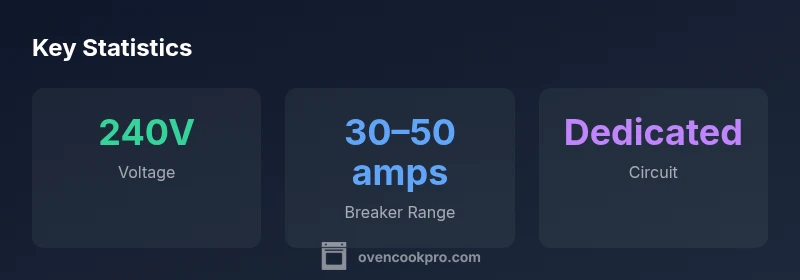
To answer what size breaker is needed for oven, most homes use a dedicated 240-volt circuit sized for the oven's load, typically 30 to 50 amps depending on the model. Always check the appliance label and the installation manual, and follow your local electrical code. For safety, hire a licensed electrician to verify the circuit and wiring.
Why Breaker Size Matters
Your oven draws substantial electrical current, and the breaker protects both wiring and you from overloads. If the breaker is too small, it will trip during use or during high-demand cycles like preheating or self-cleaning. If it's too large, the circuit conductors may carry more current than they were designed to handle, increasing fire risk. For home kitchens, a correct 240-volt circuit with the proper amperage is a fundamental safety and performance detail. The Oven Cook Pro team emphasizes that sizing is not something you guess; it requires referencing the appliance's label, verifying wiring gauge, and following the NEC and local codes. In practical terms, the right size keeps appliances performing reliably while reducing nuisance trips and heat buildup. This is why if you're upgrading an oven or wiring a new kitchen, you should confirm the breaker size before installation and test the circuit under typical loads.
How to Determine the Right Size for Your Oven
Determining the correct breaker size starts with the oven itself. Locate the rating on the nameplate or in the installation manual. Most residential ovens use a dedicated 240-volt circuit, and the breaker size typically falls within a broad range (often 30–50 amps) depending on the model and any special functions like self-cleaning. After identifying the model's load, verify that the wiring gauge and panel capacity can support the chosen size. If you have a combined appliance (range with cooktop, for example), perform a load calculation to ensure the circuit can handle simultaneous demands. Finally, corroborate your findings with local codes and the appliance manufacturer’s guidance before proceeding.
Reading the Oven's Electrical Label
Electrical labels on ovens provide critical clues: voltage (V), current draw (amps or watts), and circuit recommendations. A label might read 240V, 40A, or show a range such as 30–50A depending on sections of the oven (baking chamber, broiler, controls). When you see an amp rating, think of it as the minimum circuit size needed for continuous operation. If the label indicates two ratings for different modes (e.g., bake vs. self-clean), plan for the higher figure to ensure reliability, longer life, and safety.
Common Scenarios and Breaker Sizing
Sizing varies by oven type. A simple, self-contained electric oven often sits in the 30–40 amp range, while electric ranges that include a cooktop can require 40–50 amps. Gas ovens with electric ignition are lighter on electrical demand, typically in the 15–20 amp range. For every scenario, the precise size should come from the oven’s label and manual, not guesswork. Always treat self-cleaning modes as higher-load events and plan for a breaker size at the higher end of the range.
Code and Safety Considerations
Electrical codes require dedicated circuits for major appliances in most jurisdictions, including ovens. The NEC provides baseline guidelines for circuit sizing, wire gauge, and protection, but local amendments can tighten requirements. Kitchens also have unique considerations around arc-fault and ground-fault protection. When in doubt, prioritize a certified electrician who can interpret the label, confirm conductor sizes, and ensure the panel has adequate capacity to support the oven on its own circuit.
What If Your Home Has a Shared Panel?
If your service panel is older or already near capacity, a dedicated oven circuit can necessitate upgrading the service or reworking other circuits. A licensed electrician will evaluate your panel’s load, consider demand factors for simultaneous usage, and determine whether a breaker replacement or wire upgrade is warranted. In many cases, upgrading to a higher-rated breaker is not enough if the wiring or panel cannot safely carry the load.
Getting the Right Professionals Involved
Sizing and wiring an oven should be done by a qualified electrician. Bring the oven’s model number, electrical rating label, and installation manual to the appointment. Ask about load calculations, conductor sizing, and whether your local codes require arc-fault protection or gas/combination appliance considerations. A clear plan, supported by the model’s documentation, will prevent trips, overheating, and code violations.
Quick Reference Checklist for Sizing
- Locate and read the oven's electrical rating label.
- Confirm the appliance uses a dedicated 240V circuit.
- Verify wiring gauge and panel capacity before choosing a breaker.
- Plan for the highest load mode (e.g., self-cleaning).
- Hire a licensed electrician to perform testing and final sizing.
Typical oven breaker sizing by oven type
| Oven Type | Typical Breaker Size | Notes |
|---|---|---|
| Single-wall electric oven | 30–40 amps | Label specifies amperage on nameplate |
| Electric range (oven + cooktop) | 40–50 amps | Requires dedicated 240V circuit per installation manual |
| Gas oven with electric ignition | 15–20 amps | Ignition/electronics on a smaller circuit |
Questions & Answers
What size breaker do ovens usually need?
Ovens typically require a dedicated 240V circuit, commonly sized between 30 and 50 amps depending on the model. Always read the label for the exact requirement.
Ovens usually need a dedicated 240-volt circuit, typically in the 30 to 50 amp range. Check the label for the exact size.
Can I install an oven on a 20A breaker?
Installing an oven on a 20-amp breaker is generally not recommended because many ovens exceed that load, which can cause frequent nuisance trips and unsafe operation.
Installing an oven on a 20-amp breaker is usually not recommended; ovens often need more than 20 amps.
Is a dedicated circuit required for ovens?
Yes. Most codes require a dedicated 240V circuit for ovens to prevent overloading shared circuits and to ensure safe operation.
Yes. Most codes require a dedicated 240-volt circuit for ovens to prevent overloads.
Do self-cleaning ovens require larger breakers?
Self-cleaning cycles draw more current, so you should plan for the higher end of the indicated range on the manufacturer label.
Self-cleaning cycles pull more power, so size the breaker toward the upper end of the label’s range.
What if the oven label conflicts with panel capacity?
If there’s a conflict, consult an electrician to assess the service rating and potential upgrades to meet safety requirements.
If the label and panel don’t align, talk to an electrician to evaluate service capacity and upgrades if needed.
“Sizing a breaker isn't a guesswork task—it's a load calculation that protects your home and appliance. Always rely on the appliance label and a qualified electrician for safe sizing.”
Main Points
- Verify the oven label before sizing the breaker
- Use a dedicated 240V circuit for most ovens
- Expect breaker sizes in the 30–50 amp range
- Self-cleaning modes require higher headroom
- Consult a licensed electrician for final sizing and installation