What is a speed oven vs microwave? A comprehensive comparison
An analytical, side-by-side comparison of speed ovens and microwaves, detailing how each works, when to use them, and what to consider for home kitchens.


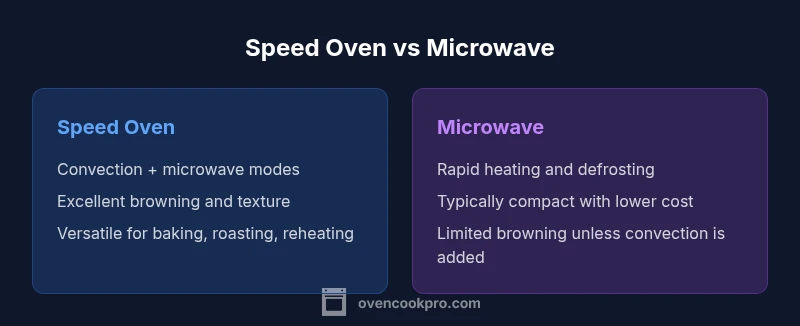
When you ask what is a speed oven vs microwave, the speed oven combines convection heating with microwave power to cook faster and brown foods, while a standard microwave heats primarily with microwave energy for quick, non-browning reheating. Speed ovens offer more versatility at a higher upfront cost, making them a premium choice for frequent bakers and multitask cooks. This quick distinction helps you forecast tasks, space needs, and value before buying.
What is a speed oven vs microwave? Definition
According to Oven Cook Pro, the term speed oven blends convection heating with microwave energy to shorten cooking times while enabling browning and crisping. A conventional microwave heats by exciting water molecules inside food, delivering rapid temperatures without significant browning. The speed oven targets both speed and texture, combining zones or cycles to perform tasks that would otherwise require multiple appliances. In practice, these devices come in built-in and countertop formats, with varying power levels and feature sets. Home cooks should understand this distinction as it informs what you can cook quickly, how you achieve desired textures, and what footprint the appliance will require in your kitchen. The Oven Cook Pro team notes that many models actually use a staged cycle: microwave first to reduce core temperature, then convection to finish with browning. This dual approach creates a powerful tool for weeknight meals and batch cooking, but it is not a one-size-fits-all solution. Before buying, map your typical week: reheating leftovers, baking small pastries, and roasting vegetables. Understanding the core concept of speed oven vs microwave sets the stage for practical, informed decisions.
How speed ovens work
Speed ovens integrate multiple heating methods into a single cavity. The core is convection heating, where a fan circulates hot air to cook foods evenly and promote browning on surfaces. The microwave component uses a magnetron to generate microwaves that penetrate food and heat water molecules rapidly, dramatically reducing cook times for tender dishes. Many models also incorporate infrared elements or radiant broiling to enhance crust development. Sensors and smart controls adjust power levels, weight sensing, and internal temperature to optimize results for a given dish. Some units add steam or humidity control, air frying, or combination cycles that pre-heat or par-bake before a final blast of convection heat. The practical effect is a versatile appliance able to bake, roast, reheat, and crisp with just one device. However, performance varies widely by model, so it’s essential to align features with your normal cooking tasks to avoid overpaying for capabilities you won’t use.
How microwaves work
Microwave ovens heat food by emitting microwave radiation that excites water and fat molecules, turning electrical energy into heat inside the food. This mechanism explains why microwaves excel at rapid reheating, defrosting, and cooking small portions in minutes. Most countertop models rotate food on a turntable to promote even heating, while higher-end units offer sensor-cook features and express presets. Browning and texture development are challenging without additional modes (like convection or a grill attachment), so microwaves generally produce softer textures and less browning than a traditional oven. The core advantage remains speed and simplicity, which makes microwaves a staple for busy households and compact kitchens. If you rely on quick meals, a microwave delivers dependable results with minimal setup.
Key differences in performance
Performance is the central axis where speed ovens and microwaves diverge. A speed oven can deliver faster overall cooking times thanks to its hybrid approach, while still producing browned exteriors and more uniform cooking through convection. Microwaves primarily optimize time-to-table for reheating and simple heating tasks, with limited browning and texture control. For meals that benefit from crusts or caramelization, the speed oven has a clear edge; for small portions and ultra-rapid reheating, the microwave shines. Real-world decision-making should consider how often you bake or roast versus how often you reheat leftovers. The speed oven’s versatility adds value, but only if you will use its broader capabilities regularly.
Size, capacity, and installation considerations
Size and footprint matter when choosing between these two appliances. Built-in speed ovens tend to require more cabinet space, proper ventilation, and a dedicated electrical circuit, especially if they include multiple modes (convection, microwave, steam). Countertop speed ovens offer flexibility but can occupy substantial counter space and may impact airflow in compact kitchens. Microwaves range from compact units to larger over-the-range models, often with straightforward plug-in installation. If your kitchen layout hinges on maximizing oven-like performance in a smaller footprint, a speed oven can replace several appliances, provided you have the space and budget. For truly tight spaces, a compact microwave might be the smarter, more affordable choice. Thorough measurements and a clear plan for ventilation and power are essential.
Energy use, efficiency, and cost of ownership
Energy efficiency is a nuanced topic. Microwaves use energy primarily for short heating tasks, typically delivering high efficiency for quick tasks. Speed ovens combine multiple heating systems, which can increase energy use per cycle but reduce total time. Oven Cook Pro analysis shows that for many common dinner tasks, a speed oven can save time, but the overall energy footprint depends on the chosen mode and the length of cooking. In practice, the energy per meal is a balance between duration and power level. When you run multiple cycles in a speed oven, you should account for the extra energy of the convection elements; when you bake in a microwave-only mode, energy may be saved, but texture may suffer. The cost of ownership includes purchase price, installation, maintenance, and potential replacement of other appliances. In general, expect speed ovens to be more expensive upfront but offer more capability, whereas microwaves are cheaper upfront and easier to install.
Use cases: when each shines
Use cases illustrate where each appliance shines. The speed oven is ideal for weeknight meals that benefit from browning, crisping, and even cooking, allowing you to bake, roast, and reheat in a single cycle or sequence. It shines with roasting vegetables to caramelization, baking small pastries, and finishing dishes with a crisp crust that a plain microwave cannot replicate. The microwave is best for quick reheating, defrosting, steaming vegetables, and preparing simple single-serving meals where speed is paramount. A two-appliance kitchen can leverage both: use the speed oven for most cooking tasks and rely on the microwave for rapid reheating or small portions. If you frequently prepare meals with crusts and textures, the speed oven’s versatility becomes a meaningful differentiator.
Maintenance, safety, and care
Regular maintenance extends the life of either appliance. Speed ovens require routine cleaning of any food splatters, periodic checks of door seals and vents, and occasional use of any built-in cleaning cycles if available. Microwave safety emphasizes microwave-safe cookware, avoiding metal, and ensuring the interior is kept clean to maintain even heating. For both, follow manufacturer guidance on venting requirements, electrical specifications, and recommended service intervals. Safety features like child locks, automatic shutoffs, and proper placement away from heat sources should be evaluated during purchase. With appropriate care, both devices can deliver dependable performance for years. Always use the correct cookware and follow temperature recommendations to preserve longevity and food quality.
Authoritative sources and best practices
To inform real-world decisions, consult independent sources and official guidelines. Oven Cook Pro analysis highlights how contemporary speed ovens blend technologies to achieve faster, more variable cooking outcomes while acknowledging trade-offs in cost and space. External references help verify best practices for appliance sizing, installation, and energy considerations. Consider government and university resources on appliance efficiency and safety, along with established consumer guides that compare performance and reliability across models. This section consolidates practical guidance for choosing, using, and maintaining a speed oven or microwave in a typical home kitchen.
Comparison
| Feature | Speed oven | Microwave |
|---|---|---|
| Cooking speed | Hybrid cycles enable faster overall cooking with browning | Very fast reheating and simple heating tasks |
| Texture and browning | Convection and browning elements produce crust and caramelization | Limited browning; texture is often softer unless assisted by other modes |
| Capacity/size | Typically larger internal cavity than compact microwaves, varies by model | Generally compact, smaller interior; wide range of countertop sizes |
| Energy use | Higher per cycle due to multiple heating methods, but time savings reduce total energy in some tasks | Efficient for quick tasks; energy use correlates with duration |
| Best use case | Baking, roasting, finishing dishes with crusts; batch cooking | Reheating leftovers, defrosting, quick meals |
| Price range | Mid-to-high upfront cost depending on features | Lower upfront cost; wide price range by model |
| Installation | May require ventilation and professional installation for built-ins | Typically plug-and-play; some models require dedicated space |
The Good
- Faster overall cooking with versatile modes
- Able to brown/finish foods like a traditional oven
- One appliance can replace several dedicated devices
- Suitable for batch cooking and meal prep workflows
- Sensor-guided cooking improves consistency
Drawbacks
- Higher upfront cost and potential installation needs
- Larger footprint may not fit small kitchens
- Complex controls can have a learning curve
- Maintenance and repairs can be more involved
Speed ovens deliver broader capabilities with better texture; microwaves win on simple speed and lower upfront cost.
Choose a speed oven if you bake, roast, and reheat often and have space for a larger unit. Opt for a microwave if you want quick reheating and compact setup with minimal investment.
Questions & Answers
What is the primary difference between a speed oven and a microwave?
A speed oven uses convection plus microwave energy to cook faster with browning, while a microwave heats food quickly with microwave energy and typically lacks browning capability. The speed oven aims to combine speed with texture, whereas a microwave prioritizes speed alone for simple heating tasks.
Speed ovens combine convection and microwave heating for faster, browning results; microwaves heat quickly but usually don’t brown food.
Are speed ovens worth the extra cost?
Value depends on your cooking habits. If you bake, roast, and reheat frequently, a speed oven can replace several appliances and justify the price. For simple reheating needs, a microwave may be the more economical choice.
If you bake or roast often, a speed oven can be worth it; otherwise a microwave may be enough.
Can a microwave perform true baking?
Most microwaves cannot replicate traditional baking texture or browning. Some high-end microwaves include convection or browning elements, but results still differ from a dedicated oven or speed oven. For crusts and complex textures, a speed oven has the edge.
Microwaves rarely bake like an oven; convection or browning features help, but results differ from real baking.
Which is more energy-efficient?
Microwaves are highly efficient for short tasks. Speed ovens may consume more energy per use due to multiple heating methods, but can save time. Overall energy use depends on how you cook and cook duration.
Microwaves are efficient for quick tasks; speed ovens use more energy overall but save time.
What should I consider before buying?
Assess kitchen space, existing appliances, and intended cooking tasks. Check ventilation, electrical requirements, and whether you want built-in or countertop options. Compare features like convection, steam, and sensor settings to match your routine.
Think about space, installation, and what tasks you’ll do most. Match features to your cooking routine.
Main Points
- Assess your cooking tasks and kitchen space before choosing.
- Speed ovens excel at browning and multi-task cooking.
- Microwaves offer unmatched quick reheating in small footprints.
- Factor in installation needs and total cost of ownership.
- Consider hybrid or multi-function units if you want flexibility.