Are Oven and Microwave Different? A Practical Comparison
Explore how ovens and microwaves differ in heating methods, performance, safety, and best-use scenarios. This analytical guide helps home cooks decide when to rely on an oven, a microwave, or both.


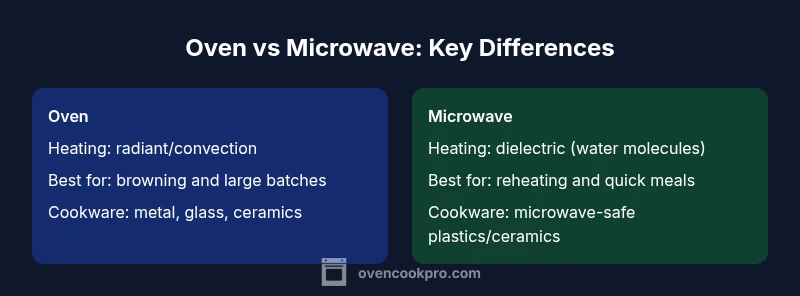
Ovens and microwaves are different in how they heat food, what they’re best for, and how you should use them. An oven uses radiant heat or convection to cook slowly and evenly, producing browning and texture. A microwave uses electromagnetic waves to heat water molecules rapidly, often reheating quickly without browning. For many tasks, both appliances are complementary.
Are ovens and microwaves fundamentally different?
Are oven and microwave different? The short answer is yes, in both mechanism and outcome. Ovens rely on radiant heat from elements or hot air circulated by a fan, translating energy into sustained cooking heat that travels through the food and around its exterior. Microwaves, by contrast, emit electromagnetic waves that cause water molecules to vibrate, generating heat from the inside out. This difference explains why browning and crust formation are common with ovens but not with microwaves, and why microwaves excel at speed for reheating and certain quick dishes. Across home kitchens, this distinction informs how you plan meals, which cookware to choose, and how you pace cooking tasks.
According to Oven Cook Pro, recognizing this divergence helps you optimize texture, moisture, and flavor while avoiding common mistakes during weeknight cooking or weekend meal prep.
Heating methods and what they imply for cooking
The core distinction between are oven and microwave different lies in energy transfer. Ovens convert electrical energy into heat at the surface through radiant elements or hot air. The heat then moves by conduction and convection, gradually cooking the food evenly while enabling browning and caramelization. Microwaves do not rely on surface heat; instead, they generate microwaves at a specific frequency that couples with polar molecules, primarily water, producing rapid internal heating. This leads to fast reheating and cooking, but with a different texture profile, often lacking the crisp exterior that an oven provides. Understanding these mechanisms helps you choose the right tool for each dish—for example, baking bread vs reheating leftovers.
What each appliance does well
- Ovens excel at browning, caramelizing sugars, and creating crisp exteriors on baked goods, roasts, and casseroles.
- Microwaves shine for quick reheating, defrosting, steaming vegetables, and cooking simple meals where speed is important.
- Some tasks benefit from a hybrid approach, such as finishing a microwave-cooked dish in the oven to achieve a crust or color.
- Overall, think texture and time: use the oven when texture matters; use the microwave when speed and convenience matter.
Practical cooking workflows: step-by-step examples
To illustrate practical differences, consider three common tasks:
- Reheating a leftover stew: Microwave first to warm quickly, then finish with a quick simmer on the stove or in a hot pan to restore texture.
- Baking chicken for a family dinner: Use the oven for even cooking and browning; check internal temperature with a thermometer and let it rest before serving.
- Defrosting and cooking vegetables: Defrost in the microwave if time is tight, then finish in the oven or on the stovetop for flavor and texture development. By outlining tasks this way, you can decide when to lean on each appliance for efficiency and quality.
Safety, energy use, and maintenance considerations
Safety rules differ between ovens and microwaves. Ovens require careful handling of hot racks and pans, and metal cookware is common but must be used correctly depending on your oven type. Microwaves restrict metal and some metals can cause arcing; always use microwave-safe containers and avoid sealed containers that can explode. Energy use varies with task: a longer bake can consume more energy, while quick reheating typically uses less but may require careful monitoring to avoid overcooking. Regular cleaning prevents flavor transfer and keeps heat distribution even in ovens, while microwaves benefit from occasional turntable cleaning and debris removal to maintain consistent heating.
Cookware, containers, and accessories: what works where
- Oven-safe cookware includes metal bakeware, cast iron, ceramic, and glass designed for high temperatures.
- Microwave-safe options include microwave-safe glass and certain plastics; avoid metal and some metal-trimmed plastics.
- Avoid using aluminum foil in microwaves unless the manufacturer explicitly allows it and you follow safe guidelines.
- For hybrid workflows, use both types of cookware where appropriate and ensure proper ventilation and heat resistance.
Comparison
| Feature | Oven | Microwave |
|---|---|---|
| Heating method | Radiant or convection heat | Electromagnetic dielectric heating |
| Typical uses | Baking, roasting, browning, casseroles | Reheating, defrosting, quick cooking |
| Cook time profile | Longer cook times; gradual heating | Very fast for reheating and simple meals |
| Texture outcomes | Crisp edges, browned surfaces | Moist interiors; limited browning |
| Cookware compatibility | Metal allowed (with cautions) | Microwave-safe containers; avoid metal |
| Energy considerations | Energy use scales with duration; great for large batches | Efficient for short tasks; some energy use for standby mode |
| Best use scenario | Breads, roasts, desserts requiring browning | Leftovers, quick meals, defrosting |
The Good
- Clarifies strengths and limits of each appliance
- Encourages efficient meal planning by using the right tool
- Helps avoid waste by choosing proper cooking method
- Improves safety and cookware decisions
Drawbacks
- Requires extra space and separate devices for some kitchens
- Microwaves limit browning and texture for many foods
- Recipes may need adaptation when switching between appliances
- Potential confusion in small, single-appliance kitchens
Use both appliances strategically to maximize texture, speed, and safety.
Oven for browning and large batches; microwave for speed and reheating. A hybrid workflow often yields the best overall results in daily cooking and entertaining.
Questions & Answers
Are microwaves safe for everyday use?
Yes. Modern microwaves are designed with safety interlocks and shielding. Following manufacturer guidelines and using microwave-safe containers minimizes risk. For most home cooks, microwaves are a safe option for reheating and quick meals when used properly.
Yes, microwaves are safe when used as intended and with microwave-safe containers.
Can I bake in a microwave?
A microwave can heat some foods, but it does not bake in the traditional sense. For browning and crusts, use the oven or finish microwave-cooked items in the oven. Expect different textures and outcomes.
You can’t bake in a microwave the way you bake in an oven; finishing in the oven is often better.
Can I substitute an oven for a microwave in all recipes?
Not universally. Microwaves excel at speed and moisture retention, while ovens excel at browning and texture. Some recipes can be adapted with time and temperature adjustments, but results may differ.
Not all recipes translate directly; sometimes you’ll need to adjust time, temperature, or finish in the other appliance.
Do microwaves destroy nutrients?
Microwaving, like other cooking methods, can reduce certain nutrients, but it often preserves others due to shorter cooking times. Overall, nutrient loss depends more on cooking duration and temperature than the appliance itself.
Microwave cooking isn’t inherently nutrient-destructive; it’s about how long and how hot you cook.
Is browning possible in a microwave?
Typical microwaves don’t brown food well. You can use a microwave with a browning dish or finish in the oven to achieve crust and color. Expect more moisture and less crispness in standard microwave cooking.
Normally, microwaves don’t brown; use oven finishing for color.
How should I decide which appliance to use?
Start with texture and speed: use the oven for crispiness and even browning, the microwave for fast reheating and simple meals. If both texture and time matter, plan a hybrid workflow that uses each appliance where it shines.
Think texture first, speed second; combine both for best results when possible.
Main Points
- Match tasks to heating method for best results
- Reserve the oven for browning, baking, and large meals
- Use the microwave for reheating and quick cooking
- Always check cookware compatibility to avoid hazards
- Consider a hybrid workflow to maximize efficiency