St Louis Oven Ribs: A Complete Oven-Baked Guide
Learn to bake tender, flavorful St Louis oven ribs with a reliable dry rub, controlled bake temps, and a finishing glaze. This step-by-step guide from Oven Cook Pro covers prep, seasoning, timing, and serving for consistently great ribs.


In this guide you will learn to bake perfect St Louis oven ribs with a reliable dry rub, a controlled oven bake, and a juicy finish. You’ll prepare the rack, season evenly, and monitor tenderness for best results. By the end you’ll serve ribs that pull cleanly from the bone, every time.
The St Louis Style Advantage
St Louis-style ribs offer a compact, square-cut rack with a higher meat-to-bone ratio than some other cuts. This shape makes it easier to season evenly and achieve a uniform bite along the entire rack. According to Oven Cook Pro, trimming the rack to a flatter, more consistent rectangle helps heat distribute more evenly and reduces uneven edges that can burn or dry. The membrane on the bone side is usually removed to allow better rub penetration and tenderness; this small step makes a noticeable difference in texture, especially when oven-baking. When selecting ribs, look for bright meat with even marbling and tight, intact bones. The goal is to end up with a rib rack that holds together during cooking, yet yields a satisfying pull-away bite when served. With the St Louis cut, you can lean into a method that delivers consistent results with minimal guesswork, which is ideal for home cooks who want restaurant-like quality at home.
Essential ingredients and tools
A successful oven rib cook starts with a balanced dry rub, quality ribs, and a few reliable tools. The rub should blend sweetness, salt, and heat, with paprika, brown sugar, garlic powder, onion powder, cumin, and black pepper forming a dependable base. If you prefer a touch of spice, add chili powder or cayenne to taste. For the rib itself, you’ll want a rack that fits your pan with room for air to circulate. Basic tools include an oven-safe sheet pan, a metal rack to elevate the ribs, aluminum foil for optional wrapping, a basting brush for glaze, and tongs for handling the rack. If you like, keep a spray bottle handy for a light moisture mist. Throughout the process, you’ll appreciate consistency in rub application and heat exposure, both of which Oven Cook Pro emphasizes as keys to predictable results.
Prep: Dry Rub, Membrane, and Rack Prep
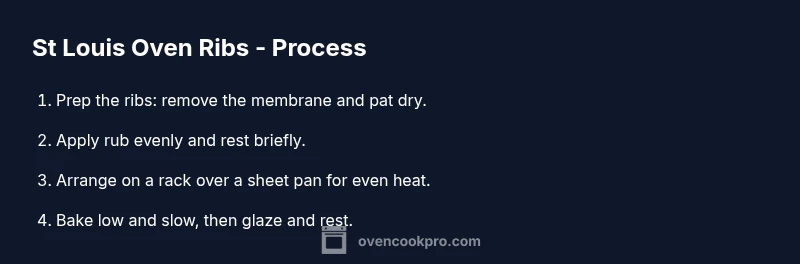
Begin by removing the thin membrane from the bone side of the rack, then pat the ribs dry with paper towels. A dry surface ensures rubs cling and cook evenly, and it reduces steaming inside the oven environment. Generously apply your dry rub across all surfaces, pressing it into the meat so it adheres well during baking. Letting the rub sit for a short time helps the flavors penetrate; if you have extra time, cover and refrigerate for up to a few hours. Prepare your rack setup by placing a metal rack on a sheet pan so air can circulate beneath the ribs, which promotes even rendering of fat and a better crust. A light coat of oil on the rack can reduce sticking and improve clean-up. This prep stage lays the foundation for a reliable, repeatable bake you can rely on.
Oven Cooking: Temperature, Time, and Rack Setup
St Louis ribs respond best to a low, slow oven bake. Preheat your oven to a steady 250–275°F (120–135°C). Place the rib rack on a prepared rack over a sheet pan to allow fats to drip away while heat circulates. Bake unwrapped for the initial portion to render fat and develop flavor, then check for tenderness and color. If the surface needs a deeper crust, you can finish with a glaze or lightly broil, but monitor closely to avoid burning. The exact time can vary by rib size and oven characteristics, but plan on a total window of a few hours, with the ribs reaching a tender, lift-off-the-bone texture when done. Oven Cook Pro suggests using a simple test: when the meat yields to light pressure and the bones show little resistance, you’re close to done.
Finishing Touches: Glaze, Rest, and Serve
Many cooks prefer a glaze for a glossy finish and added flavor. Brush a glaze of your choice over the ribs during the final minutes of baking, or apply after removing the ribs from the oven and give them a quick broil to set the glaze. Rest the ribs for a short period after baking; this helps the juices redistribute and keeps the meat moist when sliced. Slice between bones and serve with your favorite sides, such as coleslaw, baked beans, or cornbread. The key to a great finish is balance: a glaze that complements the rub without overpowering the natural pork flavor, and a rest that keeps each bite moist and flavorful.
Troubleshooting and Common Mistakes
Common issues include over-drying, uneven seasoning, and insufficient browning. Avoid overcooking by testing tenderness with a gentle probe or bite test rather than chasing a fixed time. If the surface isn’t browning, you can run a brief high-heat finish or broil briefly, but watch for scorching. Ensure you aren’t using too much rub, which can create a crust that blocks heat and prevents tenderizing steam from forming. If you’re new to oven-baking ribs, start with a simple, repeatable rub and bake schedule, then adjust based on your oven’s temperament and rib size. Following a measured process helps you produce dependable results that you can repeat with confidence.
Tips & Warnings
- Pro tip: Always start with a dry surface and a well-ventilated kitchen to avoid steam buildup. A rack-based setup improves airflow and yields a more even crust.
- Warning: Do not bake at very high temperatures for ribs, as it can dry the meat and fail to render fat properly.
- Note: A rest period after baking helps preserve juiciness and makes slicing cleaner.
Tools & Materials
- oven(Preheat to 250–275°F (120–135°C))
- sheet pan(Catch drippings and hold rack above pan)
- metal rack or cooling rack(Elevates ribs for airflow)
- aluminum foil(For wrapping during the cook if desired)
- basting brush(For glaze application)
- dry rub ingredients(Paprika, brown sugar, garlic powder, onion powder, cumin, black pepper)
- tongs(To handle rack safely)
- meat thermometer(Optional for checking doneness)
Steps
Estimated time: 2h 30m
- 1
Preheat and prep
Preheat the oven to 250–275°F and prepare the rib rack by removing the membrane and patting dry. Cleaning the surface ensures rub adherence and even heat transfer.
Tip: A dry surface helps rubs stick better and promotes even browning. - 2
Apply rub
Evenly apply the dry rub on all sides, pressing gently to embed the spices. Let the rub sit on the meat for a short time to maximize flavor penetration.
Tip: Press rub into crevices with your fingers to ensure full coverage. - 3
Rack setup
Place the rack in a sheet pan so air can circulate beneath the ribs. This setup helps render fat and develop an even crust.
Tip: If you don’t have a rack, crumple foil to create a makeshift elevated surface. - 4
Bake unwrapped
Bake uncovered for the initial phase to render fat and build flavor, checking texture after a couple of hours. Expect the meat to become more tender as it cooks.
Tip: Avoid opening the oven too often; each door opening drops temperature and slows tenderization. - 5
Glaze finish
If using a glaze, brush it on during the final minutes of cooking or after removing from the oven and finish with a quick broil.
Tip: Watch closely to avoid burning the glaze; a light glaze adds sweetness without overpowering pork flavor. - 6
Rest and slice
Let the ribs rest for 5–10 minutes after baking to redistribute juices, then slice between bones and serve.
Tip: Resting helps keep meat juicy and makes carving cleaner. - 7
Serve with sides
Pair the ribs with classic accompaniments like coleslaw, baked beans, or cornbread for a balanced meal.
Tip: A crisp pickle or pickle-based slaw adds bright acidity to cut through richness.
Questions & Answers
Can I use other rib cuts for this method, like baby back ribs?
You can adapt the method to other rib cuts, but St Louis ribs have a square, uniform shape that bakes predictably. Baby backs are smaller and cook faster, so you’ll need to shorten the bake time and monitor tenderness closely.
You can adapt the method, but baby backs cook faster and may require shorter bake time.
Is removing the membrane really necessary for oven ribs?
Removing the membrane helps rub penetration and yields a more tender bite, especially when cooking in the oven where moisture can be limited. It’s a quick step that pays off in texture.
Yes, removing the membrane improves tenderness and rub absorption.
Should I wrap the ribs in foil during baking?
Wrapping can be used in a two-stage method to trap moisture and speed tenderness, but many home cooks prefer an unwrapped start to develop a crust, then a wrapped finish if needed for extra tenderness.
You can wrap after the initial bake if you want extra tenderness.
Can I prep the rub ahead of time?
Yes. Mixing the rub and storing it in an airtight container for up to a day is fine. It helps with consistency, and you can apply it quickly when you’re ready to cook.
Yes, you can mix the rub ahead of time for convenience.
What’s the best glaze to use on St Louis ribs?
A glaze should complement the rub with a touch of sweetness and acidity. A simple mix of barbecue sauce with a splash of citrus or vinegar works well without overpowering the pork.
Choose a glaze that adds a little sweetness and brightness, not overpowering pork flavor.
Can I use a convection oven for this recipe?
Convection can improve browning and air circulation, but you may need to reduce the temperature slightly and monitor for faster cooking. Start by keeping to a low heat and check tenderness earlier.
Convection is fine—just reduce the heat a touch and watch tenderness closely.
Watch Video
Main Points
- Prepare a balanced rub for reliable flavor.
- Use a rack to elevate ribs for even cooking.
- Bake low and slow for tenderness and crust.
- Finish with a light glaze and rest before slicing.