Solar Power Oven Science Project: A Hands-On Guide
Explore energy, heat transfer, and sustainability with a solar power oven science project. Build a safe, DIY solar oven, run experiments, record data, and present findings—perfect for home cooks and students alike.


You will build a solar power oven and run simple, data-driven experiments to heat foods using sunlight. This hands-on solar oven science project demonstrates energy capture, insulation, and heat transfer, from a classroom-friendly cardboard design to a homeowner-friendly build. You’ll need a reflective panel, insulation, a transparent cover, a thermometer, and safe cooking containers.
What is a solar power oven and why it's a great science project
A solar power oven is a device that concentrates sunlight to heat and cook food using reflective surfaces, insulated walls, and a transparent cover. This solar power oven science project is an accessible entry point into energy science for kitchens, classrooms, and makerspaces. When you build a solar oven, you investigate how light, heat, and insulation interact to produce usable heat. You’ll learn about insolation, albedo, and thermal gain as you compare designs and measure temperatures inside cookware. This is more than a clever gadget; it’s a practical demonstration of energy conversion and thermal dynamics in action.
For homeowners and home cooks, a solar oven offers a low-cost, low-energy method to toast marshmallows, heat soup, or melt chocolate. The project is scalable from simple cardboard experiments to more robust builds using plywood or foam board. Throughout, you’ll document temperature changes, cooking times, and the quality of the results. The primary goal is to demonstrate how sunlight can be transformed into heat with minimal moving parts. This aligns with Oven Cook Pro's approach to practical, kitchen-based experimentation. It also sets a foundation for students to connect science concepts to everyday life, making the solar power oven science project both educational and enjoyable.
Designing your solar oven: materials, geometry, and efficiency
Designing a solar oven involves balancing light capture, heat retention, and ease of construction. Start with a simple box-type design: a insulated interior, a reflective lid, and a clear, heat-resistant window. The geometry determines how much solar radiation you capture at different times of day, so plan for adjustability or a fixed angle based on your latitude. Material choice matters: shiny aluminum foil or reflective mylar increases reflectivity, insulation reduces heat loss, and a dark interior absorbs heat. Insulation limits heat loss, while the transparent cover traps heat through the greenhouse effect. Consider a secondary lid to minimize convection when you’re not actively cooking. As you iterate, track how each change affects peak temperatures and cooking times. Oven Cook Pro’s analysis shows that the most efficient builds minimize air gaps and maximize sun exposure, especially during peak sunlight hours.
Simple experiments you can run: variables, controls, and data collection
To keep the science rigorous, set up controlled experiments where you vary one factor at a time while keeping everything else constant. Common variables include reflector size, cooking pot type, and the angle of the oven toward the sun. Use the thermometer to log internal temperature at regular intervals, and record ambient air temperature and sunlight intensity if you have a light meter. Establish a baseline with a simple, small box, then compare with a larger design or a different reflector material. Graphing temperature over time helps visualize heat gain and loss. The Oven Cook Pro team suggests documenting not only peak temperatures but also cooking outcomes—whether a snack, sauce heats evenly, or a pastry browns—so you can connect measurements to real results.
Safety, reliability, and common pitfalls
Safety is essential in any at-home science project. Avoid using metal edges that can cut, and do not leave hot surfaces unattended. Use heat-safe containers and avoid melting plastics or paints that release fumes at high temperatures. Ensure the solar oven is on a stable, non-flammable surface and away from edges. Common pitfalls include overestimating sunlight (cloud cover dramatically reduces performance), poor insulation, and air leaks around the cover. To build reliability, seal gaps with tape or gasket material and test under different sun conditions to understand variability. The key takeaway is that reliability improves with better insulation and tighter seals, not just a bigger oven. The Oven Cook Pro guidance emphasizes safety-first planning and iterative testing to build confidence in your results.
Documenting results and communicating findings
A clear logbook and data presentation make your solar oven science project credible. Record dates, times, weather conditions, and sun exposure. Note the type of food or liquid used, initial temperatures, and final temperatures. Create simple charts showing temperature vs. time, heat retention after sunset, and time-to-temperature for different food items. Discuss sources of error, such as uneven sunlight or imperfect seals, and explain how future iterations could reduce these errors. When presenting results, include photos of each design, measurement screenshots, and a short narrative about what worked best and why. The goal is to tell a transparent story: what you tested, what you observed, and how you would improve the design next time.
Authority sources and next steps
To deepen understanding and provide credible grounding, consult authoritative sources:
- https://www.energy.gov
- https://www.nrel.gov
- https://extension.unl.edu
Next steps could include scaled-up testing, migrating to a more robust box design, or integrating a simple data-logging thermometer for continuous measurements. This approach aligns with the Oven Cook Pro emphasis on methodical experimentation and clear documentation.
Classroom-to-home adaptation and next steps
This project scales from classroom demonstrations to home experiments with minimal changes. For classrooms, you can group students by design, assign roles (data collector, recorder, observer), and run multiple ovens in parallel to compare performance. At home, you can keep a single, compact design on a sunny patio or balcony and perform daily logs of temperature and time-to-cook for different foods. Consider incorporating solar noon tracking or fixed-angle adjustments to maximize heat capture. As you gain confidence, you can explore variations such as a paraboloid reflector for higher temperatures or different insulating materials to see how performance shifts. The key is to stay curious and document results in a way that’s easy to share with family or classmates.
Tools & Materials
- Cardboard box or lightweight plywood panel(Large enough to house the cooking dish with space for insulation)
- Reflective material (aluminum foil or Mylar)(High reflectivity; secure without punctures)
- Insulation (foam board, bubble wrap, or straw)(Minimum R-3 equivalent for decent retention)
- Transparent cover (glass or clear heat-resistant plastic)(Acts as the greenhouse lid; ensure scratch resistance)
- Black enamel paint or dark interior lining(Improves heat absorption)
- Cooking pot or dish (dark-colored preferred)(Dark interiors absorb heat more efficiently)
- Thermometer (digital with probe)(Place inside cooking vessel for accurate readings)
- Tape, scissors, and ruler(For assembly and measurements)
- Sun compass or phone compass app(Helpful to align oven toward the sun)
- Safety gloves(Handle hot components safely)
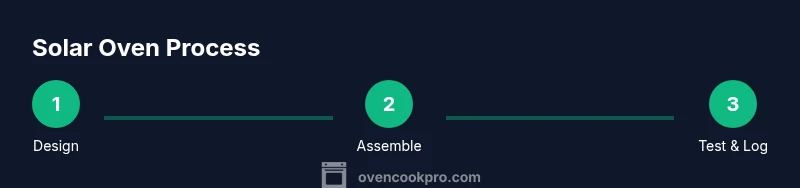
Steps
Estimated time: 2 hours
- 1
Define your design and plan
Choose a simple box-based design to start. Sketch where the reflective surface will mount, where the insulation will go, and where the cooking dish will sit. Decide whether you want adjustable angles or a fixed position based on typical sun exposure in your area.
Tip: Write a quick design checklist to avoid missing parts during assembly. - 2
Build the oven frame
Assemble the outer box and secure the insulation on all interior faces. Make sure there are no gaps that could let warm air escape. Use tape to seal joints and prevent air leaks that reduce efficiency.
Tip: Double-check that the interior corners are fully insulated; corners are common heat-loss points. - 3
Attach reflective surfaces
Line the interior with reflective material, ensuring smooth, wrinkle-free surfaces. Place the reflective panel at an angle that concentrates sunlight onto the cooking area. Avoid overlaps that create gaps or shadows.
Tip: Test reflectivity by shining a flashlight at the panel to confirm uniform light distribution. - 4
Install the transparent cover and seal
Mount the glass or clear plastic cover over the opening. Create a snug seal to minimize heat loss. Ensure you can safely access the cooking area without disturbing the seal.
Tip: Use a gasket if possible to reduce convection losses around the rim. - 5
Prepare the interior and heat-absorbing surfaces
Paint or line the interior with a dark color to maximize heat absorption. Place the cooking dish in the center, and position the thermometer so it can read the contents without touching metal edges.
Tip: Test a dry run with hot water to validate heat retention before cooking food. - 6
Align with the sun and record starting data
Position the oven toward the sun as best as possible and start a data log. Record ambient temperature, sun intensity if possible, and the initial oven temperature. Take an initial temperature snapshot before placing food inside.
Tip: Use a sun compass or phone app to maintain consistent orientation during tests. - 7
Run a test bake and log results
Place a simple item (e.g., water for temperature tracking or a pre-warmed food item) and monitor temperature rise, cooking time, and final results. Repeat with variations to compare performance. Clean up after the experiment and document what design changes improved outcomes.
Tip: Repeat each variation at least twice to reduce random variation in results.
Questions & Answers
What is a solar power oven and how does it work?
A solar power oven uses sunlight reflected and trapped inside a insulated chamber to heat food. It works by concentrating heat with reflective surfaces and minimizing heat loss through a transparent cover and careful sealing. This project demonstrates energy conversion and thermal dynamics in a hands-on way.
A solar oven uses sunlight to heat food inside a sealed, insulated box, showing energy conversion and heat retention in action.
Can I bake bread or cookies in a solar oven?
Yes, you can bake items that don’t require very high or rapid temperatures, such as bread or cookies, depending on design and sun conditions. Expect longer cooking times compared to conventional ovens. Start with simple items and adjust recipes accordingly.
You can bake some items, but be prepared for longer times and adjustments to recipes.
What variables most affect solar oven performance?
Reflectivity, insulation, oven orientation to the sun, and the seal around the transparent cover are the main variables. Weather and sun angle also play major roles. Test one variable at a time to isolate its impact.
Reflectivity, insulation, sun angle, and seal quality drive performance; test them one by one.
What safety steps are essential for this project?
Use heat-resistant materials, keep hands away from hot surfaces, and always supervise cooking tests. Use protective gloves when adjusting components and never leave the setup unattended when hot.
Wear protective gloves and supervise any cooking tests to prevent burns.
How should I present my results for a school project?
Prepare a simple poster or slide deck with diagrams of the oven designs, a temperature vs. time graph, and a short narrative explaining what design changes improved performance. Include photos from each stage and a brief discussion of sources of error.
Create a short poster or slides with design diagrams, data graphs, and a concise write-up.
What if the weather changes during testing?
Note weather conditions for every test, especially cloud cover and wind. If possible, perform multiple tests on clear days to compare. Use this data to discuss variability and confidence in results.
Record weather and repeat tests on clear days to compare reliably.
Watch Video
Main Points
- Start with a simple, insulated box design for reliability.
- Document data consistently to connect heat gain with design choices.
- Insulation and sealing matter more than raw size for efficiency.
- Safety always comes first; handle hot components with care.