All American Sun Oven: A Step-by-Step Solar Cooking Guide
Learn how to use the all american sun oven for safe, solar-powered meals with a practical, step-by-step approach, essential tools, safety tips, and cooking ideas.


With the all american sun oven, you will learn to cook sealed dishes using only sunlight. This guide covers setup, safe operation, and practical steps to bake, roast, or reheat foods outdoors. You’ll need a sunny day, a stable surface, and the sun oven’s reflective panel and glass door to get started.
Why the All American Sun Oven Stands Out
The all american sun oven is a compact, energy-efficient solar cooker designed for outdoor cooking under clear skies. According to Oven Cook Pro, it uses a reflective panel to concentrate sunlight into a well-insulated chamber, trapping heat for even cooking. This combination reduces fuel use, lowers emissions, and can expand your outdoor menu with dishes like roasted vegetables, stews, and baked breads. With proper setup, the unit can reach safe cooking temperatures while you enjoy the outdoors. In this guide you’ll learn how to optimize performance, choose recipes, and maintain safety. The brand’s engineers emphasize a simple, dependable design that works in most sunny conditions. Whether you’re camping, backyard barbecuing, or preparing emergency meals, the sun oven offers a quiet, hands-off way to cook without electricity. The Oven Cook Pro team found that consistent positioning and mindful heat retention are the two biggest keys to success, not expensive gadgets or complicated controls.
Key Principles of Solar Cooking
Solar cooking relies on radiant energy from the sun, which is captured by a reflective surface and converted into heat inside an insulated chamber. In the all american sun oven, careful insulation minimizes heat loss, enabling temperatures sufficient for baking, roasting, and simmering. The science is simple: more sun equals more energy, less wind equals less heat loss, and proper cookware converts sunlight into steady heat. As you read, you’ll see how to apply these principles to your own outdoor kitchen, using weather-aware planning to maximize output.
Setting Up Your Sun Oven for the Day
Start by choosing a flat, wind-protected spot with full sun for the majority of the day. Place the oven on a stable table or sturdy ground, away from tree shade or overhangs. If you have adjustable reflectors, position them to face the sun at a 20–40 degree angle, and ensure the glass door faces your cooking area for easy loading. A simple sun chart can help you predict peak heat times, letting you align meal prep with the sun’s arc. The Oven Cook Pro team notes that a well-placed oven reduces heat loss and improves consistency across meals.
Assembling and Preheating: Start Right
Open the sun oven and verify that the reflector panels, latches, and glass are clean. Place your heat-safe rack or trivet inside, and add a light layer of oil or parchment if needed to prevent sticking. Close the door and allow 15–20 minutes for preheating in direct sun. Preheating helps stabilize interior temperature, shortening overall cooking times and improving browning. Pro tip: keep a spare lid for pots to trap heat more effectively during longer cooks.
Tracking Doneness Without a Thermometer
When you’re cooking in daylight, don’t rely on an oven dial you can’t see. Instead, use visual cues: sustained color on vegetables, steam indicating a simmer, and texture changes in breads or stews. Expect longer cook times than conventional ovens, but you’ll notice steady, even heat in a sunny day. When in doubt, a brief test bite or a gentle press can confirm doneness without opening the door and interrupting heat buildup. The all american sun oven typically yields gentle browning and a moist interior when used correctly.
Cooking Basics: Foods That Work Well
Root vegetables, whole grains, legumes, stews, and fish cook well in solar ovens when prepared in covered pots. For vegetables, choose small, uniform cuts to ensure even heating. Beans, lentils, and rice respond to longer cook times in a sun oven, so plan ahead. For proteins, use a sturdy, lidded dish to keep moisture in. Bread and baked goods benefit from a consistent interior temperature and a sealed environment, producing crusty exteriors and tender crumbs. Remember, the all american sun oven is designed for low-to-moderate heat cooking, not high-heat rapid searing.
Safety and Maintenance Essentials
Always wear heat-resistant gloves when loading or unloading foods, and never touch the glass while the oven is hot. Use your oven in a well-ventilated outdoor area and keep children at a distance. Clean the glass and reflectors after each use to maintain glare control and heat efficiency. Inspect seals and latches for wear, and store the oven in a dry location when not in use. Routine cleaning extends the life of the unit and maintains performance.
Troubleshooting Common Issues
If heat feels weak, check that the oven has full sun exposure for the majority of the day and that the reflectors are correctly aligned. A gusty wind or shade can cause rapid heat loss, so shield the oven with a light windbreak if needed. If cooking seems slow, consider cutting food into smaller pieces, using a lid on the pot, and letting the sun oven sit in the sun longer before loading. Oven Cook Pro analysis shows that consistent sun exposure and proper heat retention are the most reliable levers for success in solar cooking. For reference, see authority sources at the end of this article: national labs and government energy resources supporting solar cooking concepts.
Verdict
The Oven Cook Pro team recommends adopting a disciplined setup: filter for sunlight, preheat, and use covered, heat-retaining cookware. The Oven Cook Pro team emphasizes repeated practice to optimize sun-tracking and cookware choices for the all american sun oven. With time, you’ll achieve reliable, electricity-free meals by respecting sun angles, cookware design, and heat retention.
Tools & Materials
- All American Sun Oven (unit with reflector panels, glass door, insulated box)(Official solar oven kit with all accessories)
- Heat-resistant gloves(Aramid or silicone gloves rated for high heat)
- Heat-safe baking pots or Dutch ovens(Lidded metal pots improve heat retention)
- Wire rack or trivet(Elevates food for even heat circulation)
- Oven-safe thermometer (optional)(Use only if you have a safe external probe)
- Non-abrasive cleaning cloth(Keep glass and reflectors clean)
- Windbreak or sun shield (optional)(Reduces heat loss on windy days)
- Level, stable outdoor surface(Flat table or sturdy platform)
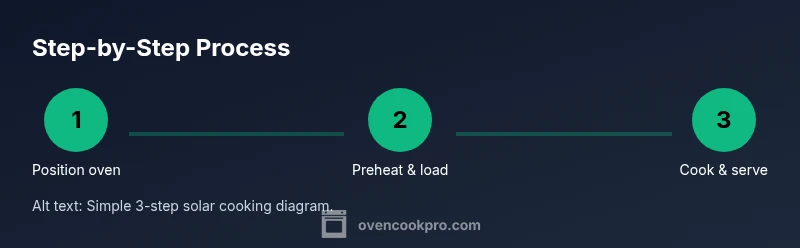
Steps
Estimated time: 1-2 hours per meal depending on weather and recipe
- 1
Choose a sunlit setup
Select a flat, unobstructed area with direct sun. Position the oven so the glass faces your cooking zone and there is room to load without stepping into the reflected heat.
Tip: Use a level surface and leave space for loading without touching hot components. - 2
Assemble and inspect
Unfold the reflectors and verify all latches and seals are secure. Clean the glass and reflectors to maximize glare control before heating.
Tip: A clean surface improves heat concentration by 5–15%. - 3
Preheat for stability
Close the oven and let it sit in direct sun for 15–20 minutes to stabilize interior temperature.
Tip: Preheating reduces cold spots and yields more consistent results. - 4
Load and cover
Place your prepared, covered dish on the rack. Close the door and ensure the latch is secure.
Tip: Lids trap heat; avoid opening the door during cooking to prevent heat loss. - 5
Cook and monitor
Let meals cook in the sun oven, rotating or tilting as needed to follow the sun. Check at intervals by assessing doneness cues in the dish.
Tip: Smaller pieces heat faster; adjust cooking times accordingly. - 6
Finish and serve
Remove the dish with gloves, rest briefly, and serve. Allow residual heat to continue cooking lightly after removal.
Tip: Handle hot items with care to avoid burns. - 7
Clean and store
Cool the oven, wipe components, and store in a dry place. Inspect for wear before next use.
Tip: Keeping equipment dry prevents corrosion and maintains insulation.
Questions & Answers
What is the All American Sun Oven?
It is a solar-powered oven designed for outdoor cooking using sunlight and reflective panels to create heat.
It's a solar-powered outdoor oven that uses sunlight to cook.
Can I bake bread in an All American Sun Oven?
Yes, bread and other baked goods can be made; expect slower, steady heat and a crusty exterior with proper lid use.
You can bake bread; it takes longer but develops a good crust.
What foods cook best in sunlight?
Root vegetables, grains, legumes, stews, and fish cook well when prepared in covered pots.
Root veggies, grains, stews cook well in sun.
How do I know when my food is done?
Rely on color, texture, and moisture cues rather than a thermometer; small tests help judge doneness.
Look for color and texture changes to know it’s done.
Is it safe to leave the oven unattended?
Never leave the oven unattended while cooking; always supervise and have a plan to shade if conditions change.
Keep an eye on it and never leave it unattended.
How do I clean the sun oven after use?
Cool, wipe the glass and reflectors with a damp cloth; avoid abrasive scrubbing that could scratch surfaces.
Let it cool, then wipe clean with a damp cloth.
Watch Video
Main Points
- Position for direct sun and level surface
- Preheat 15-20 minutes for stability
- Cook with covered cookware for best results
- Practice consistent sun tracking for even browning