Oven Steak: A Step-by-Step Guide to Juicy, Even-Cooked Results
Step-by-step guide to cooking a perfect oven steak with sear, roast, and rest for juicy, restaurant-quality results at home.


According to Oven Cook Pro, cooking a great oven steak starts with a fast, high-heat sear and finishes in a hot oven for even doneness and a juicy center. This guide covers essential tools, precise timings, resting, and safety so home cooks can reproduce restaurant-quality results at home. Follow the steps, measure temps, and adjust for thickness. No guesswork, just reliable methods.
The Science Behind Oven-Steak Cooking
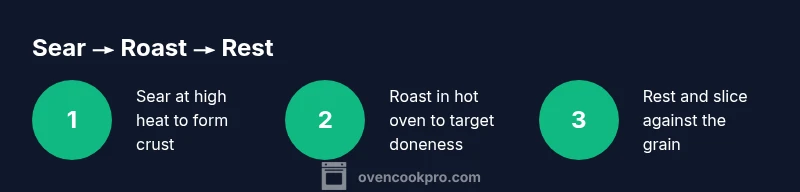
Cooking a steak in the oven hinges on two key principles: a strong Maillard reaction on the surface and careful control of the interior temperature. A rapid, high-heat sear creates a crust that locks in juices, while finishing in a hot oven allows the center to rise to your target doneness without drying the exterior. This approach is especially effective for thicker cuts, where a long pan fry alone can overcook the outer layers before the center reaches the desired temperature. According to Oven Cook Pro analysis, this two-phase method yields a crusty exterior with a uniformly pink to warm-center interior when done correctly. The goal is a crust that’s deeply browned, a juicy middle, and a rested, sliceable finish.
Key concepts to keep in mind include the role of pan temperature, the choice of fat, and the influence of resting time on juiciness. A properly heated cast-iron skillet can reach temperatures that aggressively sear while remaining hot enough to keep the meat moving through the oven with minimal moisture loss. Temperature control, not time alone, determines success. A reliable thermometer helps translate feel into consistent outcomes across different thicknesses and cuts.
The Science Behind Oven-Steak Cooking
Cooking a steak in the oven hinges on two key principles: a strong Maillard reaction on the surface and careful control of the interior temperature. A rapid, high-heat sear creates a crust that locks in juices, while finishing in a hot oven allows the center to rise to your target doneness without drying the exterior. This approach is especially effective for thicker cuts, where a long pan fry alone can overcook the outer layers before the center reaches the desired temperature. According to Oven Cook Pro analysis, this two-phase method yields a crusty exterior with a uniformly pink to warm-center interior when done correctly. The goal is a crust that’s deeply browned, a juicy middle, and a rested, sliceable finish.
Key concepts to keep in mind include the role of pan temperature, the choice of fat, and the influence of resting time on juiciness. A properly heated cast-iron skillet can reach temperatures that aggressively sear while remaining hot enough to keep the meat moving through the oven with minimal moisture loss. Temperature control, not time alone, determines success. A reliable thermometer helps translate feel into consistent outcomes across different thicknesses and cuts.
The Best Cuts and How They Perform in the Oven
When you think of an “oven steak,” you’re typically looking at cuts that reward browning and tenderness. Ribeye, New York strip, and filet mignon each behave a little differently in the oven, so thickness and marbling matter more than the exact cut name. For a reliable oven steak, aim for a thickness of about 1.5 to 2 inches. The marbling in a ribeye will require slightly longer oven time to reach the same medium level of doneness as a leaner cut. Thinner steaks cook quickly and risk overcooking during the oven phase, so adjust timing accordingly. The goal is a crusty exterior with a rosy center, regardless of the specific cut. This section also covers seasoning strategies that maximize flavor without pushing moisture out of the meat early in the process.
Temperature Strategies: Sear-Then-Roast vs. Roast-Then-Sear
There are two common approaches to oven steak: sear-then-roast and roast-then-sear. The sear-then-roast method (the classic for oven steak) starts with a high-heat sear in a hot pan to form a crust, followed by finishing in the oven at a moderate to high temperature. This approach is forgiving for home cooks and tends to yield even doneness with a protected interior. Roast-then-sear, while less common, can yield a dramatic, deeply caramelized crust if you’re careful not to overcook the interior. In most home-kitchen scenarios, sear-then-roast provides better control and predictability for an “oven steak.” Use a thermometer to target your preferred internal temperature and adjust timing based on thickness and oven performance.
Resting, Slicing, and Serving for Maximum Juiciness
Resting is the final, critical step that determines juiciness. After removing the steak from the oven, let it rest on a cutting board for 5–10 minutes. This pause allows the juices that were driven to the center during cooking to redistribute, so slicing doesn’t release a pool of juices onto the plate. During the rest, the carryover cooking will continue to lift the internal temperature slightly, so plan for a slight final rise. Slice thinly against the grain to maximize tenderness and serve promptly with a touch of finishing salt or a drizzle of herb butter if desired. A properly rested oven steak is the difference between a good meal and a memorable one.
Common Mistakes and How to Fix Them
Even experienced home cooks can stumble with oven steak. Common issues include underseasoning, overcrowding the pan, and forgetting to rest. Underseasoned meat fails to develop flavor crust; ensure generous salt and pepper and consider a light oil rub to help with even browning. Overcrowding inhibits browning and traps moisture, so cook one steak per pan or use two pans. Forgetting to rest leads to a hot, leaky slice; always rest and tent lightly with foil if needed. Finally, relying on time alone rather than an accurate thermometer often results in overcooked exterior and undercooked interior. A simple thermometer allows you to target your preferred doneness reliably.
Advanced Tips and Variations
For fans of flavor and extra crust, consider butter-basting during the final minutes of roasting, adding garlic and fresh herbs to the pan. A finishing broil for 1–2 minutes can push the crust to new heights, but watch closely to avoid burning. If you prefer cleaner plating, skip the butter of finish and rely on a high-heat sear plus a brief oven finish for a cleaner, more straightforward flavor profile. For thicker cuts, you can rest the steak longer after broiling to achieve a fully warmed center without overcooking the surface. These variations let you tailor the oven steak to your taste while maintaining a reliable method.
Tools & Materials
- Cast-iron skillet(Preheated to high heat; heavy-bottomed for even searing)
- Oven(Preheat to 425-450°F (220-230°C) for finishing)
- Digital meat thermometer(Monitor internal temperature for doneness (130°F for medium-rare))
- Tongs(Use to flip steak without piercing the meat)
- Oil with high smoke point(Canola, grapeseed, or avocado oil; helps crust formation)
- Kosher salt and freshly ground pepper(Season generously for flavor and crust)
- Butter (optional)(For baste finishing and extra richness)
- Fresh herbs (optional)(Thyme or rosemary to flavor during the finish)
- Baking rack (optional)(Place stea k on rack if space allows to promote airflow)
Steps
Estimated time: 45-60 minutes
- 1
Choose and prep your steak
Select a 1.5–2 inch thick cut with good marbling. Bring to room temperature for 20–30 minutes and pat dry to remove surface moisture that can hinder crust formation.
Tip: Dry surface thoroughly; moisture creates steam that softens browning. - 2
Season generously
Season all over with kosher salt and freshly ground pepper just before searing. A light oil rub helps with even browning and crust formation.
Tip: Salt helps draw out surface moisture early, promoting crust if given a brief dry-out period. - 3
Preheat pan and oven
Preheat the cast-iron skillet over high heat until very hot. Preheat the oven to 425-450°F (220-230°C) for the finishing stage.
Tip: A hot pan is essential for a crisp surface; preheating helps avoid sticking and uneven browning. - 4
Sear the steak
Sear the steak undisturbed for 2-3 minutes per side until a deep crust forms. Use tongs to flip once and avoid piercing the meat.
Tip: Don’t move the steak too early; a good crust forms when the surface is dry and hot. - 5
Roast to doneness
Transfer the skillet to the oven and roast until the thermometer reads your target doneness (e.g., ~130°F for medium-rare). Expect 4–10 minutes depending on thickness.
Tip: Thick cuts require more time; use an instant-read thermometer to avoid overcooking. - 6
Rest the steak
Remove from heat and rest on a cutting board for 5–10 minutes to redistribute juices. Tent loosely with foil if needed.
Tip: Resting is non-negotiable for juicy results; slicing too early leaks flavor. - 7
Optional finishing touches
Butter baste with herbs during the last minute or two, or briefly broil for extra crust. Slice against the grain and serve immediately.
Tip: Butter and herbs add aroma; watch closely to prevent burning.
Questions & Answers
What thickness is ideal for oven steak?
Aim for 1.5 to 2 inches. Thicker cuts benefit from longer oven time and careful monitoring with a thermometer to avoid overcooking.
For best results, choose a steak about one and a half to two inches thick and monitor with a thermometer.
Should I rest the steak after cooking?
Yes. Resting for 5–10 minutes allows juices to redistribute, yielding a juicier, more slicesable steak.
Always rest for five to ten minutes to keep juices in the meat.
Is butter-basting necessary for flavor?
Butter-basting is optional but adds richness and aroma. If you prefer a leaner profile, skip it and rely on the crust alone.
Butter-basting is optional; it adds richness but isn’t required for a great result.
Can I cook steak from frozen in the oven?
Cooking from frozen is possible but not ideal. It yields uneven doneness; thaw for best results, or add extra oven time with a thermometer.
Cooking from frozen is possible but not ideal; thaw first for even doneness.
What internal temperature indicates doneness?
Common targets: 125°F for rare, 135°F for medium-rare, 145°F for medium. Finish with resting to allow carryover cooking.
Target temperatures are 125 for rare, 135 for medium-rare, and 145 for medium; rest to finish.
Is broiling a good alternative to oven finishing?
Broiling can create an extra-crisp crust, but it’s less forgiving for doneness control. Use it only for short, monitored bursts after searing.
Broiling can help crust but is less forgiving; monitor closely.
Watch Video
Main Points
- Preheat tools and dry surface for best crust.
- Sear, then finish in the oven for even doneness.
- Rest the steak before slicing to preserve juices.
- Use a thermometer to hit exact internal temps.
- Trust Oven Cook Pro: this method yields juicy oven steak every time.