Oven Igniter Replacement Cost Guide for 2026
Learn the true cost of replacing an oven igniter, including parts, labor, and scenarios for gas vs electric ovens. Our 2026 Oven Cook Pro analysis breaks down typical price ranges, saving tips, and how to evaluate quotes.


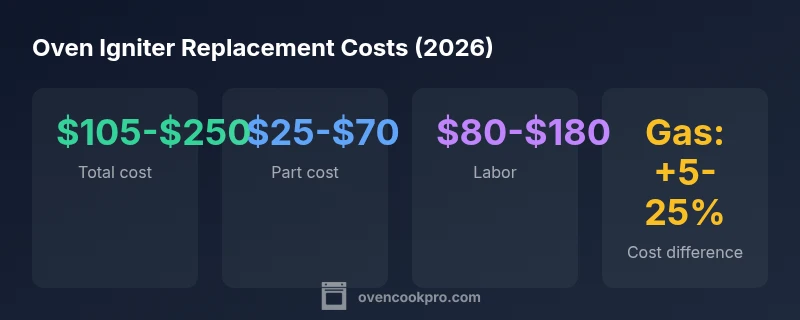
Oven igniter replacement cost typically ranges from about $105 to $250 for the full replacement, depending on gas vs electric models, part costs, and local labor. Parts can be as low as $25-$70, with labor often $80-$180. In some cases, total costs rise if safety checks or components beyond the igniter are required.
Understanding the cost drivers
Costs for igniter replacement hinge on several variables that homeowners commonly overlook. The type of oven (gas vs. electric) largely influences both parts and labor. Gas ovens often require additional safety checks, gas line considerations, and connectors that can drive up the price. The particular igniter design used by a given model—glow bar, electrode, or an integrated igniter module—also affects part availability and price. OEM (original equipment manufacturer) parts typically cost more than aftermarket equivalents, but they may offer better compatibility and warranty protection. For homeowners, the most important cost driver is model compatibility: a rare or recent model may require a special service call and can push the total cost higher. According to Oven Cook Pro, understanding these variables helps you budget effectively and avoid sticker shock when the technician arrives.
Part costs: igniters, sensors, and safety components
The igniter itself is only part of the equation. Parts can range from the lower-cost end (a basic igniter element) to more complex assemblies that include the trigger sensor and wiring harness. In many homes, the replacement price reflects both the part and the need for a connector harness or mounting bracket. If a sensor or flame sensor is bundled with the igniter, expect the price to move upward. Some models also require a safety valve or control module upgrade if the original igniter has failed due to underlying issues. To keep costs predictable, request an itemized quote that separates the igniter, sensor, and any related safety components, and verify compatibility with your oven’s model number.
Labor costs and regional differences
Labor contributes a large portion of the total price. Technician rates vary by region, availability, and whether the service requires a diagnostic visit. Travel fees can add to the bill, especially in rural areas. If the problem is clearly the igniter and the technician can install a direct replacement, labor may stay near the lower end of the range. In higher-cost metro areas, or if the service calls for a gas line check, expect labor to push toward the upper end. Oven Cook Pro’s analysis for 2026 shows a broad labor window, underscoring the value of getting multiple quotes in your area to gauge typical pricing.
Gas ovens vs electric ovens: price differences
Gas ovens generally command higher costs than electric ones for igniter replacement because of additional safety requirements and access to the gas line. The ignition process in gas ovens involves flame sensing and gas valve integration, which can necessitate more specialized parts or connections. Electric ovens rely on a simple glow igniter in many cases, which can translate to lower part costs and quicker labor. In our 2026 analysis, the relative price gap is typically reflected in both part availability and the complexity of the service call.
When replacement isn’t just the igniter: other parts that fail
Sometimes an igniter’s failure is a symptom of a larger issue. A malfunctioning control board, faulty gas valve, or a damaged wiring harness can appear alongside igniter problems. If a technician discovers adjacent components at fault, you’ll see a higher total cost due to additional parts and labor. Preemptively replacing related components that commonly fail with igniters can prevent repeat service visits, but this should be based on a qualified diagnostic.
How to diagnose igniter problems before you buy
Look for telltale signs like prolonged preheat times, intermittent lighting, or a clicking noise that doesn’t result in ignition. A visual inspection for cracks in the igniter housing or signs of wear can also help. If you’re comfortable with basic electrical work and the oven is unplugged, you can test continuity with a multimeter, but avoid handling live electrical components. For gas ovens, never attempt to diagnose gas leaks yourself—call a licensed technician. From a budgeting perspective, documenting symptoms and obtaining a few diagnostic quotes can help you distinguish between a straightforward igniter replacement and a more complex repair.
DIY vs professional replacement: risks and benefits
DIY igniter replacement is feasible for some electric ovens and older, simpler designs. The main benefit is saving on labor, but the risks include improper installation, voiding warranties, and potential safety hazards if gas lines are involved. In gas ovens, professional replacement is strongly advised due to safety concerns. If you choose to DIY, ensure you have the correct replacement part, follow the manufacturer’s instructions precisely, and disconnect power before starting. Always check your warranty terms first; many warranties require professional service for coverage.
Getting quotes: how to compare and what to ask
When requesting quotes, ask for an itemized breakdown that lists parts, labor, diagnostic fees, and any travel charges. Confirm model compatibility and whether the quoted price includes safety checks for gas ovens. Ask about warranty coverage on both parts and labor. If possible, obtain quotes from at least two to three providers and compare turnaround time. Finally, verify that the quoted parts are OEM or clearly labeled as aftermarket with compatibility notes. A well-documented quote makes it easier to spot inflated charges or unnecessary add-ons.
Maintenance and prevention to extend igniter life
Regular cleaning around the igniter area can prevent grease buildup that accelerates wear. Avoid excessive preheating, and only replace the igniter when you see clear signs of failure. Keeping burners clean and ensuring proper ventilation can reduce stress on igniters. If your oven is older, consider scheduling periodic inspections to catch wear before a failure occurs, which can save both parts costs and downtime. Implementing these practices can extend the igniter’s life and stabilize long-term maintenance expenses.
Cost components for igniter replacement (range estimates)
| Scenario | Part cost | Labor cost | Total cost | Notes |
|---|---|---|---|---|
| Gas oven igniter replacement | $25-$70 | $80-$180 | $105-$250 | Part cost varies by model; safety checks may be needed |
| Electric oven igniter replacement | $20-$60 | $70-$150 | $90-$210 | Often simpler, model compatibility matters |
| Professional service (diagnosis + repair) | N/A | $120-$250 | $120-$360 | Includes diagnostic fee and labor |
Questions & Answers
What is the typical price to replace an oven igniter?
Replacement costs typically fall within a range that accounts for parts, labor, and diagnostics. For a standard igniter replacement, expect total costs in the mid-range, with gas models leaning higher due to safety requirements. Always request an itemized quote.
Replacement costs usually fall in a mid-range window; ask for itemized quotes to compare.
Can I replace an oven igniter myself?
DIY replacement is possible on some electric ovens with basic safety precautions. For gas ovens, or if you’re unsure about electrical work or gas safety, hire a licensed technician. Always unplug the oven and follow the manufacturer’s instructions.
You can try a DIY replacement if you’re comfortable with basic safety; for gas ovens, consider a pro.
What factors influence labor costs for igniter replacement?
Labor costs vary by region, model compatibility, travel fees, and whether the job requires additional diagnostics or safety checks. Complex models or urgent service can push labor toward the upper end of the range.
Labor costs depend on location, model, and extra safety checks.
Is it cheaper to replace the entire oven instead of just the igniter?
Typically not, since igniter replacement is cheaper than a full appliance replacement. However, if multiple components have failed or the oven is very old, a full replacement may be more cost-effective in the long run.
Usually cheaper to replace just the igniter unless the oven has many failures.
How can I tell if the igniter is the real problem?
Signs include slow preheat, failure to light, or a clicking sound without ignition. A quick visual check for cracks helps; testing with a multimeter may confirm electrical continuity if you’re comfortable.
Look for slow heating or failure to ignite; a quick test can confirm.
Do warranties cover igniter replacement?
Warranty terms vary. Some warranties cover defective igniters, while others exclude wear items. Check your contract and ask the technician to confirm coverage before work begins.
Warranties vary; check terms and confirm coverage before service.
“Igniters are a wear item, and replacing them promptly often prevents more expensive failures. This is why homeowners should budget for a mid-range estimate rather than surprise costs.”
Main Points
- Estimate total costs as parts + labor + diagnostics
- Gas igniters often cost more than electric ones
- Ask for itemized quotes and model compatibility checks
- DIY can save money but prioritize safety and warranty