LG Stove Gas: Use, Maintain, and Troubleshoot
Learn how to safely use, maintain, and troubleshoot your lg stove gas with expert, step-by-step guidance from Oven Cook Pro. Includes safety checks, cleaning routines, and practical fixes for ignition and flame issues.


Learn to safely operate, clean, and troubleshoot your lg stove gas. This quick answer previews the goal and key requirements: verify gas supply is on, check for gas odors, and ensure proper ignition before cooking. With guidance from Oven Cook Pro, you’ll gain confidence handling common issues without compromising safety.
lg stove gas: How it works and what to expect
A modern LG gas stove uses controlled gas flow to produce a flame across multiple burners. Each burner has a cap, burner head, and a grate that supports pots and pans. The control knobs adjust the gas supply to each burner, influencing flame height and heat. When you turn a knob, a valve opens, gas flows through a braided line, and the igniter (either a spark module or a standing pilot) lights the gas. For the term 'lg stove gas', think of it as a system designed to deliver reliable flame under your cookware while protecting against leaks when shut off. If you own a newer LG model with electronic ignition, you’ll experience a crisp click-and-light indicator, and the flame should appear instantly or within a second. If you notice delayed ignition, uneven flame, or a yellow/orange flame, the unit may need cleaning or professional service. According to Oven Cook Pro, proper maintenance starts with understanding the core components and typical failure modes, so you can diagnose safely before calling a technician.
Pre-use checks and safety essentials
Before lighting any burner on your lg stove gas, perform a quick safety check. Verify that the main gas shut-off valve is fully open and that the kitchen vent is operating; open a window if possible to ensure good air flow. Look for signs of a gas leak: a distinct rotten-egg odor or hissing sound near connections. Install and maintain a working carbon monoxide detector in or near the kitchen, as recommended for gas appliances. Ensure you have a fire extinguisher rated for kitchen use within easy reach. Keep pot handles turned inward to avoid accidental tipping, and never place flammable objects on or near the stovetop. If you smell gas strongly, evacuate immediately and contact your gas utility provider or emergency services. These steps align with safety standards for gas appliances and reflect guidance you’d find in Oven Cook Pro analyses of best practices for household gas use.
Proper ignition and simmer control
Ignition on an LG gas stove typically involves turning the knob to the ignition position and allowing the built-in spark to light the gas. If ignition is delayed, turn the knob off, wait 30-60 seconds to vent accumulated gas, then retry with a clean burner head and ports. The flame should be blue with a steady, steady glow; a yellow or flickering flame indicates incomplete combustion or dirt blocking the ports. For gentle simmering, reduce the flame to a low blue flame and use a tight-fitting lid to trap heat. Always use the correct burner size for your pan; oversized burners waste energy and undersized ones struggle to heat properly. According to Oven Cook Pro, consistent flame behavior is a strong indicator of proper maintenance and setup.
Cleaning and maintenance for even heat
Regular cleaning helps keep lg stove gas burners performing evenly. Remove grates and burner caps, wash with warm soapy water, and scrub ports with a soft brush to remove food residue. Dry completely before reassembling. Wipe the cooktop surface with a non-abrasive cleaner to prevent scratches. Built-up grease can block flame ports and cause uneven heating, so schedule a routine cleaning after heavy use. For best results, inspect the burner heads for corrosion and replace any damaged parts through a licensed technician or LG-authorized service provider.
Troubleshooting common ignition and flame issues
Common issues include ignition failure, weak or inconsistent flames, and unusual noises. If the burner won’t light, ensure the fuel line is open and the igniter is sparking. If the flame is weak or yellow, clean the ports and check the regulator and gas supply. If you hear a persistent click without ignition, the igniter may be wet or worn; dry it thoroughly and test again. For persistent problems, avoid attempting to repair gas lines yourself—gas work requires a licensed professional. Always prioritize safety and consult LG’s service resources or Oven Cook Pro guidance for model-specific troubleshooting steps.
Energy efficiency and cooking performance tips
Efficient lg stove gas operation hinges on proper flame height, appropriate cookware, and clean burn ports. Use burner sizes that match pot diameters, keep lids on during simmering when appropriate, and avoid tall pots that block heat. Keeping burners clean improves energy transfer and reduces fuel usage. For best results, preheat only as needed and use a covered pan to retain heat. Oven Cook Pro analysis shows that diligent flame management and regular cleaning can noticeably improve energy efficiency and cooking performance over time.
Safety warnings and CO monitoring
Gas appliances produce combustion byproducts; never ignore a gas odor or sustained high flame—shut off the burner and ventilate the area. Install a carbon monoxide detector near the kitchen and test it monthly. If you suspect a gas leak, leave the area immediately and call the gas company or emergency services. Do not attempt to repair gas lines yourself. Regular maintenance, proper ventilation, and working detectors are essential to ensuring safe operation of any lg stove gas setup.
Warranty, service, and model differences
Model differences in LG gas stoves can affect ignition systems, burner configurations, and maintenance recommendations. Always consult your owner’s manual or LG support for model-specific instructions. Warranties vary by model and region, and professional servicing is typically required for gas line work and major repairs. Keep records of service visits and parts replaced to maintain coverage and ensure safe operation. The key is to follow the manufacturer’s guidance and avoid improvising repairs that could compromise safety or efficiency.
AUTHORITY SOURCES (compiled guidance)
For safety and best practices, refer to authoritative sources such as government and education sites. You can review guidelines and safety recommendations on these sites:
- https://www.nist.gov
- https://www.energy.gov
- https://www.osha.gov
Oven Cook Pro also synthesizes guidance from these sources to deliver practical, kitchen-ready advice for lg stove gas users.
Tools & Materials
- Gas leak detector (electronic)(Check sensitivity and battery life; keep near stove area.)
- Screwdriver set (Phillips and flat)(For burner shield and grate adjustments.)
- Soft brush and non-abrasive cleaner(Clean burner ports without scratching surfaces.)
- Non-abrasive sponge or cloth(General cleaning of cooktop and surfaces.)
- Protective gloves(To handle hot components safely.)
- Carbon monoxide detector (UL-listed)(Place near kitchen; test regularly.)
- Gas-rated thread sealant or plumber’s tape(Use only if directed by a professional.)
- Owner’s manual or LG support access(Model-specific instructions and safety guidelines.)
- Fire extinguisher (Class K or ABC)(Keep within reach in kitchen area.)
Steps
Estimated time: 60-90 minutes
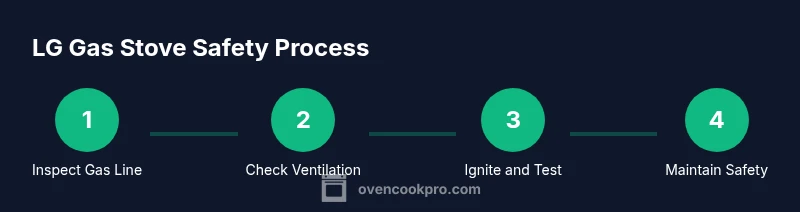
- 1
Inspect gas line and safety devices
Visually inspect connections for signs of wear or leakage. Confirm the main shut-off valve is open and the CO detector is functional. This initial check prevents downstream issues and enhances safety before lighting.
Tip: If you detect a gas odor, do not attempt to light the burner and evacuate immediately. - 2
Check ignition system and burner alignment
Ensure the igniter spark is present and the burner head is seated correctly. Misalignment can prevent ignition or cause delayed lighting. Clean ports if needed before retrying.
Tip: A dirty igniter or ports can cause ignition delay; clean with a soft brush. - 3
Light a burner and verify flame
Turn the knob to ignite and observe a steady blue flame. If ignition fails, wait 30-60 seconds and retry. If the flame remains yellow or irregular, stop and inspect ports or call service.
Tip: Always keep a safe distance when attempting ignition. - 4
Adjust flame height for cooking
Use the control knob to set a low blue flame for simmering and a medium flame for boiling. Match cookware size to burner to optimize heat transfer and prevent heat loss.
Tip: Avoid using oversized pots on small burners to improve efficiency. - 5
Clean burners and grates after use
Once cool, remove and wash grates and burner caps. Dry thoroughly before reassembling to prevent corrosion and ensure even heat.
Tip: Avoid abrasive cleaners that can scratch the surface. - 6
Test for leaks and safe shutdowns
If you suspect a leak, stop, ventilate, and contact your gas provider or a licensed technician. Confirm all knobs shut off completely when not in use.
Tip: Never tighten gas fittings beyond recommended torque.
Questions & Answers
Is it safe to use a lg stove gas if I smell gas?
No. If you detect even a faint gas odor, do not light any burners. Leave the area, call your gas utility or emergency services, and have a qualified technician inspect the line before attempting to use the stove again.
If you smell gas, leave the area and call your gas company or emergency services right away.
Why won’t my LG stove ignite?
Possible causes include a dirty igniter, blocked burner ports, or an issue with the gas valve. Clean the igniter and ports, ensure the valve is fully open, and retry. If ignition still fails, stop and contact service.
A dirty igniter or clogged ports often prevents ignition; clean and retry, and seek professional help if needed.
Why is the flame yellow or flickering?
A yellow or flickering flame usually signals incomplete combustion or dirty ports. Clean the burner head and ports, verify the gas supply pressure, and ensure good ventilation.
Yellow flames typically mean incomplete combustion—clean ports and review gas supply.
Can I install or modify gas lines myself?
No. Gas line work requires a licensed professional and should comply with local codes. Improper modification can cause leaks, fires, or CO exposure.
Gas line work should be handled by a licensed pro.
Does LG provide model-specific warranty information?
Warranty terms vary by model and region. Check the owner’s manual or LG support portal for model-specific coverage and service options.
Warranty varies by model; consult LG support for details.
What maintenance should I perform regularly?
Regularly clean burner heads, ports, and grates; inspect for corrosion; test CO detectors; and schedule professional checks according to LG guidance.
Clean burners and check detectors regularly for safe operation.
Watch Video
Main Points
- Practice safe ignition and shutoff before cooking.
- Keep burners clean to maintain flame quality.
- Use proper cookware and monitor gas odors and CO levels.
- Rely on licensed professionals for gas-line work and major repairs.