Mastering the KitchenAid Double Oven: A Practical Guide
Learn how to select, install, maintain, and troubleshoot a KitchenAid double oven with actionable, step-by-step guidance from Oven Cook Pro for homeowners.


This guide helps you master a KitchenAid double oven by walking you through essential setup, operation, and maintenance steps. You'll learn how to plan space, use upper and lower ovens, adjust racks, preheat, bake, and troubleshoot common issues—so you can cook with confidence. It also covers safety tips, recommended tools, and a clear 9-step process to maximize performance.
Why the KitchenAid double oven matters for home cooking
According to Oven Cook Pro, a KitchenAid double oven is more than a luxury; it is a practical solution for busy households that want to execute multiple dishes with precision. The two independently controlled cavities give you the flexibility to bake a sheet of cookies in one chamber while roasting a chicken in the other, without flavor transfer. This separation is especially useful during holiday meals or weeknight dinners when timing is tight. The design also helps maintain consistent results by staggering heat zones and offering versatile convection options when supported by the model. Homeowners often report that the extra capacity reduces last minute stress and expands menu planning options. The KitchenAid double oven brings professional-style capabilities into a home kitchen, making it easier to deliver uniform browning, better heat control, and more predictable outcomes across recipes.
Understanding dual ovens and how they work
Dual ovens operate as two separate cavities with their own racks, timers, and temperature controls. The upper oven is typically optimized for faster preheating and finishing touches, while the lower oven focuses on maintaining steady heat for longer cooks. When both are convection-enabled, hot air circulates for even cooking, which is especially helpful for baking multiple trays at once. The independent control panels allow you to set each oven to a different temperature, which is ideal when you have to juggle roast beef, potatoes, and a dessert simultaneously. With practice, you learn to schedule dishes so that you start with long, slow roasts in the lower oven and finish delicate pastries in the upper oven without cross reactions.
How to measure your space and choose the right model
Before purchasing or installing a KitchenAid double oven, measure the width, height, and depth of the cabinet opening. Check the clearance around vents and doors to ensure proper ventilation. Consider whether you want a slide-in or freestanding unit and whether your cabinet finish matches the appliance. Look for models with a sturdy door seal, easy-glide racks, and clearly labeled controls. If space is tight, you may prefer a compact double oven with a smaller footprint but still offering independent cooking zones. Read model manuals and check warranty terms to ensure you get the best value for your kitchen layout.
Planning electrical and space requirements (safety comes first)
A KitchenAid double oven installation often requires a dedicated electrical supply and proper ventilation. If you are not a licensed professional, hire an electrician to verify the circuit capacity, wire gauge, and grounding. Do not attempt electrical work beyond your training, as improper connections can pose serious safety risks. In addition to electrical readiness, confirm that your countertop and cabinetry can support the appliance’s weight and depth. A proper installation enhances performance and reduces the likelihood of nuisance tripping or overheating during high-demand cooking sessions.
Daily use: getting started with the controls
Begin with the manufacturer’s guide to identify which controls operate the upper versus lower oven. Set the preferred temperatures, choose bake or roast modes, and use the timers to coordinate cooking times. When using both ovens, plan for separate temperatures and racks. If your model supports convection, consider enabling it for even browning and faster cooking. Practice basic routines like preheating, loading trays evenly, and using oven-safe cookware. Over time, you’ll speed up meal prep by memorizing common settings for your favorite recipes and keeping essential tools within easy reach.
Cooking strategies: maximizing results with two ovens
A common approach is to use one oven for long roasts while the other handles vegetables, sides, or desserts. Place larger, denser items in the lower cavity and lighter, delicate items in the upper cavity to avoid heat transfer issues. Use convection selectively for items that benefit from even air flow, and disable it for fragile baked goods that require a gentler approach. When timing is tight, start with the dish that takes longer and finish with faster-cooking items in the second oven to have everything ready together.
Cleaning and maintenance for longevity
Regular cleaning keeps a KitchenAid double oven performing at its best. After each use, wipe spills once the oven has cooled, and remove racks to wash separately. Use non-abrasive cleaners and soft cloths to protect enamel surfaces. Schedule a deeper cleanup periodically if your model includes a self-cleaning cycle; follow the manufacturer’s instructions to avoid damaging gaskets or seals. Inspect door seals and hinges for wear and ensure the glass remains free of residue for clear visibility. Consistent care preserves heat efficiency and prevents residue build-up that can affect flavor and texture.
Troubleshooting common issues you might encounter
If heat seems uneven between ovens, verify that racks are positioned correctly and that you are using compatible bakeware. For temperature discrepancies, consider an external oven thermometer to confirm actual temperatures. If the door won’t latch or seal properly, check for obstructed racks or misaligned seals and consult service if the problem persists. If preheating takes longer than expected, confirm that the power supply is stable and that the oven is not in a energy-saving mode. When in doubt, resetting the unit and rechecking settings can resolve many minor glitches.
Safety and energy tips for long-term performance
Always wear heat-resistant gloves and use insulated oven mitts when handling hot cookware. Keep a clean workspace around the oven to prevent accidental spills and reduce fire risk. Position racks with adequate clearance from walls or cabinetry to allow airflow and prevent heat damage. When baking; avoid opening the door during preheat or early cooking stages to prevent temperature drops. For energy efficiency, plan meals to utilize both ovens simultaneously when possible and group similar temperatures to minimize energy consumption.
Meal prep with dual ovens: planning for a big dinner
Dual ovens enable efficient meal prep by letting you run multiple cooking processes in parallel. Start slow-roasting a large cut in the lower oven while simultaneously finishing a casserole, baking bread, or roasting vegetables in the upper oven. Use separate timers and label each dish to stay organized during busy dinner prep. By coordinating temperatures and rack positions, you can deliver a cohesive, multi-course meal with consistent results across all dishes.
Tools & Materials
- Oven mitts(Heat-resistant, up to 450°F (232°C))
- Oven-safe baking sheets/trays(Metal or glass; ensure compatibility with both ovens)
- Oven thermometer(If your oven has no built-in thermometer, use an independent thermometer)
- Measuring cups and spoons(For precise recipe measurements)
- Soft cloth or sponge(Keep interiors and handles clean)
- Mild dish soap(For light cleanup)
Steps
Estimated time: 30-60 minutes
- 1
Check space and power
Before using, verify the oven is correctly installed and that you have a clear, unobstructed area for venting. If you are uncertain about electrical requirements, consult a licensed professional. This ensures safe operation and avoids nuisance trips.
Tip: Review the installation manual and note any local electrical code requirements. - 2
Read manual and locate controls
Familiarize yourself with the upper and lower oven controls, timers, and illuminate indicator lights. Knowing which dial controls bake vs broil can prevent mistakes when cooking complex meals.
Tip: Mark frequently used settings with a sticky label for quick access. - 3
Power on and set initial mode
Turn on the unit and select the desired oven mode (bake, broil, convection). Ensure both ovens operate independently if your recipe requires different temperatures.
Tip: Set a reminder to check preheat progress if you are multitasking. - 4
Preheat and test bake
Preheat the oven to the target temperature for 8–12 minutes. Place a test pan inside to verify even heat distribution and adjust rack placement as needed.
Tip: Avoid opening the door during preheat to preserve temp. - 5
Use upper and lower ovens strategically
For roasted proteins, use the lower oven for steady heat while the upper oven handles finishing browning. When baking cakes or cookies, keep a central rack and use convection if available.
Tip: Rotate pans halfway through for even browning. - 6
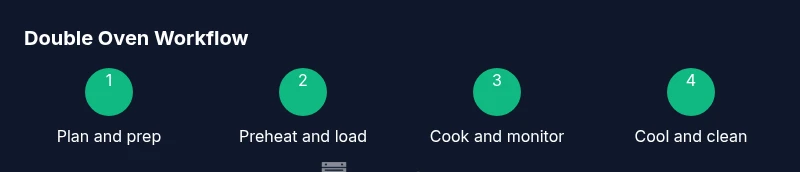
Cool, clean, and store
After use, allow appliances to cool, wipe with a damp cloth, and store racks in their holders. Regular cleaning prevents residue buildup that affects performance.
Tip: Avoid abrasive cleaners on enamel surfaces.
Questions & Answers
Do I need professional installation for a KitchenAid double oven?
Yes, installation often requires a dedicated electrical supply and proper ventilation. Consult a licensed technician or electrician to ensure safety and code compliance.
Yes. A professional can verify wiring, ventilation, and mounting for safe operation.
Is the upper oven convection-enabled?
Many models offer convection in one or both ovens; check your specific model's specs. Convection improves even heat distribution and faster cooking times.
Check if convection is available on the upper or both ovens for even results.
Can I bake in both ovens at the same time?
Yes, you can bake in one oven while using the other for roasting or broiling. Keep in mind heat distribution and avoid cross-contamination by using separate racks.
Yes, but plan temperatures and racks to avoid overloading either oven.
What cleaning options should I use?
Use manufacturer-recommended cleaners and avoid abrasive materials. If your model has a self-clean cycle, follow the safety and pre-clean guidelines.
Use approved cleaners and follow the self-cleaning instructions if available.
How do I adjust racks properly?
Position racks to allow air circulation around food. Use the guide marks inside the cavity and avoid overloading.
Place racks as the recipe directs to ensure even heat.
What if the door won't latch?
Check for obstructions, ensure racks are correctly placed, and inspect sealing gaskets. If it persists, contact service.
Make sure nothing blocks the door and call for service if needed.
Watch Video
Main Points
- Preheat properly and verify temperatures.
- Use upper and lower ovens strategically for different recipes.
- Keep racks, pans, and seals clean for best results.
- Read the manual and consult a professional for installation.
- Regular maintenance extends oven life.