How to Warm Lasagna in the Oven: A Step-by-Step Guide
Learn how to safely and evenly reheat lasagna in the oven, from fridge leftovers to frozen portions. This expert guide covers temperature, covering vs uncovering, baking times, and moisture control, with tips from Oven Cook Pro.


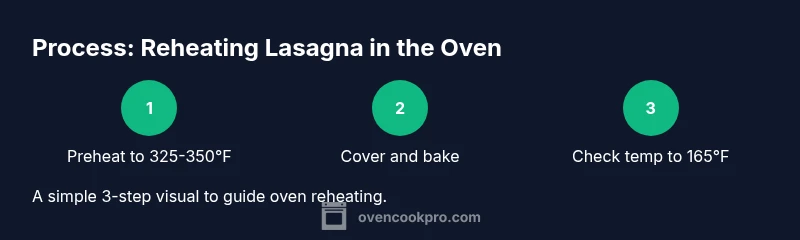
Reheat lasagna in the oven safely and evenly, whether from the fridge or from frozen. Preheat to 325-350°F, keep the lasagna covered, and heat until steaming hot throughout. Use a meat thermometer to reach 165°F in the center and let it rest briefly before serving. This guide covers timing, coverage, and moisture retention.
Why Proper Reheating Matters
Reheating lasagna is about more than speed; it is a balance of safety, texture, and flavor. According to Oven Cook Pro, the goal is to bring leftovers to a safe eating temperature while preserving the layered structure that makes lasagna appealing. Proper reheating minimizes dry edges, gooey centers, and soggy crusts, ensuring every bite is as satisfying as when it was first baked. The core ideas are temperature, moisture, and coverage. Cold spots invite bacterial growth, while overheating can toughen noodles and overcook the cheese. With the right approach, your refrigerated or frozen lasagna can taste nearly fresh, even after hours in the fridge or a long trip from the freezer. This overview sets the stage for practical steps, including choosing the right oven settings, deciding when to cover for moisture, and knowing when to finish uncovered for a toasted top.
Preparing the Lasagna for Reheating
Before you heat, inspect the lasagna for packaging integrity and determine if thawing is necessary. From fridge leftovers to frozen portions, the starting temperature affects timing and texture. If the dish was stored for more than a couple of days, ensure there are no signs of spoilage; when in doubt, discard. Thawed leftovers reheat more quickly and evenly than solid frozen blocks, and individual portions tend to heat more uniformly than a whole pan. Remove any plastic wrap and transfer the lasagna to an oven-safe dish that can go straight from fridge to oven. If you plan to reheat in a single large tray, consider dividing it into smaller portions to improve heat distribution. Oven Cook Pro notes that planning ahead reduces hot spots and makes it easier to reach a safe internal temperature.
Temperature Guidelines for Reheating Lasagna
A moderate oven temperature helps preserve moisture while achieving thorough heating. Set the oven to 325-350°F (165-177°C) depending on whether you start from fridge or frozen. Lower temperatures are gentler on delicate cheese and sauce, while slightly higher temperatures speed up the process for chilled leftovers. Use convection only if your oven is reliable at maintaining even airflow, otherwise stay with standard bake. The goal is to heat through without drying out the edges. As a general rule, begin with 25-35 minutes for fridge leftovers and extend to 40-60 minutes for frozen portions, checking for even warmth across the pan. Always rely on an internal temperature target to confirm safety.
Covered vs Uncovered: Moisture and Texture
Covering the lasagna during most of the bake traps moisture and prevents the top from drying out. Foil is the simplest method; just tent it loosely to avoid sticking. Remove the cover for the final 5-10 minutes to help the cheese melt and the top regain a light browning. If your lasagna has a very saucy filling, keeping it covered longer can prevent bubbling over the edges. For a crispier edge, some cooks switch to a light convection bake for the last 5-7 minutes, but monitor closely to avoid scorching. Remember: moisture retention is the key to a creamy middle and tender noodles.
Bakeware, Spacing, and Prep
Use a shallow, wide dish whenever possible to maximize heat exposure to all layers. Glass, ceramic, and metal pans all work, but metal heats faster and can overcook edges if you’re not careful. Ensure the pan fits your oven and has a lid or can be tightly covered with foil. Leave space around the dish on the oven rack to promote even air circulation. If reheating from a deep dish, consider dividing the lasagna into two shallower pans to shorten total heating time and reduce the risk of cold centers. Lining the bottom with parchment paper can help with cleanup, but it isn’t strictly necessary for reheating.
Reheating from Fridge: Practical Timelines
Fridge leftovers reheat most reliably when you start with a covered bake and finish with a brief uncovered phase. Place the dish in the center of the oven and bake for 25-35 minutes, then check for warmth. If you’re using multiple and particularly chunky layers, you may need a longer initial bake to spread heat evenly through the pan. Rotating the pan halfway through helps avoid hot spots. After the main bake, remove the foil and cook for an additional 5-10 minutes to encourage cheese to melt and edges to gain color. Let the lasagna rest for about 5-10 minutes before slicing to finish the texture.
Reheating from Frozen: Adjusted Times
Frozen lasagna requires longer, gentle heating and a protective outer layer to avoid scorching. Bake covered at 350°F (177°C) for 40-60 minutes, depending on the thickness and starting temperature. For extra-large or dense trays, you may need an additional 10-20 minutes. After the initial bake, remove the cover for 5-10 minutes to promote a crisp top and even browning. Use a thermometer to verify the center reaches 165°F (74°C) before serving. If you’re in a hurry, some kitchens thaw overnight in the fridge first, reducing total bake time by about half.
Checking Doneness and Resting
The safest indicator of readiness is the internal temperature. Insert a thermometer into the center of the lasagna; aim for 165°F (74°C). Check a few spots to ensure even heating, especially in large pans. Once at temperature, remove the dish from the oven and let it rest for 5-10 minutes. Resting allows the juices to redistribute and the layers to set, making it easier to slice and serving slices hold their shape better. If you notice runny edges, give it a few more minutes of gentle heating and recheck the temperature in the center.
Serving Tips and Leftover Handling
When ready to serve, slice with a sharp knife and serve with a light sprinkle of parmesan or fresh herbs for aroma. If you have leftovers, refrigerate promptly within two hours of reheating and use within 3-4 days. Do not reheat leftovers more than once; instead, portion and reheat only what you intend to eat. For future meals, consider freezing small portions in individual containers for quick dinners. Stale or overly dry edges are best avoided by adding a splash of sauce or a drizzle of olive oil before the final reheating.
Authority and Practical Notes
For further guidance, consult trusted sources on leftovers safety. The USDA’s guidance on keeping leftovers safe and the FDA’s recommendations for reheating provide background on safe temperatures and handling, while a university extension program offers practical kitchen tips tailored to home cooks. By following validated guidelines, you can confidently reheat lasagna without compromising texture or safety. Oven Cook Pro emphasizes that planning, proper covering, and accurate temperature checks are the cornerstones of a successful reheating session.
Tools & Materials
- Oven preheated to 325-350°F (165-177°C) depending on the starting temperature(Choose the lower end if you’re reheating from freezer; higher end for fridge leftovers to speed up heating)
- Oven-safe dish with lid or heavy-duty foil(If you don’t have a lid, foil works; ensure a tight seal to trap moisture)
- Aluminum foil(Use to cover during the main bake and to tent during longer times)
- Meat thermometer or instant-read thermometer(Target 165°F (74°C) in the center for safety)
- Parchment paper (optional)(Helpful under a fragile dish for easy cleanup)
- Oven mitts and kitchen tongs(Safe handling when moving hot dishes)
- Timer(Track bake time accurately, especially for large trays)
Steps
Estimated time: 30-90 minutes
- 1
Preheat the oven
Set the oven to 350°F (175°C) to ensure even heating from edge to center. This temperature balances moisture retention with reliable heat transfer, reducing hot spots. If your oven runs hot, you can drop to 325°F (165°C) and extend the bake time slightly.
Tip: If you use convection, reduce the temperature by about 25°F (15°C) and monitor for even browning. - 2
Prepare the lasagna for reheating
If the lasagna is in a store container or plastic, transfer it to an oven-safe dish. Remove any plastic wrap and cover with foil to trap moisture. For very saucy or cheese-heavy lasagna, a light coating of sauce along the edges helps prevent drying.
Tip: Use a dish that allows heat to reach the center; deeper dishes take longer to heat through. - 3
Reheat refrigerated leftovers
Place the dish in the center of the oven, covered, and bake for 25-35 minutes. Rotate halfway if you can to promote even heating. After the initial bake, uncover and bake 5-10 minutes more to lightly brown the top.
Tip: Check center with a thermometer after the uncovered phase to confirm 165°F (74°C). - 4
Reheat from frozen portions
Keep the dish covered and bake at 350°F (177°C) for 40-60 minutes, depending on thickness. If using a large tray, you may need an additional 10-15 minutes. Remove the foil for the final 5-10 minutes to achieve a golden top.
Tip: If still cool in the middle, re-cover and continue in 5-10 minute increments. - 5
Test for doneness
Insert the thermometer into the center of the lasagna; aim for 165°F (74°C). Verify multiple points if the dish is very large. If needed, return to the oven in 5-minute bursts until the target is reached.
Tip: Take care to avoid touching the pan bottom with the thermometer to get an accurate reading. - 6
Rest before serving
Remove from oven and let the lasagna rest 5-10 minutes. Resting allows the layers to rebind and makes slicing cleaner. Avoid cutting immediately, which can cause ooze and a less tidy presentation.
Tip: Use this window to prepare sides or finish garnishing. - 7
Slicing and serving
Cut with a sharp knife or a wide spatula for clean portions. Serve hot with a fresh salad or a light cheese garnish. If you keep portions for later, store leftovers in shallow containers to cool quickly and evenly.
Tip: Portion by weight if possible to ensure even leftovers and quicker future reheats. - 8
Safety and hygiene recap
Always reheat to 165°F (74°C) and avoid re-reheating leftovers more than once. Keep hot foods above 140°F (60°C) if serving later, and refrigerate within two hours of heating. Clean as you go to prevent cross-contamination.
Tip: If you’re unsure about safety, discard; it’s better to waste a little than risk illness. - 9
Optional finishing touches
Add a sprinkle of parmesan, chopped basil, or a drizzle of olive oil after reheating to refresh aroma and flavor. These small steps can lift a reheated dish closer to freshly baked quality without adding heavy sauces.
Tip: Fresh herbs brighten the dish and make leftovers feel new again.
Questions & Answers
Can I reheat lasagna from frozen in the oven?
Yes, but it takes longer. Keep the dish covered and bake at 350°F (177°C) for 40-60 minutes, then uncover to brown the top. Use a thermometer to verify the center reaches 165°F (74°C).
Yes, you can reheat lasagna from frozen in the oven. Bake covered, then uncover to brown, and check the center with a thermometer to ensure it reaches 165 degrees.
What temperature should lasagna be heated to?
Aim for an internal center temperature of 165°F (74°C) to ensure safety and good texture. Check multiple points in large pans for even heating.
Heat until the center reaches 165 degrees Fahrenheit, checking several spots for even heating.
Should I cover lasagna while reheating?
Yes, cover during most of the reheating to preserve moisture. Remove the cover in the final 5-10 minutes to brown the top.
Cover it to keep moisture, then uncover to brown the top near the end.
How long does fridge lasagna take to reheat?
Expect about 25-35 minutes in a 350°F oven when reheating fridge leftovers, longer for very large pans or initial cold spots.
Typically around 25 to 35 minutes, longer for bigger pans.
Is it safe to reheat leftovers more than once?
No. It’s safer to reheat only what you will eat, then refrigerate any leftovers promptly. Reheating multiple times increases risk of spoilage.
Avoid reheating leftovers more than once to stay safe.
Can I reheat sauce separately from lasagna?
Yes, but for best texture, reheat sauce with the lasagna so it reabsorbs into the noodles. If reheating sauce separately, ensure it reaches 165°F as well.
Reheat sauce with the lasagna for best texture, or ensure it reaches proper temp if reheated separately.
Watch Video
Main Points
- Preheat to 325-350°F for even heating.
- Cover during most of the bake to retain moisture.
- Heat to 165°F in the center for safety.
- Rest 5-10 minutes before slicing.
- Reheat from frozen takes longer; thaw if possible.