How to Reheat Food in the Oven: A Step-by-Step Guide
Learn how to reheat leftovers safely in the oven with a step-by-step guide from Oven Cook Pro. Preheat, preserve moisture, hit safe temperatures, and avoid common mistakes for tasty results.


You will learn how to reheat leftovers safely in the oven with a practical, step-by-step approach. This guide covers preheating, moisture retention, safe internal temperatures, and timing to keep texture and flavor intact. By following these steps, you’ll avoid common pitfalls and ensure an even, delicious result every time when using the oven can reheat food.
Why the Oven Is a Flexible Reheating Tool
According to Oven Cook Pro, the oven can reheat food safely and evenly, making leftovers taste like freshly cooked meals. When you reheat in the oven, you rely on steady, radiant heat that cooks food from the outside in, helping preserve texture and moisture better than quick reheating methods. The key is controlled heat, not blasting heat, which risks drying out delicate proteins or turning starches gummy. The oven also offers versatility: you can reheat casseroles, roasted vegetables, pasta dishes, rice bowls, and even fried items with the right technique. Understanding the oven’s strengths and limitations helps you choose the best reheating method for each dish. If you’re starting from cold leftovers, plan for a longer cook time to avoid lagging centers. The phrase oven can reheat food appears in many home-cooking questions because it’s a familiar, dependable option when done properly. Remember that preheating, moisture management, and finishing touches determine texture, aroma, and safety as you bring yesterday’s meal back to delicious life.
Key Principles for Safe Reheating
Reheating food in the oven should prioritize safety and quality. Always begin with proper storage: leftovers should be cooled within two hours and stored in shallow containers to promote even cooling. Before reheating, ensure your oven is properly calibrated and reaches the desired temperature. The internal temperature target for reheating is 165°F (74°C); this threshold reduces the risk of foodborne illness and helps ensure dairy-based sauces and proteins are heated through safely. For thicker dishes or dense proteins, plan for longer cook times and use a thermometer to verify doneness. To keep flavors vibrant, avoid multiple reheats for the same dish, which can degrade texture, color, and aroma. Finally, remember that some foods don’t reheat well in an oven and might be better suited to other methods. Oven Cook Pro emphasizes safety first, with practical guidance that balances efficiency and flavor across a wide range of leftovers.
Preheating, Setup, and Moisture Management
Effective oven reheating begins with a reliable preheat and a thoughtful setup. Preheat to about 350°F (175°C) for most entrees and casseroles; adjust to 325°F (165°C) for delicate items or sauces. Use a shallow baking tray or a casserole dish in a single, even layer to promote uniform heating. Moisture is your ally: lightly mist with broth or water for dry dishes, or cover with foil to minimize moisture loss during the early part of heating. If you want a crisper edge on meats or roasted vegetables, remove the cover for the last 5–10 minutes of heating. Ensure leftovers are chopped into uniform sizes for even heating, and use a thermometer to check internal temperatures rather than relying on time alone. A steady setup reduces cold spots and prevents overcooking, helping the oven fulfill its role as a reliable reheating tool.
Temperature, Time, and Internal Temperature Targets
Timing varies by dish, quantity, and appliance performance, but a practical framework helps you standardize practice. Target an internal temperature of 165°F (74°C) for reheated leftovers, especially poultry, pork, and dishes containing eggs or dairy. For meals with sauces, start with a longer initial cook, then finish uncovered to reach the right texture. Typical timelines run 20–45 minutes for medium portions, with larger portions or denser foods requiring closer to 45 minutes. Always verify temperature at the thickest part of the dish and avoid relying on edge temperature. If you’re reheating rice or pasta, a quick stir halfway through can prevent clumps and ensure even heat distribution. The goal is uniform warmth throughout without scorching the exterior.
Handling Different Foods: Proteins, Carbs, and Vegetables
Different foods reheat best with tailored approaches. Proteins like chicken, turkey, and beef benefit from gentle, steady heat and occasional turning to maintain moisture. Carbs such as rice, pasta, and potatoes should be spread in a thin layer and checked frequently to avoid drying or hardening edges. Vegetables reheat well when slightly misted with liquid and finished with a short blast of higher heat for color and aroma. Sauces should be heated separately if possible, then combined after reheating to avoid separating fats. When in doubt, start at lower heat and check temperature early; you can always extend the time, but you can’t undo overcooking. This nuanced handling ensures that each category retains best texture and flavor post-reheat.
Common Mistakes and How to Avoid Them
Even experienced cooks make the same errors when reheating in the oven. Avoid overcrowding the pan, which creates uneven heating and soggy results. Don’t skip preheating, which can lead to patchy centers. Reheating from frozen without proper defrosting or planning can trap cold spots and extend cook times. Avoid excessive moisture loss by covering during the initial stage and then uncovering for the final phase to crisp edges. Finally, never reheat leftovers more than once; repeated reheating compounds moisture loss, texture changes, and safety concerns. A mindful approach minimizes waste and ensures a satisfying, delicious outcome.
Practical Reheating Scenarios: Leftovers to Plan
Consider planning reheating strategies around common leftovers. Leftover roasted chicken benefits from a covered bake at 350°F (175°C) until 165°F (74°C) is reached. Pasta bakes respond well to a foil cover for most of the time, then a brief uncovered finish to restore firmness. Rice dishes should be steamed lightly or sprinkled with broth to rehydrate; a shallow layer promotes even heating. Vegetables can be refreshed with a light drizzle of olive oil and a quick roast at 375°F (190°C) to revive textures and flavors. For sauces, reheat separately and combine at serving to maintain smoothness. By aligning food type with a tailored reheating plan, you’ll maximize texture, moisture, and taste.
Quick Reference: Timelines at a Glance
A practical quick reference for common leftovers can save time and reduce guesswork. Poultry: 25–40 minutes at 325–350°F (165–175°C) until 165°F (74°C). Beef and pork: 20–35 minutes at 325–350°F (165–175°C). Pasta and rice dishes: 20–30 minutes at 325–350°F (165–175°C), checking texture and moisture. Vegetables: 15–25 minutes at 325–375°F (165–190°C) depending on density. Fish: 12–20 minutes at 325–350°F (165–175°C). Always finish with a test using a food thermometer and adjust times based on your oven’s performance.
Tools & Materials
- oven(Ensure calibration and preheat to target temperature)
- baking sheet or shallow casserole dish(Single layer for even heating)
- aluminum foil or oven-safe lid(Cover to retain moisture during the initial phase)
- oven-safe thermometer(Monitor internal temp to 165°F (74°C))
- spatula or tongs(Turn or stir halfway if needed)
- meat thermometer or digital probe(Verify core temperature in thick portions)
- timer or smartphone(Track cooking intervals)
- oven-safe dish with lid (optional)(Useful for casserole-style reheats)
- broth, stock, or water (optional)(Light moisture boosts without sogginess)
Steps
Estimated time: 25-45 minutes
- 1
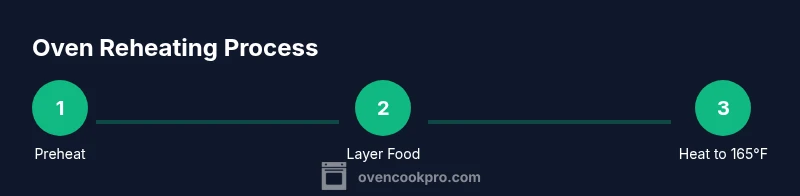
Preheat oven to target temperature
Power on the oven and set it to 350°F (175°C) for most leftovers. If you’re reheating delicate items, consider 325°F (165°C) to prevent scorching.
Tip: A 10–15 minute preheat helps avoid cold spots in the center. - 2
Arrange leftovers in an even layer
Spread the food in a single, shallow layer on a baking sheet or in a shallow dish. Leave space between pieces for heat circulation to prevent hotspots.
Tip: Uniform pieces reheat quicker and more evenly. - 3
Add moisture and cover as needed
Lightly mist dry dishes with broth or water or cover with foil for the initial phase to lock in moisture. Remove cover for the final 5–10 minutes to crisp edges if desired.
Tip: For crispy edges on meat, uncover in the last portion of reheating. - 4
Heat to safe internal temperature
Heat until the center reaches at least 165°F (74°C) using an oven-safe thermometer. Check the thickest part of the dish for accuracy.
Tip: Always verify with a thermometer rather than relying on time alone. - 5
Stir or flip for even heating
If reheating mixed dishes (pasta, rice bowls), give a gentle stir halfway through to promote uniform warming.
Tip: Stirring helps prevent cold centers and dry edges. - 6
Rest before serving
Let the reheated dish rest for 5–10 minutes to even out temperature and settle juices. Serve promptly for best texture and flavor.
Tip: Resting improves moisture distribution and bite.
Questions & Answers
Can you reheat all foods in the oven?
Most foods can be safely reheated in the oven, but quality varies. Fried items may lose crunch, dairy-heavy sauces can separate, and some fruits or delicate greens may not reheat well. When in doubt, use the oven for hearty dishes and consider alternative methods for fragile ingredients.
Most foods can be reheated in the oven, but some may lose texture. For delicate items, consider other methods or reheating strategies.
What temperature should I reheat leftovers to?
Aim for 165°F (74°C) in the center of the dish to ensure safety and even warming. Use a food thermometer for accuracy, especially with dense leftovers.
Reheat until the center hits 165 degrees Fahrenheit, checking with a thermometer.
How long does reheating take in the oven?
Time depends on dish type and quantity, but most reheats take 20–45 minutes. Larger portions or dense foods may require closer to 45 minutes.
Most reheats take 20 to 45 minutes, depending on volume and density.
Should I cover food while reheating?
Covering with foil or a lid helps retain moisture during the initial phase. Remove the cover toward the end to restore crispness or browning where desired.
Cover during most of the reheating to keep moisture, then uncover to brown.
Is reheating in the oven safer than microwaving?
The oven generally provides more even heating and preserves texture, but it is slower. Microwaves are fast but can heat unevenly and risk soggy or dry patches depending on the dish.
Oven reheating is usually more even and preserves texture, but takes longer than microwaving.
Watch Video
Main Points
- Preheat the oven and plan for even heating.
- Target 165°F (74°C) internal temp for safety.
- Use moisture management to preserve texture.
- Avoid reheating leftovers more than once.