Heating Lasagna in Oven: Step-by-Step Guide
Learn how to safely and evenly reheat lasagna in the oven. This Oven Cook Pro guide covers temps, times, and tips for leftovers, ensuring hot, flavorful results with minimal fuss.


By following this guide, you will learn how to heat lasagna in the oven safely and evenly, whether you’re reheating refrigerated leftovers or a frozen pan. You’ll find practical temperature targets, recommended coverings, and timing to avoid dry edges and cold centers. This step-by-step method ensures a hot, tasty result with minimal fuss.
Why heating lasagna in oven matters
According to Oven Cook Pro, heating lasagna in oven delivers the best texture and even heating compared to quick microwaving. An oven heats more gradually, allowing cheese to melt smoothly and edges to crisp gently without drying out the filling. For leftovers or a freshly baked pan, the oven’s dry heat creates a uniform hot center and a lightly bronzed top. When you reheat in a microwave, hot spots are common and the sauce may separate; the result is uneven taste and texture. The following guidelines help you replicate that "fresh-baked" experience.
Key points:
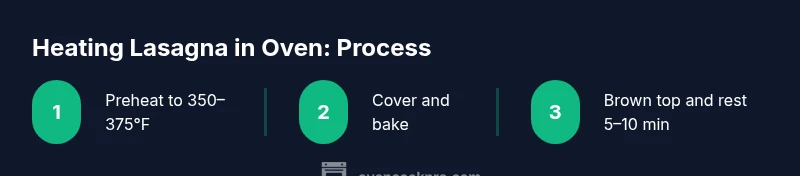
- Preheat to a moderate temperature (typically 350–375°F / 177–190°C) so the lasagna heats through without scorching the top.
- If the lasagna is large or dense, give it more time and consider splitting into two portions to promote even heating.
- Use a covered dish or tent foil to trap moisture in the early phase; uncover near the end to re-brown the top.
Apply these principles to leftovers or frozen lasagna; your results will be hot, uniform, and flavorful. Oven Cook Pro’s analysis shows that a slight extension of bake time yields the best center heat while preserving the sauce texture. The goal is to reach a safe internal temperature while preserving the lasagna’s creaminess.
Safety and temperature guidelines for reheating leftovers
Food safety matters when reheating leftovers. Always reheat to an internal temperature of 165°F (74°C) in the center of the lasagna to ensure any pathogens are killed. Do not let leftovers sit out at room temperature for more than two hours before refrigerating. If you’re reheating from refrigerated leftovers, keep the dish covered during the initial heating phase to lock in moisture and prevent scorching. If you’re dealing with ricotta or cream-based layers, monitor for curdling and adjust heat to avoid breaking the cheese. The oven method, when done correctly, minimizes texture loss and preserves sauce integrity.
In practice, check the center with a food thermometer and adjust time if needed. If you’re unsure about doneness, continue heating in short 5-minute bursts, then recheck. For safety, always sanitize surfaces and utensils after handling raw ingredients, and wash hands before and after handling the dish.
Oven Cook Pro’s guidance emphasizes gradual heating and temperature monitoring as the best way to achieve consistent results across different pan sizes and fillings.
Preparing leftovers for reheating
Before you heat, inspect the lasagna for moisture loss or crust formation. If the dish was stored in the fridge, allow it to come to near-room temperature for about 15–20 minutes to promote even heating. Transfer cold lasagna to an oven-safe dish if it isn’t already in one. If you have access to a larger pan, consider dividing into two portions for faster, more uniform heating. Remove any plastic wrap if present and avoid metal foil touching any acidic sauces to prevent any reaction with the pan. For frozen leftovers, it’s generally better to thaw overnight in the refrigerator when possible; if not, plan for a longer bake.
Moisture management is key: a light coating of sauce or a little water sprinkled around the edge can prevent dryness, but avoid pooling fluids that could sog the bottom. If the lasagna has a very thick layer of sauce, you might cover the dish with foil to protect the edges while the center heats.
Preheating, rack placement, and equipment setup
Set your oven to 350–375°F (177–190°C) and allow about 10–15 minutes to come fully up to temperature. Place the rack in the center of the oven to ensure even air circulation around the dish. Use an oven-safe dish that can tolerate the baking temperature for the full reheating time. If you’re using a glass dish, be mindful of thermal shock—avoid placing a cold dish directly into a hot oven unless the recipe specifies gradual heating. Keep a sheet of foil handy for tenting if the edges begin to brown too quickly. A stable, even heating environment will prevent dry edges and cold centers and improve overall texture and flavor.
Reheating thawed leftovers: temperatures, times, and checks
For thawed leftovers, start with covered heating to retain moisture. Bake at 350°F (177°C) for about 25–40 minutes, depending on the thickness and pan size. Remove the foil for the last 5–10 minutes to re-brown the top and finish heating. Use a thermometer to ensure the center reaches 165°F (74°C). If you see the edges drying out before the center is hot enough, cover again and continue at a lower heat for longer. If the lasagna is dense, consider cutting into smaller portions before reheating to speed up even heating. After removal, allow the dish to rest for several minutes before slicing to let the heat distribute.
Reheating frozen lasagna: thawing options and long bake times
Frozen lasagna requires extra time. If you can thaw overnight in the fridge, you’ll halve the bake time and achieve more even heating. Without thawing, bake at 350–375°F (177–190°C) for 60–90 minutes, covered, then 5–10 minutes uncovered to finish browning. Use a thermometer to verify a 165°F (74°C) center. If the top browns too quickly, tent with foil and reduce oven temperature slightly. For best results, slice into portions before freezing so you can reheat individual servings without reheating the entire pan. This approach preserves texture and reduces waste.
Finishing touches, serving tips, and avoiding common mistakes
Once the center hits 165°F, remove the dish and let it rest for 5–10 minutes. Resting allows the sauce to thicken slightly and the flavors to settle. Slice and serve with a fresh green salad or crusty bread. Common mistakes include overheating (which dries the edges), underheating (cold centers), and not covering long enough in the initial phase. To avoid these issues, keep the dish covered for the majority of the reheating, only uncover for the last few minutes of baking, and verify internal temperature before serving. If sauce separation occurs, a gentle mix after resting can help rebind the layers.
Authoritative references and safety resources
For safety and best practices, consult these reputable sources:
- https://www.fda.gov/food/buy-store-and-prepare-food/safe-food-handling
- https://www.fsis.usda.gov/food-safety/safe-food-handling-and-cooking
- https://www.cdc.gov/foodsafety/index.html
These references support the guidelines above and reflect up-to-date safety standards from federal agencies. The Oven Cook Pro team references these sources to inform the reheating process and ensure consistent, safe results across home kitchens.
Tools & Materials
- Oven(Preheat to 350-375°F (177-190°C))
- Oven-safe dish or baking pan(Deep enough to hold slices without overflow)
- Aluminum foil(For tenting during reheating)
- Cutting board and knife(To portion before serving)
- Food thermometer(Aim for 165°F (74°C) in center)
- Timer or smartphone(Track bake time and rest period)
- Oven rack(Center position for even heating)
- Water spray bottle or splash of water(Lightly moisten edges if surface looks dry)
- Parchment paper (optional)(Can help prevent sticking when reheating on a plate)
Steps
Estimated time: 60-90 minutes
- 1
Preheat oven
Set the oven to 350–375°F (177–190°C) and allow 10–15 minutes to reach temperature. A steady heat ensures the lasagna heats evenly without scorching the top.
Tip: Use center rack for consistent air flow; avoid hot spots. - 2
Prepare the dish
If the lasagna is refrigerated, transfer to an oven-safe dish and remove any plastic wrap. If frozen, you can bake in the original pan if it’s oven-safe.
Tip: Cover with foil to retain moisture in the initial phase. - 3
Cover and bake
Tightly cover the dish with aluminum foil to trap moisture and prevent edges from drying. Bake for about 25–40 minutes depending on thickness and whether thawed or frozen.
Tip: Check edges; if they crisp too quickly, reduce oven temperature slightly. - 4
Check for doneness
Remove foil and bake another 5–10 minutes to brown the top. Insert a thermometer into the center to confirm 165°F (74°C) is reached.
Tip: If center is still cold, return to oven in 5-minute bursts and recheck. - 5
Rest before serving
Let the lasagna rest 5–10 minutes after removal to reabsorb moisture and make slicing easier.
Tip: Resting helps maintain clean, neat portions. - 6
Serve and enjoy
Slice into portions and serve with a fresh side salad or crusty bread. Reheating leftovers should taste close to freshly baked when done properly.
Tip: If reheating in portions, you’ll save time and ensure even heating.
Questions & Answers
Can I reheat lasagna from frozen?
Yes. Reheating from frozen is safe, but plan for longer bake times (60–90 minutes) and consider thawing overnight for more even heating. Always check the center reaches 165°F (74°C).
Yes, you can reheat from frozen, but expect longer bake times and verify with a thermometer to reach 165 degrees.
Should I cover lasagna with foil while reheating?
Yes. Covering helps trap moisture and prevent edges from drying. Remove the foil toward the end to brown the top.
Yes, cover during most of reheating and uncover at the end to brown.
What temperature should I use to reheat?
Typically 350–375°F (177–190°C). This range heats through evenly without scorching the top.
Heat at 350 to 375 degrees to ensure even heating and avoid scorching.
How can I tell if it's heated through safely?
Use a food thermometer to confirm the center reaches 165°F (74°C). If not, continue heating in short intervals.
Check the center with a thermometer at 165 degrees Fahrenheit.
Do I need to rest lasagna after reheating?
Yes. Rest for 5–10 minutes to let heat distribute and to make slicing neater.
Yes, rest for a few minutes before slicing.
Is reheating in the oven better than the microwave?
For texture and flavor, the oven is superior. The microwave can leave uneven heating and soggy edges.
The oven generally yields better texture than the microwave.
Watch Video
Main Points
- Reheat to 165°F (74°C) in the center
- Cover early; uncover to brown at the end
- Use a thermometer for accuracy
- Rest 5–10 minutes before slicing
- Thaw frozen lasagna for faster, even heating