What Temperature Should You Bake Lasagna? A Complete Guide
Discover the ideal oven temperature for lasagna, with guidance for traditional and no-boil noodles, convection adjustments, and safe doneness. Oven Cook Pro analyzes common bake temps and offers practical, tested tips for perfect lasagna every time.


What temp oven lasagna should use
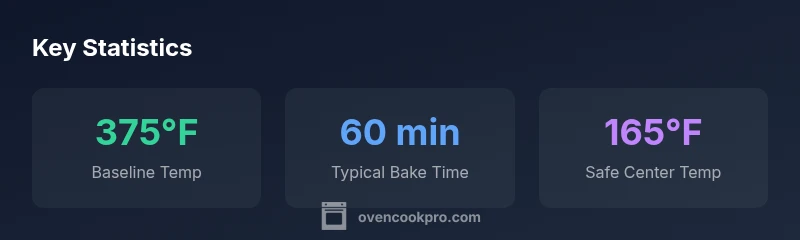
Choosing the right oven temperature is the foundation of a great lasagna. For most traditional recipes, a steady 375°F (190°C) yields a creamy sauce, properly melted cheese, and tender noodles without drying out the edges. Temperature consistency matters more than a precise minute count, so preheat early and keep racks stable during baking. According to Oven Cook Pro analysis, starting with a standard baseline and then adjusting for noodle type, pan size, and sauce moisture produces the most reliable results. If you’re using thicker fillings or dense layers, you can lower the temperature slightly or extend the bake time to avoid scorching the surface while the center finishes cooking. Finally, always account for residual heat after removal from the oven; the lasagna will carry heat for several minutes and continue to set.
Standard bake temperatures and times
Most lasagna recipes bake at 375°F (190°C) for 45 to 60 minutes. A common technique is to cover the dish with foil during the first portion of baking to trap steam and keep the noodles soft, then uncover for the last 10 to 15 minutes to help the cheese brown. If you start with no-boil noodles, or if your sauce is particularly thick, you may want to shorten or lengthen the bake window slightly and monitor the edges. If you’re cooking a large, multi-layer pan, you might push toward the upper end of this range or extend by 5–10 minutes, always checking for bubbling sauce and a firm center. The key is to avoid a dry top while ensuring the center is cooked through.
Traditional noodles vs no-boil: Temperature implications
Traditional dried lasagna noodles are designed to soak up sauce as they bake; they tolerate longer bake times at 375°F. No-boil noodles already contain absorbed moisture and may cook faster, so they often need the same temperature but a shorter time, typically 40 to 50 minutes. Regardless of noodle type, ensure your sauce is moist; too thick a sauce can lead to a stiff middle. If you notice bubbling around the edges but the center remains underdone, tent with foil and extend the bake in 5-minute increments. Converting to smaller or larger pan sizes also affects heat distribution and time.
Moisture, sauce balance, and cheese behavior at bake temp
Soupier sauces require less time or more resting, while very thick sauces can protect noodles but risk a soggy center if over-baked. A well-balanced lasagna uses enough sauce to hydrate the noodles without drowning the layers. Cheese adds browning and flavor but can burn if the oven runs hot or if the dish is very shallow. For deeper pans, you may need a slightly longer bake at 375°F, but cover edges to avoid scorching. Resting the finished lasagna after baking lets the structure solidify, making slicing cleaner.
Doneness and safe internal temperature: how to confirm
Beyond time, checking internal temperature is a reliable signal of doneness. The center of a properly baked lasagna should reach at least 165°F (74°C). Use a digital instant-read thermometer inserted into the middle before removing from the oven to confirm; be careful not to touch the bottom or sauce, which may give a false reading. After removing, let it rest for 10–15 minutes. The rest period allows steam to redistribute and the layers to set for clean slicing.
Practical tips to prevent dry edges and soggy centers
Place the lasagna on a middle rack and avoid crowding the oven with multiple dishes. Preheating matters, but so does moisture management: use enough sauce, or add a lid or sheet of foil for part of the bake. If the edges brown too quickly, tent with foil or shield with parchment. For soggy centers, ensure you’ve used an appropriate pan size and that your fillings aren’t overly watery. If you’re pressed for time, consider a shorter bake with a longer rest, as the lasagna continues to cook off the heat.
Step-by-step quick-start guide to bake lasagna
- Preheat oven to 375°F (190°C) and position a rack in the middle. 2. Assemble lasagna in a pan with sauce on the bottom and top for moisture. 3. Cover tightly with foil and bake 30–40 minutes. 4. Remove foil, bake 10–15 more minutes until cheese is bubbling and lightly browned. 5. Let rest 10–15 minutes before cutting for clean slices.
Convection vs conventional ovens: adjusting temperature
Convection ovens cook more efficiently, often with faster browning. If you’re using convection, reduce the temperature by about 25°F (14°C) and start checking earlier. Some recipes call for 350–360°F in convection for 45–55 minutes; others still use the standard 375°F with a shorter time. The key is to monitor the center with a thermometer and prevent scorching along the edges. If you’re unsure, start at the lower end of the range and increase as needed, rather than starting hot and drying out the dish.
Troubleshooting common issues during bake
Common problems during lasagna bake include a dry surface, undercooked center, or a watery sauce. If the top is dry, cover with foil and add a splash of sauce or a bit of cheese to rehydrate. If the center is undercooked, extend the bake time in 5-minute increments and ensure the pan is not blocking heat. If the sauce is too watery, thicken it with a quick simmer or add more cheese to absorb moisture; avoid soggy layers by adjusting noodle to sauce ratio.