How to Bake Beef Ribs in the Oven: A Step-by-Step Guide
Learn how to bake beef ribs in the oven for tender, flavorful results. This guide covers prep, rubs, low-and-slow roasting, wrapping, finishing glaze, resting, and serving tips for perfect crust and juicy meat.


According to Oven Cook Pro, you can master tender, smoky beef ribs in the oven with a low, slow roast, a flavorful dry rub, and a final glaze. The approach combines a preheated oven at 250–275°F, a wrapped 'Texas crutch' phase (optional), and a final unwrapped finish to set the crust. You’ll need a rimmed sheet, rack, foil, thermometer, and a brush for glaze.
Why beef ribs shine in the oven
Beef ribs are meatier and more forgiving than many other rib cuts, making them ideal for oven roasting. The bones help insulate the meat as it cooks, and the connective tissue (collagen) melts into a rich, fork-tender texture with time. The oven provides a steady, controllable heat that helps develop a deep, caramelized crust while keeping the interior juicy. For home cooks, this method offers consistency, repeatability, and the ability to build flavor without special equipment. When done well, oven-baked beef ribs rival slow-smoked versions in tenderness and depth of flavor.
Seasoning and technique matter as much as time. A well-balanced rub with salt, sugar, spices, and a touch of acidity primes the surface for browning while preserving moisture inside the meat. The result is a crust that delivers bold flavor with every bite.
Selecting and prepping beef ribs
Choose bone-in racks for maximum moisture retention and rich flavor. Look for evenly sized ribs with clean bones and plenty of marbling. Trim excess fat and remove the silver skin from the bone side if present; pat the surface dry with paper towels to ensure the rub adheres and browns evenly. If you’re using multiple racks, plan to space them so air can circulate; crowding leads to uneven cooking. The pre-cook prep sets the stage for a consistent texture from bite to bite.
Before applying the rub, pat ribs dry and lightly oil the surface to help the spices stick. A 15–30 minute rest after applying the rub gives the flavors time to penetrate the surface. For very large racks, you may cut them into manageable sections to fit your pan and ensure even heat exposure.
Flavor foundations: rubs, marinades, and resting
Rubs can range from simple salt and pepper to more complex blends with brown sugar, paprika, garlic, chili, and mustard powder. The right balance of sweet, savory, and smoky notes enhances both the crust and the meat’s depth. If you have time, a light overnight marinate or dry rub applied a few hours before cooking yields deeper flavor. Resting after seasoning lets the surface dry slightly, improving saucing and browning during the bake.
For a no-fuss option, start with a basic rub: kosher salt, black pepper, smoked paprika, garlic powder, and a pinch of brown sugar. Adjust salt to taste, especially if you plan a glaze later. If you prefer extra moisture, consider a quick splash of apple cider vinegar or beef stock in the pan to create a gentle humid environment that helps keep the meat juicy during the long bake.
Tools and kitchen setup for reliable results
A dedicated rimmed sheet pan with a raised rack is ideal. The rack elevates the ribs so hot air can circulate around every surface, promoting even browning. You’ll also need heavy-duty aluminum foil for the Texas crutch, a good meat thermometer or probe, kitchen tongs, a sharp knife, and paper towels for drying. Have a brush or spoon ready for applying glaze during the final stage. A timer or smart oven helps you track the long cook without constantly checking.
Keep everything within arm’s reach: rub ingredients, a carving knife, a separate cutting board, and a clean work area. Lining the pan with parchment or foil can simplify cleanup, but foil provides a strong moisture barrier when you’re wrapping during the middle stage.
The low-and-slow oven method: temperatures and timing
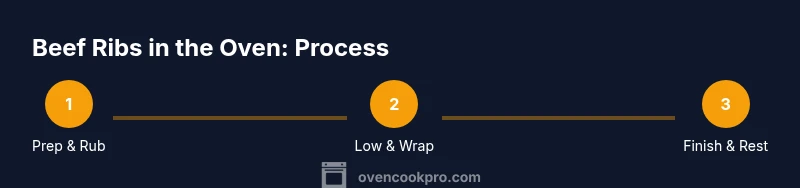
Begin at a low oven temperature of 250–275°F. Plan for 3–5 hours of cooking, depending on rib thickness and bone count. The goal is a tender interior with a well-developed crust on the outside. About midway, you may wrap the ribs tightly in foil to trap moisture (the Texas crutch) for another 1.5–2 hours. After unwrap, finish with a glaze for 15–30 minutes to form a glossy crust. Keep an instant-read thermometer handy to check for 195–205°F internal temperature in the meatiest part.
During the bake, resist the urge to open the oven door frequently; opening adds temperature fluctuations and lengthens the process. If you notice excessive moisture in the pan, you can tilt the ribs slightly to let drippings accumulate on a separate surface for later use as a glaze base.
The Texas crutch: wrapping for moisture and tenderness
Wrapping during the middle stage concentrates heat and moisture, effectively braising the ribs inside their own juices. Tightly wrap the rack in heavy-duty foil, sealing all edges to prevent steam from escaping. This technique helps render collagen, making the meat exceptionally tender while protecting the crust from over-browning. After several hours, unwrap to resume crust formation and apply glaze.
If you skip wrapping, you’ll rely more on the dry rub and natural moisture; the texture will lean toward a firmer bite. Wrapping is a reliable method for consistently tender results, especially with thick-cut ribs.
Finishing glaze and crust formation
After unwrapping, brush on a glaze or rub a final layer of seasoning onto the surface. Return the ribs to the oven uncovered to develop color and a glossy crust. The glaze should set quickly at these temperatures, which adds a sweet-savory note that complements the beef’s richness. Monitor color; a deep brown crust signals a good Maillard reaction, while over-darkened edges indicate the need for protective foil or shorter final exposure.
Common glaze options include a blend of brown sugar, soy sauce or Worcestershire, garlic, and a touch of apple juice or cider. Apply in thin layers to avoid a sticky finish that overpoweringly coats the meat.
Resting, slicing, and serving
Let the ribs rest for 10–20 minutes after removing them from the oven. Resting allows juices to redistribute, resulting in juicier slices. Slice between the bones in a clean, confident stroke for clean portions. Serve with side dishes that complement the meat’s richness, like roasted vegetables, coleslaw, or a bright chimichurri. If you plan to store leftovers, wrap tightly and refrigerate within two hours of cooking.
When slicing, cut across the grain for the most tender bites. A sharp chef’s knife makes a noticeable difference in ease and presentation.
Troubleshooting common issues
If the ribs come out dry, verify that you cooked at a consistent low temperature and allowed enough resting time. If the surface isn’t browning, increase the last 15–20 minutes or adjust the glaze to drive color without burning. If the ribs appear under-seasoned, apply a touch more rub in the final 20 minutes and let it set under heat. For very thick racks, consider an extra hour wrapped in foil and check internal temp at the end.
Flavor pairings, sides, and menu ideas
Serving beef ribs calls for bold accompaniments. Creamy mashed potatoes, roasted garlic green beans, grilled corn, or tangy pickles balance the richness. A herb chimichurri or bright citrus relish can cut through fat and refresh the palate between bites. For beverages, a full-bodied red wine or a stout beer pairs nicely with the deep, beefy flavors. If you’re meal-prepping, portions freeze well; reheat gently to preserve texture and moisture.
Batch cooking, storage, and leftovers
Leftover beef ribs can be stored in an airtight container in the refrigerator for up to 3–4 days. To reheat, wrap and warm gently in a low oven or in a covered skillet with a splash of stock to retain moisture. For longer storage, freeze cooked ribs in a freezer-safe container, labeling with date. Reheat slowly to avoid toughening the meat and loss of flavor.
Tools & Materials
- bone-in beef ribs(2–3 racks depending on size; look for even thickness and good marbling)
- rimmed baking sheet(Helps contain drips and keeps the oven clean)
- wire rack(Elevates ribs for even heat circulation)
- heavy-duty aluminum foil(For wrapping during the Texas crutch)
- paper towels(Pat ribs dry before seasoning)
- sharp chef’s knife(For trimming and portions)
- cutting board(Stable surface for prep)
- meat thermometer/probe(Monitor internal temperature; aim for 195–205°F in the thickest part)
- measuring spoons(Accurate rub proportions)
- basting brush(Apply glaze smoothly)
- oven mitts(Safe handling of hot sheets and ribs)
- tongs(Turn and move ribs safely)
Steps
Estimated time: 3-5 hours
- 1
Preheat and prep the oven
Set your oven to 250–275°F. Line a rimmed sheet with foil or parchment and place a wire rack inside. Pat ribs dry with paper towels to ensure the rub sticks and browns evenly.
Tip: Dry surfaces promote better browning and crust formation. - 2
Trim, pat dry, and apply rub
Trim any excess fat and remove the silver skin if present. Pat ribs dry again, then apply a balanced rub evenly over all surfaces. Let sit 15–30 minutes to let flavors adhere.
Tip: Higher sugar rubs can burn if left on too long; balance with salt. - 3
Position ribs on the rack
Cut large racks into manageable portions and place them bone-side down on the rack. If needed, use butcher’s twine to keep sections aligned for uniform cooking.
Tip: Space ribs for air to circulate; crowding leads to uneven browning. - 4
Start the low-and-slow bake; wrap (Texas crutch)
Cook uncovered for the first part, then wrap tightly in heavy foil to trap moisture. Return to the oven for 1.5–2 hours until the meat feels tender at the touch.
Tip: Wrap tightly so steam stays close to the meat; this preserves moisture. - 5
Check progress and temp
After the wrap stage, check internal temperature with a probe. Aim for 195–205°F in the thickest part for optimal tenderness.
Tip: Use an instant-read thermometer for accuracy. - 6
Unwrap and glaze; finish browning
Unwrap, brush with glaze or rub a final layer, and return to the oven uncovered for 15–30 minutes to set the crust.
Tip: Watch closely to avoid burning; thin glaze layers build color gradually. - 7
Rest and slice
Remove ribs and let rest 10–20 minutes before slicing between the bones. Resting redistributes juices for juicier portions.
Tip: A sharp knife makes clean slices; cut across the grain. - 8
Serve and store
Serve immediately with preferred sides. Refrigerate leftovers in airtight containers for up to 3–4 days or freeze for longer storage.
Tip: Label dates to track freshness.
Questions & Answers
Is bone-in beef rib better than boneless for oven baking?
Bone-in ribs tend to stay juicier and more flavorful in the oven due to the bone’s insulating effect and collagen contribution during cooking. Boneless ribs can work, but they’re more prone to dryness if not monitored closely.
Bone-in ribs stay juicier in the oven, thanks to the bone and collagen; boneless can work but needs careful timing.
What temperature and time should I use to bake beef ribs in the oven?
Bake at 250–275°F for about 3–5 hours, depending on thickness. Check for 195–205°F internal temp in the meatiest part and a deep, caramelized crust.
Bake slowly at a low temperature for several hours, then check internal temperature to ensure tenderness.
Should I wrap the ribs during cooking?
Wrapping during the middle stage helps trap moisture and tenderize the meat (the Texas crutch). Unwrap near the end to develop a crust and glaze.
Yes, wrap in foil during the middle stage for moisture, then uncover to finish browning.
How long should I rest the ribs after baking?
Rest the ribs for 10–20 minutes after removing from the oven to allow juices to redistribute before slicing.
Let the ribs rest briefly so the juices settle and slicing stays tidy.
Can I glaze during the bake, or should I glaze only at the end?
You can glaze during the final uncovered stage to help set a glossy crust. Apply thin layers to avoid a sticky finish.
Glaze in the last phase for a glossy crust without burning.
What sides pair best with oven-baked beef ribs?
Bold sides like roasted vegetables, creamy potatoes, and tangy slaws complement the richness of beef ribs without overpowering them.
Pair with roasted veggies and a bright slaw for balance.
Watch Video
Main Points
- Start with a low oven and patient roasting for tenderness
- Wrap during the middle stage to seal in moisture
- Finish uncovered to develop a crust and color
- Rest 10-20 minutes before slicing for juicier meat