How to Bake Already Cooked Ham in the Oven
Learn how to bake already cooked ham in the oven for juicy, evenly warmed slices. This comprehensive guide covers temps, glazing, timing by weight, and safety tips to ensure your reheated ham stays moist and flavorful.


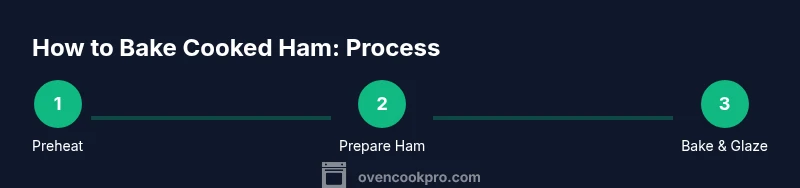
Reheat an already cooked ham in the oven to a safe, juicy finish. You’ll want a 325°F oven and heat until the internal temperature hits 140°F (60°C), usually 10-15 minutes per pound plus glaze in the final 15-20 minutes. Gather a roasting pan, thermometer, glaze, and foil. Oven Cook Pro guides you every step.
What it means to bake already cooked ham
If you’re starting with a fully cooked ham, the goal is not to cook it from raw but to heat it through while preserving moisture. This is exactly how to bake already cooked ham so it stays juicy, evenly warmed, and ready for slicing. Because the meat has already reached a safe internal temperature, the oven is a heat tool for reheating, not cooking. Use a stable roasting pan, a thermometer, and a glaze that won’t burn at higher temperatures. Oven Cook Pro analysis shows that gentle, steady heat and a brief glaze window yield the best texture and flavor in sliced ham. Expect a pale pink crust where glaze sits and a moist interior when you heat slowly and cover as needed.
Temperature and time fundamentals
Reheating a fully cooked ham requires a gentler approach than cooking from raw. Set your oven to 325°F (163°C) to balance even heating with moisture retention. The goal is an internal temperature of 140°F (60°C) when measured in the thickest part, away from bone. Plan roughly 10-15 minutes per pound as a starting point, then adjust based on your oven and ham shape. If glazing, apply the glaze during the final 15-20 minutes of baking to prevent sugar burns. Oven Cook Pro analysis shows that controlled heat and timely glaze yields a juicier slice and a nicer glaze coat.
Glazing options for flavor and moisture
A glaze not only tastes great but helps keep the surface moist. Classic options include honey-mrown sugar glaze, maple-mustard glaze, or orange-ginger glaze. Apply a thin coat in the first 30 minutes, then brush a second layer in the last 15-20 minutes. For bone-in hams, you’ll get more surface area to glaze, so consider scoring the rind lightly to help the glaze penetrate and caramelize without burning. Choose glazes with a balance of sweetness and acidity to avoid dull flavors.
Preparing the ham for baking
Remove the ham from packaging and pat dry if needed. Place it in a deep roasting pan with a small amount of liquid (water, broth, or juice) to create steam and prevent drying. If the ham has a thick rind, score a crisscross pattern to help glaze penetrate. Bring the ham closer to room temperature for 20-30 minutes before baking to promote even heating. This step helps avoid cold spots and ensures more predictable results.
The reheat process: timing by weight
Begin with the 10-15 minutes per pound guideline and then verify with a meat thermometer. Insert the thermometer into the thickest part of the ham, avoiding bone if present. Plan for extra 10-15 minutes if your glaze needs caramelization. If your ham is larger or denser, expect longer times; smaller, boneless hams heat more quickly. Remember that the goal is an internal temperature of 140°F (60°C) for safety and quality.
Doneness, safety, and resting
Once the internal temperature reaches 140°F (60°C), remove the ham from the oven and tent loosely with foil. Resting for 10-15 minutes allows juices to redistribute, which makes slicing more manageable and reduces dryness. Slices cut too soon can shed juices and feel dry. If you want extra glaze flavors, reapply a thin layer after resting and warm briefly for a final gloss.
Easy glaze ideas you can try
Try cutting the glaze into simple mixtures: honey + Dijon for a tangy-sweet note, maple + brown sugar with a splash of soy for depth, or orange marmalade with ginger for brightness. For a bolder finish, finish with a quick broil for 1-2 minutes, watching closely so the glaze doesn’t burn. Always glaze toward the end to preserve the sauce’s shine and texture.
Common mistakes to avoid
Avoid overheating or over-thick glazing that dries out the meat. Do not baste too aggressively in the early stages, which can make the surface soggy; instead, brush a light layer and return to heat. Don’t skip letting the ham rest—juices redistribute and improve slice quality. If your ham is bone-in, don’t rely solely on time; check the thermometer instead for doneness.
Serving, storing, and repurposing leftovers
Slice the ham across the grain for tenderness. Refrigerate leftovers in shallow, covered containers within two hours of serving. Reheat small portions gently, using a little broth to keep moisture. Use leftover ham in sandwiches, soups, or casseroles, pairing with your favorite sides and fresh herbs to refresh flavors.
Tools & Materials
- Oven(Preheat to 325°F (163°C))
- Roasting pan with rack(Large enough for ham, with space around edges)
- Meat thermometer (probe or instant-read)(Monitor 140°F (60°C) target)
- Basting brush(Silicone brush for glaze)
- Aluminum foil(Tent the ham as needed; prevents drying)
- Glaze ingredients(Choose your preferred glaze (honey, maple, mustard, etc.))
- Carving knife and board(For clean slices)
- Measuring spoons(Accurate glaze ratios)
- Pan with small liquid (water/broth)(Adds moisture during bake)
Steps
Estimated time: 60-90 minutes
- 1
Preheat and prep
Preheat your oven to 325°F (163°C). Remove the ham from the fridge and let it come closer to room temperature for 20-30 minutes to promote even heating.
Tip: A short warm-up helps prevent cold spots in the center. - 2
Position the ham
Place the ham in a deep roasting pan, bone side down if applicable. Add a small amount of liquid to the pan to create steam and keep the meat moist.
Tip: Liquid creates gentle steam that keeps juices in during reheating. - 3
Score the rind (optional)
Lightly score the surface in a crisscross pattern to help glaze penetration and caramelization without breaking the surface.
Tip: Keep cuts shallow to avoid exposing too much meat. - 4
Apply the glaze (early)
Brush a thin layer of glaze over the surface to start flavoring and glossy appearance, leaving some surface dry for later gloss.
Tip: Glaze early to layer flavors without burning. - 5
Cover and bake
Tent the ham with aluminum foil to retain moisture and bake for the initial 45-60 minutes, depending on weight.
Tip: Foil helps prevent surface drying during the first stage. - 6
Check temperature
Insert a thermometer into the thickest part away from the bone. Begin checking around the 60-75 minute mark, as times vary by size.
Tip: Rely on temp, not time alone, for doneness. - 7
Finish glaze and caramelize
In the last 15-20 minutes, brush on the glaze again and leave uncovered or briefly broil for 1-2 minutes if you want a deeper gloss.
Tip: Watch closely to prevent burning due to sugars. - 8
Rest and slice
Remove from oven and tent loosely with foil. Let rest 10-15 minutes before carving to redistribute juices.
Tip: Resting improves moistness and slice quality.
Questions & Answers
Is it safe to reheat a fully cooked ham in the oven?
Yes. Reheating a fully cooked ham to 140°F ensures safety and moisture. Use a thermometer to verify doneness rather than relying on time alone.
Yes, it is safe to reheat a fully cooked ham to 140 degrees Fahrenheit; use a thermometer to check.
Should I rinse the ham before reheating?
Rinsing is not necessary for reheating a pre-cooked ham and can wash away surface glaze and flavors. Pat dry if moisture is excessive before applying glaze.
Rinsing isn’t needed for reheating; just pat dry and glaze as you like.
Can I reheat from frozen?
It’s best to thaw the ham completely before reheating to ensure even heating and safe temperatures throughout. Reheating from frozen can result in uneven warmth.
Thaw the ham first; reheating from frozen can be uneven.
How long for a large ham to reheat in the oven?
Reheating times scale with weight. Plan about 10-15 minutes per pound, then verify with a thermometer. Bone-in hams may require slightly longer.
Plan about 10-15 minutes per pound and check with a thermometer.
Can glaze be reused or stored for later batches?
If glaze is heated and brushed, allow any cooled leftovers to refrigerate and reuse within the same serve, but avoid cross-contamination. Make fresh glaze for best flavor.
You can reuse a warmed glaze once, but fresh glaze tastes best.
Watch Video
Main Points
- Reheat to 140°F for safe, juicy results
- Bake at 325°F with glaze in the final 15-20 minutes
- Rest 10-15 minutes before slicing
- Monitor temperature rather than relying solely on time