How Long to Bake Already Cooked Ham: Reheat Guide
Learn how long to bake already cooked ham with a step-by-step reheating plan, safe temperature targets, moisture tips, and common mistakes to avoid. Oven Cook Pro explains how to reheat gently for juicy, safe results.


How long to bake already cooked ham depends on weight, oven temperature, and whether you glaze. In general, reheat at 325°F (163°C) until the ham reaches 140°F internally, then rest before serving. For best results, heat slowly to preserve moisture, check early with a thermometer, and adjust time based on thickness and bone-in vs boneless cuts.
Why reheating already cooked ham requires care
Understanding how long to bake already cooked ham is essential to keep it juicy and safe. Even though the ham is pre-cooked, it still needs to reach a safe serving temperature and stay juicy. According to Oven Cook Pro, the safest and most reliable reheating approach is to bring the ham up to a steady, gentle heat rather than attempting a rapid, high-heat finish. The goal is to warm the center while protecting the outer layers from drying out, which can happen quickly if the oven is too hot or the ham is left uncovered for too long. So plan for a moderate bake, use a thermometer to monitor progress, and choose a technique that suits bone-in versus boneless cuts, as well as your preferred glaze or flavor boosters.
Key factors that influence bake time
When estimating bake time for a precooked ham, several factors matter. First is weight and thickness: a heavy, thick end will require more time than a thin boneless slice. Second is whether the ham is bone-in or boneless; bone-in pieces generally heat more slowly because the bone conducts heat unevenly. Third is whether the ham is fully thawed; frozen or partially frozen portions dramatically increase reheating time. Fourth, your choice to glaze or baste affects moisture and crust formation; glaze adds sweetness but can burn if applied early or in excess. Finally, your oven's accuracy matters; an oven thermometer helps ensure you’re actually at 325°F or your chosen temperature, not just the dial setting. By considering these factors, you’ll tailor the bake time to your specific ham and oven.
Practical reheating approach (overview)
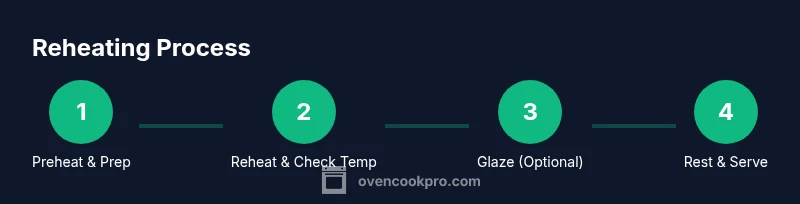
The practical approach to reheating a cooked ham combines even heat, moisture retention, and optional glaze. Start by warming your oven to a stable 325°F (163°C). Place the ham in a shallow roasting pan on a rack so hot air circulates around the meat. Add a small amount of water or broth to the pan to help maintain moisture, especially if your ham is lean. Cover loosely with foil to trap steam, and leave a small gap for escape so the outer surface doesn’t steam too softly. This setup minimizes drying and creates a hospitable environment for gentle heat transfer.
Temperature targets and safety guidelines
Safety is about both time and temperature. Since the ham is already fully cooked, the objective is to bring the center to about 140°F (60°C) for safe serving, while the outer portions stay tender. Use an instant-read thermometer inserted into the thickest part away from bone to verify. If you’re starting from fridge-cold meat, expect a longer reheating window; if you thawed the ham, the process will move more quickly. Do not rely solely on clock time; thermometer checks are essential. If the ham was purchased fully cooked but has been stored improperly, discard if there are any signs of spoilage (odd odor, slimy texture).
Moisture preservation and glaze ideas
Moisture = taste. Keep the ham moist by using the pan liquid, covering with foil, and avoiding oven temperatures that are too high. If you glaze, brush during the last 15-20 minutes; a glaze with sugar can burn, so watch the color closely. For a simple glaze, whisk together a small amount of honey, brown sugar, and mustard, then brush on toward the end. If you prefer a savory finish, a glaze with apricot preserves and ginger pairs nicely with ham. Remember to re-cover after glazing to trap moisture during the final minutes.
Troubleshooting and common mistakes
Common mistakes include cooking at too high a temperature, which dries the meat, or removing the foil too early, which evaporates moisture. Not using a thermometer can lead to underheated or overcooked ham. If the outer layer seems overcooked before the center is heated, tent the ham with foil and reduce oven temperature by 25°F and continue heating. Don’t rely on time alone; test temperature, monitor color, and keep the pan covered for most of the bake. Leftovers should be cooled promptly and stored in the fridge.
Authority sources
- USDA Food Safety and Inspection Service: https://www.fsis.usda.gov/food-safety/safe-food-handling-and-cooking/hams-and-shoulders
- U.S. Food and Drug Administration: https://www.fda.gov/food
- University extension resource: https://extension.illinois.edu/foodsafety
Tools & Materials
- Oven-safe roasting pan with rack(Ensure it fits your oven and ham size; 9x13 inch or larger often works.)
- Meat thermometer (instant-read preferred)(Insert into thickest part away from bone; target 140°F.)
- Heavy-duty aluminum foil(For tenting and moisture retention.)
- Liquid for pan (water, broth, or stock)(Helps maintain moisture.)
- Basting brush or spoon(For applying glaze if desired.)
- Oven mitts(Safety for handling hot equipment.)
Steps
Estimated time: 60-120 minutes
- 1
Preheat and prep
Preheat the oven to 325°F (163°C) and position the rack to the center. Remove packaging, pat the ham dry, and place it in a roasting pan on a rack. Add a small amount of liquid to the pan to help maintain moisture.
Tip: Using a rack promotes even heating around the ham. - 2
Arrange and moisten
If you’re using glaze, mix it beforehand. Pour a little water or broth into the bottom of the pan to prevent drying. Cover the pan loosely with foil to trap steam while still allowing some moisture escape.
Tip: A loosely tented cover keeps the surface from steaming too soft. - 3
Begin reheating
Place the pan in the oven and start checking after about 45 minutes. Use a meat thermometer to monitor progress, aiming for an internal temperature of about 140°F in the center.
Tip: Rotate the pan halfway through for even heat distribution. - 4
Glaze during final stage
If you’re glazing, remove foil during the last 15–20 minutes and apply the glaze. Return to the oven just long enough to set the glaze without burning.
Tip: Watch closely to prevent sugar from scorching. - 5
Rest and slice
Remove the ham from the oven and let it rest for 10–15 minutes before slicing. Resting redistributes juices and improves tenderness.
Tip: Slice against the grain for juicier portions. - 6
Serve and store
Slice and serve warm. Refrigerate leftovers promptly in airtight containers to maintain quality and safety.
Tip: Use leftovers within 3-4 days for best quality.
Questions & Answers
Can you reheat ham that has already been reheated?
Reheating cooked ham more than once is not recommended. If you must, ensure it reaches a safe temperature and refrigerate promptly between heats. For best quality, reheat only once.
Reheat ham once if possible; refrigerate leftovers promptly and heat to a safe temperature each time.
What internal temperature should I aim for when reheating ham?
Aim for an internal temperature of 140°F (60°C) in the center for fully cooked ham. Use a meat thermometer for accuracy and avoid guessing by time alone.
Target 140 degrees Fahrenheit in the center, verified with a thermometer.
Should I glaze before or after reheating?
If you glaze, apply it in the final 15-20 minutes of reheating to prevent burning the sugars. Glazing earlier can lead to a burnt crust.
Glaze toward the end for best flavor and color.
Does bone-in ham heat differently than boneless?
Yes. Bone-in hams often heat more slowly and may require slight time adjustments. Rotate the pan and check the center temperature to ensure even heating.
Bone-in can take a bit longer; check the center to confirm even heating.
Can I reheat from frozen?
Thaw completely before reheating. Reheating from frozen can lead to uneven heating and unsafe temperatures. Plan extra time if thawing is needed.
Don’t reheat from frozen; thaw first for even heating.
Watch Video
Main Points
- Reheat gently at 325°F to preserve moisture
- Aim for an internal 140°F; thermometer checks are essential
- Cover during most of the bake to avoid drying out
- Glaze in the final minutes to prevent burning
- Rest ham 10-15 minutes before slicing