How Long to Cook Brisket in the Oven: A Step-by-Step Guide
Discover precise oven cooking times for brisket, including temps, rest, and slicing tips. This guide from Oven Cook Pro helps home cooks achieve tender, flavorful brisket with a reliable, low-and-slow method.


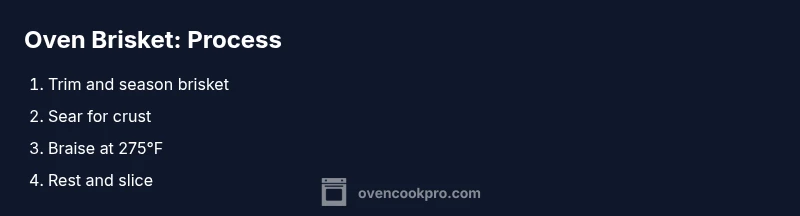
To oven-cook brisket reliably, use a low, slow braise at 275°F. Plan about 1.75 hours per pound, plus a 20–30 minute rest. For very large cuts, time increases. Start with trimming, seasoning, and searing, then wrap tightly in foil and cook until the internal temperature reaches 195–205°F for tender, sliceable results.
Understanding Brisket and Oven Cooking
Brisket comes from the chest and includes two parts: the leaner flat and the fattier point. Oven cooking works best when you apply slow, even heat to break down collagen into silky tenderness. The size and thickness of the cut affect cook time, so aim for uniform thickness where possible. According to Oven Cook Pro, starting with a careful trim and even thickness helps the brisket cook more consistently. Moisture retention and gentle heat are more critical than chasing a perfect crust in this stage, since the goal is a juicy, tender slice.
Temperature, Time, and Doneness Milestones
The backbone of this method is low temperature and long braising. Set the oven to 275°F (135°C) for most briskets. Plan roughly 1.75 hours per pound, plus a 20–30 minute rest after cooking. If the brisket is very thick, allow a bit more time and consider finishing with a higher heat for the last 15–20 minutes to develop more bark. The target internal temperature for tenderness is 195–205°F (90–96°C). Oven Cook Pro analysis shows that maintaining moisture and gentle heat yields the most reliable tenderness across brisket sizes.
Prep, Rub, and Searing: Building Flavor
Trim away excess fat so the meat cooks evenly; remove the silver skin for better spice uptake. Pat the surface dry and apply a balanced rub, focusing on salt and pepper with a touch of garlic powder and paprika for color. Let the rub set on the surface for 20–40 minutes if time allows. Searing the meat in a hot pan before braising creates a rich crust and flavorful fond that adds depth to the finished dish. If searing isn’t possible, rely on a generous rub and a long braise to develop flavor.
Wrapping, Liquid, and Finishing: Moisture Matters
A successful oven brisket braise uses moisture to break down connective tissue. Place the brisket on a rack in a large roasting pan and pour in 1/2–1 cup of beef broth, water, or beer to create a gentle braising environment. Tightly seal the pan with heavy-duty foil (or use parchment + foil) to trap steam. This step ensures the meat braises in its own juices and the flavor concentrates as it cooks. If you notice excessive evaporation, add a splash more liquid during the halfway point.
Troubleshooting and Common Mistakes
Common problems include dry edges, uneven doneness, and overcooking. If the brisket dries out, reduce the oven temperature by 25–50 degrees or add more braising liquid during cooking. If the meat seems tough after several hours, continue braising and check tenderness with a thermometer. Slice only after resting to allow juices to redistribute. Avoid lifting the foil prematurely, which can cause moisture loss and uneven cooking.
Resting, Slicing, and Serving
Resting is essential: loosely tent the brisket with foil and allow 20–30 minutes for juices to redistribute. Slice against the grain for maximum tenderness; separate the flat and point if desired, and trim any long fat edge for a cleaner presentation. Serve with pan juices or a simple au jus; a tangy barbecue sauce can complement the meat if you prefer. Leftover brisket stores well in the fridge for 3–4 days or freezes for 2–3 months.
Tools & Materials
- Beef brisket (flat or point)(Weight 5–8 lb is common; adjust time by weight)
- Roasting pan with rack(Large enough to hold brisket without crowding)
- Heavy-duty aluminum foil or butcher paper(For wrapping and moisture retention)
- Meat thermometer (instant-read or probe)(Monitor internal temp; target 195–205°F)
- Beef broth, water, or beer(1/2–1 cup for braising liquid)
- Dry rub ingredients (salt, pepper, garlic powder, paprika)(Pat-dry surface before cooking)
- Carving knife and cutting board(Slice against the grain)
- Tongs and oven mitts(For handling hot pans and meat)
- Oven thermometer (optional)(Calibrates oven accuracy)
Steps
Estimated time: Total time: 3.5-6 hours (including 20-30 minutes resting)
- 1
Trim and pat dry
Trim excess fat cap for even cooking; remove silver skin. Pat the surface dry to help the rub adhere and to promote even browning.
Tip: A clean surface improves rub penetration and browning. - 2
Apply rub and rest
Evenly season with salt, pepper, and spices; let the rub sit on the surface for 20–40 minutes if possible to meld flavors.
Tip: Resting after seasoning helps moisture balance and flavor uptake. - 3
Sear the brisket
Heat a heavy pan with a little oil and sear the brisket on all sides until deeply browned to develop crust and fond.
Tip: Sear quickly to avoid overcooking; crust enhances texture and flavor. - 4
Rack and liquid setup
Place the brisket on a rack in a roasting pan and add 1/2–1 cup braising liquid.
Tip: Raising the meat ensures uniform braising and prevents boiling. - 5
Seal and braise
Tightly seal with foil or use parchment + foil; bake at 275°F for the recommended time until tender.
Tip: Seal well to trap moisture; a vented cover can be used if you need to check moisture. - 6
Check tenderness and adjust
Probe the brisket after several hours. Continue cooking until the internal temperature reaches 195–205°F for tenderness.
Tip: Patience here pays off; avoid rushing the final stage. - 7
Rest the brisket
Remove from oven and rest, loosely tented, for 20–30 minutes to reabsorb juices.
Tip: Resting prevents juices from pooling on the cutting surface. - 8
Carve and serve
Slice against the grain and separate the flat from the point if desired. Serve with pan juices or au jus.
Tip: Slice thinly for maximum tenderness and a neat presentation.
Questions & Answers
What internal temperature should oven-cooked brisket reach?
Aim for 195–205°F; this range allows collagen to break down for tender slices.
Aim for about 195 to 205 degrees for tenderness.
Should I wrap the brisket early or late?
Most cooks wrap after the surface browns and moisture is established; wrapping later helps retain moisture.
Wrap after browning to keep moisture in.
Can I cook brisket from frozen?
Cooking from frozen is not ideal; thaw thoroughly for even cooking and better texture.
Thaw completely for best results.
What if my oven runs hot?
Use an oven thermometer and consider lowering heat slightly or rotating the brisket to prevent scorching.
Check with a thermometer and adjust as needed.
Should I trim fat before cooking?
Yes, trim excess fat cap to promote even rendering and glaze penetration.
Trim excess fat for even cooking.
How long can you rest brisket after oven cooking?
Rest 20–30 minutes to redistribute juices; longer rests can push slices to cool too quickly.
Rest for 20–30 minutes.
Watch Video
Main Points
- Plan about 1.75 hours per pound at 275°F.
- Wrap tightly to trap moisture and flavors.
- Rest 20–30 minutes before slicing.
- Slice against the grain for tenderness.
- Target 195–205°F internal temperature for best texture.