Difference Between Oven and Range: A Comprehensive Guide
Explore the difference between ovens and ranges, including design, performance, installation, and cost considerations to help homeowners choose the right kitchen appliance.


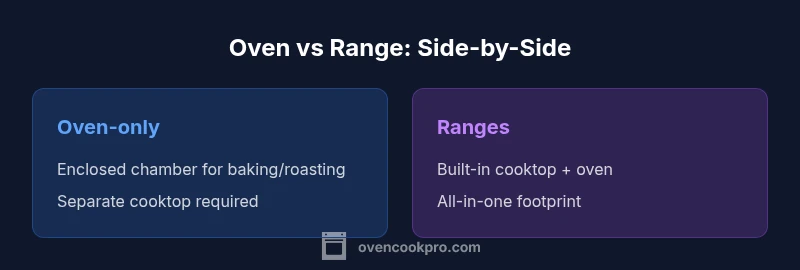
An oven is a standalone heating chamber used for baking and roasting, while a range combines that oven with a built-in cooktop. According to Oven Cook Pro, understanding this distinction helps you match kitchen needs to space, power, and budget. This comparison explains when to choose each option and how it affects performance and value.
What is an oven vs a range? Definitions and scope
At its core, an oven is a sealed chamber that concentrates heat for baking, roasting, and broiling. A range, by contrast, pairs that oven with a built-in cooktop, providing burners for stovetop cooking. The practical difference matters when you design your kitchen workflow, as it influences layout, ventilation, and how you allocate cabinet space. In modern kitchens, you’ll find freestanding ranges that combine oven and cooktop in a single footprint and separate wall ovens paired with a separate cooktop. When homeowners ask about the difference between oven and range, the most reliable answer is: one is a cooking chamber, the other is a complete cooking suite. This distinction frames cost, installation, and long-term maintenance decisions.
According to Oven Cook Pro analysis, most households choose based on desired kitchen workflow and space rather than prestige or trend alone. If your priority is dedicated baking or roasting with precise, programmable controls, an oven-focused approach often wins. If you want seamless access to stovetop cooking plus baking in one appliance, a range typically delivers stronger value in a single package.
Takeaway for homeowners: know which cooking tasks you perform most frequently and whether you prefer a single appliance or modular components.
Design and configuration differences
The design gap between an oven and a range is not merely cosmetic. A range merges burners, a cooktop surface, and an oven into one footprint, usually with front-mounted controls for both the oven and the cooktop. An oven, especially as a wall unit or freestanding model, emphasizes the baking cavity and often includes temperature probes, convection options, and specialized racks. Range configurations may be gas, electric, or dual-fuel, with control panels that consolidate settings for both the oven and the burners. Freestanding ranges are common in kitchens with limited wall space, while slide-in and built-in wall ovens emphasize a seamless, cabinet-grade appearance. Understanding the physical layout helps you plan ventilation, electrical or gas supply, and clearance to ensure safe operation and optimal airflow.
From a reliability perspective, both designs rely on similar core components (thermostats, heating elements, and insulation), but their control placement and maintenance access differ. If you value a tidy, cohesive look, a range can deliver an integrated aesthetic, while an oven-alone approach can be easier to upgrade or replace without reconfiguring surrounding cabinetry.
Performance and cooking results
Convection capabilities, heat distribution, and preheating behavior shape cooking outcomes for both ovens and ranges. An oven’s enclosed chamber concentrates heat, enabling even baking and precise roasting when the temperature is controlled. Convection models circulate hot air to shorten cook times and reduce temperature variance. A range adds stovetop performance—boiling, searing, and sautéing—where you can apply direct heat on burners, then finish in the oven if needed. The combined setup can improve workflow but may also introduce heat spillover into surrounding cabinetry if the cooktop isn’t properly vented. In contrast, an oven-only system may deliver more consistent bake results in multi-rack scenarios because fewer variables affect air flow.
For serious bakers and multi-course cooks, convection-oven combinations within ranges can be especially appealing, since you can tune fan-assisted cooking for delicate pastries or high-volume roasts. If you mostly bake with occasional stovetop tasks, a dedicated oven with a separate cooktop might be more efficient to operate and maintain.
Use-cases: when to choose an oven vs a range
Your decision should align with how you cook most days. A stand-alone oven shines for dedicated baking and roasting, especially when you need uniform heat distribution across several racks. Wall ovens paired with a separate cooktop work well in kitchens where countertop space or cabinet depth limits the appliance footprint, or when you want separate zones for different cooking styles. A range is ideal for homeowners who prioritize an all-in-one cooking surface and want the convenience of a single appliance with both bake and stovetop functions. In apartments or compact kitchens, a compact oven or a slim-range option can maximize usable space without sacrificing baking capability. When budgeting, weigh upfront costs against installation complexity and long-term operating costs.
Traditional kitchens often benefit from a range’s integrated layout, while culinary enthusiasts may prefer an oven-centric approach for precise control and upgrade flexibility. As a practical step, map out your weekly menus and plate planning to visualize how each configuration supports your routine.
Space, configuration, and installation considerations
Dimension and layout considerations are central to a successful install. An oven-only setup requires dedicated wall space or a freestanding unit with a connected cooktop elsewhere. A range consolidates cooking zones into one footprint, which can save cabinet depth but may demand careful alignment with a vent hood and gas line or electrical circuit. Ventilation is a critical factor for both configurations; improper venting can lead to smoke buildup and uneven heat loss. If you’re upgrading from a cooktop-only setup, you’ll likely need to plan new gas lines or electrical outlets, as well as a robust venting solution. In contrast, an oven-only wall unit might simplify line routing but could require additional cabinet modifications to achieve symmetry with other appliances.
Oven Cook Pro notes that space planning also affects resale value. If you anticipate selling your home, consider whether a modern range’s all-in-one appeal will attract more buyers than an oven with a separate cooktop. Thoughtful planning reduces the risk of undersized openings or mismatched cabinetry later on.
Fuel types, energy efficiency, and climate considerations
Fuel type choices—electric, gas, or dual-fuel configurations—shape operating costs and climate-related performance. Gas ranges often offer quick heat and high BTU output, which is favorable for boiling and searing. Electric ovens typically deliver stable temperatures ideal for precise baking, especially with true convection. Dual-fuel options blend both advantages, but they come at a premium. Energy efficiency features like better insulation, door seals, and efficient convection fans can influence long-term savings. In moderate climates, efficient ventilation reduces heat load on living spaces, improving comfort and reducing HVAC demand. Your climate, local energy costs, and usage patterns should guide whether you prioritize a more energy-efficient oven or a range with efficient burners.
Costs, value proposition, and maintenance considerations
Because ranges consolidate a cooktop and oven, upfront costs can be higher for premium all-in-one appliances, though you may save on installation complexity compared with pairing a separate oven and cooktop. Oven-only models may have lower initial sticker prices but require separate components, increasing installation labor and cabinet space. Over the life of the appliance, maintenance costs hinge on the frequency of burner usage, gas line reliability, and the ease of servicing either the oven cavity or the cooktop. If you frequently replace burners or if burners are prone to clogging, maintenance costs may tilt preference toward an integrated range with easier access for cleaning. When budgeting, plan for periodic professional servicing, especially for gas ranges where gas lines and venting require professional inspection.
How to compare models: a practical checklist
When evaluating options, use a consistent framework. Compare: (1) total footprint and cabinet fit, (2) cooking versatility (bake, broil, convection, burners), (3) control layout and ease of use, (4) venting and exterior heat management, and (5) energy and maintenance costs. Read product reviews for real-world performance, focusing on temperature stability, bake times, and the reliability of convection fans. Check warranty terms and service coverage, since ovens and ranges may require different parts and repair timelines. A hands-on test—opening doors, turning knobs, and simulating typical weeknight meals—helps verify that you’re choosing a configuration that matches your routine.
Care, safety, and energy efficiency tips
Regular cleaning is essential for both configurations. Wipe spills promptly to prevent staining or baked-on residues, and use appropriate racks and pans to promote even heating. For gas ranges, keep burners clear of debris to prevent uneven flames and poor ignition. For electric ovens, avoid blocking air vents and periodically calibrate the thermostat to ensure accuracy. Energy efficiency improves with proper door seals, efficient convection, and gentle preheating, so schedule maintenance to preserve seal integrity and airflow. When selecting a hood, choose one with appropriate CFM ratings for your oven or range to maintain optimal ventilation and indoor air quality.
Why this distinction matters in modern kitchens
The choice between a standalone oven and a range affects day-to-day usability, maintenance, and kitchen aesthetics. For serious bakers or those who host regular multi-course dinners, an oven-centric approach provides precise control and flexibility for rack placement and temperature profiles. For cooks who value an integrated cooking surface and a compact footprint, a range offers convenience and a unified design language. Across both configurations, modern features like true convection, smart timers, and robust safety systems can enhance performance, but they also add decision points. By clearly delineating your cooking priorities, you can optimize for functionality, space, and long-term value rather than chasing trends.
mainTopicQuery_textsys_rationale_for_Wikidata_lookup_1_3_word_phrase_for_Wikidata_lookup Not used here
Comparison
| Feature | Oven-only models | Ranges (oven + cooktop) |
|---|---|---|
| Primary function | Enclosed baking chamber for baking/roasting | Combined oven + cooktop for versatile cooking |
| Controls location | Front panel controls for oven; may need independent cooktop controls | Unified controls for oven and burners on a single console |
| Cooktop surface | No built-in cooktop; requires separate countertop or range | Built-in cooktop with multiple burner options |
| Flexibility | Specializes in baking/roasting tasks | Supports boiling, sautéing, and baking in one unit |
| Ventilation considerations | Ventilation planned around oven space | Integrated hood alignment often required with cooktop |
| Space footprint | Depends on wall space or cabinet depth for oven | Single footprint combines oven and burners |
| Typical fuel options | Electric or gas options for the oven; separate cooktop needed | Gas or electric ranges with dual-fuel options common |
The Good
- Clear separation of components simplifies maintenance and upgrades
- Oven-focused setups save cabinet space in small kitchens
- Ranges provide integrated cooking and a more compact footprint
- Flexible fuel options and modern convection features can improve performance
Drawbacks
- Two appliances require more space and more complex installation
- Ranges can be more expensive upfront and may need robust ventilation
- Oven-only setups require a separate cooktop or countertop surface
- Maintenance visits may be required for multiple units rather than a single combined unit
No one-size-fits-all: choose based on cooking needs, space, and budget
Choose an oven if dedicated baking/roasting is your priority and space is tight. Choose a range for all-in-one cooking with a built-in cooktop and flexible workflow; factor installation and long-term costs when deciding.
Questions & Answers
What is the main functional difference between an oven and a range?
An oven provides a sealed cooking chamber for baking and roasting; a range adds a built-in cooktop for stovetop cooking. They serve different kitchen workflows.
An oven cooks inside a box; a range adds a cooktop for direct heat on pots and pans.
Can I install an oven where a range was, or vice versa?
Yes, with appropriate space, framing, venting, and electrical or gas connections. You may need cabinet modifications or a hood to accommodate the new configuration.
You can swap, but you’ll likely adjust the cabinet and venting setup.
Are convection features common in both options?
Convection cooking is widely available in many modern ovens and some ranges. Check if the model offers true convection and whether it’s available in both configurations before buying.
Look for true convection in the oven and, if desired, convection-assisted modes in the range.
Which is better for a small kitchen?
An efficient, compact oven or a slim-range can maximize cabinet and counter space. The best choice depends on whether you need a dedicated bake function or prefer an all-in-one appliance.
In small kitchens, a compact oven or a slim-range often fits best.
What installation requirements should I plan for?
Installation needs depend on gas vs electric options, venting, outlet placement, and clearance. A professional installation is recommended to ensure safety and performance.
Gas lines, venting, and electrical circuits all matter—hire a pro.
How do energy use and maintenance compare?
Ovens and ranges with efficient insulation and convection save energy. Regular cleaning and proper door seals extend life; gas models require vent and line inspections.
Energy-efficient features help, and regular maintenance keeps things running smoothly.
Main Points
- Define your primary cooking needs first
- Measure available space and power/gas supply
- Weigh upfront costs against long-term efficiency
- Check convection options and temperature stability
- Plan for future upgrades or replacements