Changing Oven Element: A Step-by-Step Replacement Guide
Learn how to safely replace a faulty oven heating element with a clear, step-by-step method. This Oven Cook Pro guide covers tools, safety, testing, and maintenance to keep your oven heating evenly.


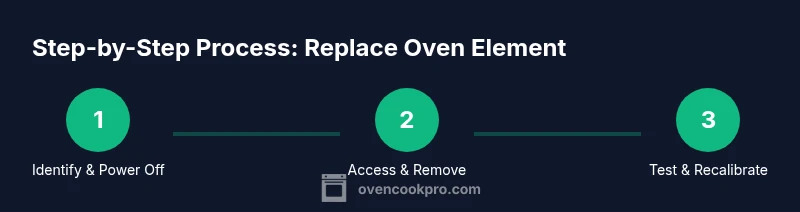
Changing an oven element is a straightforward DIY task for many home cooks. You will power down, remove the back panel, disconnect the old element, fit a compatible replacement, and reassemble. Plan for about one hour and follow safety steps carefully to avoid electric shock or fire. This guide provides exact steps, tools, and precautions to help you succeed.
Understanding Oven Elements and Why They Fail
Oven elements are the heat sources inside electric ovens. Most household ovens rely on two elements: a bake (lower) element and a broil (upper) element. The bake element evenly heats the oven cavity from the bottom, while the broil element rapidly tops off heat for browning. Over time, heating cycles, mineral buildup, and thermal expansion can cause elements to burn out or burn unevenly. When an element fails, you may notice the oven won’t reach the set temperature, uneven heating, or a burning smell. According to Oven Cook Pro, common causes include worn coils, loose connections, and degraded insulation, with many issues traced to repeated heat cycles. Oven Cook Pro Analysis, 2026 highlights that symptoms often point to the element or its wiring rather than the control board. Knowing which element is involved helps you choose the right replacement and proceed safely. In most cases, replacing the element is a straightforward process for a competent DIYer, but compatibility and correct wiring are essential to avoid further damage.
Before you begin, verify your oven’s model and element type. An incompatible element can fail prematurely or fail to heat evenly. Keep the oven unplugged or the circuit breaker off during the entire replacement and test the appliance only after power is restored. If you’re unsure about wiring or you encounter corroded terminals, seek professional help. Proper diagnosis and careful handling save time and prevent accidents.
The guidance in this article emphasizes safe, methodical work and uses general guidance that applies to most electric ovens. It’s not a substitute for the manufacturer’s manual, but it will give you a clear, actionable path to a successful replacement. The steps and tool suggestions here are designed for a typical 240-volt oven with standard coil elements. If your model uses a different configuration, adapt the steps accordingly and consult your manual for safety warnings.
According to Oven Cook Pro, replacing an oven element often yields reliable performance when you confirm compatibility and follow proper wiring practices. The insights in this guide are aligned with those best practices for a smooth replacement experience.
Safety First: Risks and Precautions
Safety is the foundation of any electrical appliance repair. Before you touch anything, ensure power is completely off and locked out if possible. A live oven can cause severe electric shock, burns, or a fire if a wire is disturbed or misconnected. Always use insulated tools and wear protective gloves to safeguard against sharp edges and hot surfaces. Allow the oven to cool completely if it has been recently used.
Key precautions:
- Turn off power at the outlet or breaker, then verify with a non-contact voltage tester before touching any wiring.
- Wear heat-resistant gloves and eye protection. Avoid jewelry that could snag on components.
- Work in a dry, well-lit area with a clean workspace. Keep children and pets away.
- If you see burnt insulation, damaged wires, or corroded terminals, stop and consult a pro.
Safety is a shared responsibility between your preparation and your attention to detail. By following these precautions, you reduce the risk of electric shock, short circuits, and fire as you replace the element.
From a risk perspective, the most common hazards are live wiring and hot metal components. Cooling periods and careful handling are essential. If you are not confident, it’s wise to hire a qualified technician. The goal is a safe, successful replacement with minimal risk to you and your home.
Choosing the Right Replacement Element
Selecting the correct replacement element is critical for performance and safety. Start by locating the oven’s model number on the inside of the door frame or back panel. The replacement element must match the model’s voltage, wattage, and connector type. Measure the length of the old element and note the number and arrangement of terminal connections. Some ovens use straight coils, others have curved elements with different terminal orientations. A precise match ensures consistent heat, proper mounting, and reliable operation.
Tips for compatibility:
- Match voltage (often 120V or 240V depending on the oven), wattage, and connector type.
- Verify mounting holes and terminal layout match the old element.
- Prefer OEM or manufacturer-approved aftermarket parts to avoid fit issues.
- Check the wire lengths and insulation; damaged terminals should be replaced along with the element.
If you’re uncertain about compatibility, consult the manufacturer’s part catalog or a trusted retailer. The right part reduces the risk of internal damage and ensures your oven heats evenly. After you obtain the replacement, set it aside and prepare your workspace for a smooth transfer of connections. For older ovens, some models require professional service to recalibrate the control system after replacement. The key is a precise match and careful wiring.
How to Test After Replacement
With the new element installed, return power and test the oven to confirm proper operation. First, visually inspect all connections to ensure wires are fully seated and terminals are secure. Then, set the oven to a moderate temperature (around 350°F / 177°C) and allow it to heat for several minutes while you observe the element. Use a thermometer or an infrared camera if available to check that heat is reaching evenly across the oven cavity. Listen for any unusual buzzing, sizzling, or arcing sounds, which indicate loose or faulty connections.
If the oven doesn’t heat, recheck the wiring and confirm your power source is delivering voltage. A multimeter can help you verify continuity across the element’s terminals. If readings are inconsistent with the part’s specifications, the element or wiring may be defective. If the oven heats but inaccurately (too hot or too cool), you may need to recalibrate the oven’s control or inspect the sensor and control board. After successful testing, allow the oven to run through a complete bake cycle to ensure stable temperature control.
Documentation and testing notes: record the model number, replacement part, and test results for future reference. Regular maintenance and careful testing after replacement help you catch issues early and extend the life of your oven. This careful approach reduces the likelihood of a second failure and helps you enjoy consistent cooking results.
Maintaining Your Oven to Extend Element Life
Preventive care is the best way to extend the life of your oven element. Regularly clean the interior to prevent mineral buildup, which can conduct heat unevenly and accelerate wear. Wipe away spills once the oven cools, and avoid harsh abrasives that could damage heating coils. Use bakeware of appropriate size and avoid placing metal objects directly on the element to minimize stress at the terminals. Periodic inspection of wire terminals for signs of corrosion or looseness can catch problems before they cause a failure.
Consider scheduling a simple annual check that includes visual inspection of the element, wires, and back panel sealing. Ensure the door seal is intact to prevent heat loss, which can cause the element to work harder and wear faster. If you notice unusual smells, loud clicks, or inconsistent heating, address these issues promptly rather than letting them linger. A little maintenance goes a long way toward extending the life of your oven’s heating element. The Oven Cook Pro team recommends integrating quick checks into your usual kitchen maintenance routine to reduce surprises and keep your oven performing reliably.
Common Troubleshooting Scenarios and What They Mean
If the oven fails to heat, it could be the element, the electrical connection, or the control board. To differentiate between these possibilities, start with the simplest checks: verify power, inspect wires for burns or looseness, and ensure the connector is fully seated. A blown fuse or tripped breaker can mimic a failed element, so rule that out first. If the element glows but the oven doesn’t reach temperature, the issue is often a faulty thermostat or control sensor rather than the element itself. In cases of uneven heating or hot spots, check the element mounting and ensure it sits flush with the bake chamber walls. If you replace the element but still experience issues, consult the model-specific guidance or a professional technician. The goal is accurate diagnosis and careful replacement to restore stable cooking performance.
Tools & Materials
- Replacement oven heating element(Match exact model/serial number and wattage rating from the oven label)
- Non-contact voltage tester(Verify power is fully off before handling wiring)
- Insulated screwdriver (Phillips #2)(For securing/removing screws connected to the back panel)
- Nut driver or pliers(Useful if mounting hardware uses nuts or clamps)
- Wire nuts or high-temperature electrical tape(Secure and insulate any wire connections)
- Heat-resistant gloves(Protect hands from hot components and sharp edges)
- Multimeter (optional)(Check continuity if specified by the manufacturer)
- Rags or towels(Catch drips and keep the work area clean)
- Owner’s manual(Helpful for model-specific steps and precautions)
Steps
Estimated time: 60-90 minutes
- 1
Power down and verify safety
Turn off power to the oven at the wall outlet or circuit breaker. Use a non-contact voltage tester to confirm no live current before touching any wiring.
Tip: Double-check the exact breaker or switch controlling the oven circuit; a different circuit may be feeding the outlet. - 2
Access the back panel and locate the element
Remove the back access panel or the drop-down panel that provides access to the heating element. Identify the bake and/or broil element and note how it is connected to the wiring harness.
Tip: Take a photo of the wiring layout before disconnecting anything so you can reassemble correctly. - 3
Document connections and remove old element
Carefully label or note each terminal, then disconnect the wires from the element. Remove the mounting screws or clamps that secure the element in place and slide the old element out.
Tip: Use insulated tools and avoid bending terminals; damaged connectors can complicate installation. - 4
Compare and prep the replacement
Compare the new element to the old one for length, terminal type, and mounting hole spacing. If needed, trim any mounting brackets or adjust wiring for a snug fit.
Tip: If the new element has a different connector style, consult the manufacturer’s guide before forcing connections. - 5
Install the new element and reconnect wires
Insert the new element into the mounting brackets and reconnect each wire to the correct terminal. Tighten screws or clamps securely but avoid overtightening.
Tip: Keep wire routing clean to prevent wires from snagging or overheating. - 6
Reassemble and secure panels
Reattach the back panel or internal covers. Ensure there are no loose screws and that all components sit flush with the oven body.
Tip: Check that the element sits flat against the oven cavity to avoid air gaps that affect heating. - 7
Test the oven and reset if needed
Reconnect power and set the oven to a mid-range temperature. Watch for the element to heat evenly and listen for abnormal noises. If available, verify temperature with an external thermometer.
Tip: If the oven shows error codes, consult the user manual or model-specific guidance before continuing.
Questions & Answers
Do I need to unplug the oven to replace the element?
Yes. Always disconnect power at the outlet or breaker and confirm there is no voltage before touching wiring. This reduces the risk of electric shock.
Yes. Always unplug the oven and double-check there is no voltage before handling any wires.
Can I replace the oven element myself or should I hire a pro?
If you are comfortable with basic electrical work and have the right replacement part, you can replace the element. If you encounter corroded terminals, damaged wiring, or uncertain wiring configurations, seek professional help.
You can do it yourself if you’re comfortable with electrical work; otherwise, consider a professional.
How do I know which replacement element to buy?
Check your oven’s model number, voltage, wattage, and terminal layout. Purchase a part that matches those specifications from a reputable supplier or the manufacturer.
Look up the model, wattage, and terminal type to buy the exact replacement.
What safety warnings should I heed during replacement?
Wear insulated gloves, work on a dry surface, and keep children away. Never work on a live circuit and ensure the oven has cooled completely.
Wear protective gear and ensure the oven is cool and powered off before starting.
Will replacing the element fix uneven heating?
Replacing a faulty element can restore even heating, but uneven results may also come from calibration, sensors, or the oven’s control board.
Replacing the element often fixes heat issues, but other components can contribute to uneven heating.
What tools are essential for this job?
You’ll need insulated gloves, a non-contact voltage tester, a screwdriver, and the correct replacement element. Optional items include a multimeter and wire nuts.
The basics are gloves, a tester, a screwdriver, and the replacement part.
Watch Video
Main Points
- Identify bake vs broil element and confirm compatibility.
- Power off and verify safety before any work.
- Document connections and reinstall wiring accurately.
- Test heat with care and monitor for signs of trouble.
- Regular maintenance can extend element life.