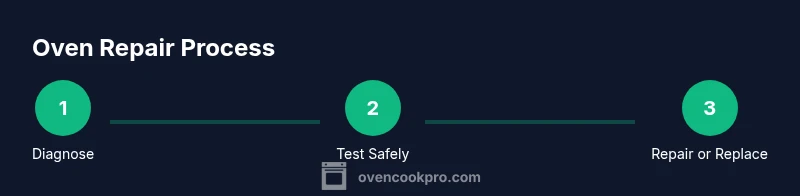
Oven Repair: A Home Cooks Step-by-Step Guide
Learn safe, practical oven repair techniques for common issues like thermostat drift and heating element failure. This expert guide from Oven Cook Pro explains diagnostics, DIY fixes, maintenance tips, and when to call a pro.


Learn to diagnose and address common oven repair issues, from thermostat miscalibration to heating element failure. This guide walks you through safety checks, basic tests, and practical fixes you can perform at home before calling a professional. You’ll know when to replace parts, how to test for continuity, and how to minimize downtime.
Why oven repair matters for safety and efficiency
According to Oven Cook Pro, a cautious, methodical approach to oven repair protects people and property. The Oven Cook Pro team found that many home oven issues arise from thermostat drift, aging heating elements, or damaged wiring, especially in older models. Addressing these problems early not only restores accurate temperatures but also reduces energy waste and the risk of electrical faults or fires. In this section, we explore why timely repair matters and how to assess the severity of a fault without jumping to conclusions. You’ll learn the difference between a nuisance symptom and a serious failure, how to track preheat times, heat distribution, and error codes, and how to plan next steps. The goal is to empower homeowners with a clear, safe way to diagnose common faults, decide whether a DIY fix is appropriate, and know when professional service is warranted. As with any appliance, safety comes first, particularly when electricity and high temperatures are involved. This mindset helps you maintain reliable cooking performance and protect your investment.
Common oven issues and diagnostic approach
Most frequent oven problems fall into a few categories: failure to heat, uneven heating, inaccurate temperature readings, and nuisance error codes. Start by observing whether the oven preheats within a reasonable time, whether the door seals are intact, and if the bake and broil functions behave differently. Thermostat drift is common as sensors age, while worn heating elements can burn out or develop hot spots. Control boards may fail to relay signals, producing intermittent or stuck operation. The diagnostic approach emphasizes safety and method: verify that the oven is receiving power, check internal fuses, inspect wiring for signs of wear, and test basic continuity on simple components before replacing parts. Keep notes of symptoms, such as “preheats slowly” or “top rack not heating,” since this helps pinpoint likely culprits. While some fixes are straightforward, more complex faults require professional diagnosis to avoid further damage or safety risks. For model-specific guidance, consult your owner’s manual and trusted service resources.
Safety and preparation before you begin
Begin any repair by removing power. Unplug the oven or switch off the circuit breaker, and if your oven is gas-powered, shut off the gas supply and ventilate the area. Wear safety glasses and insulated gloves, and work on a cool, dry surface away from water. Gather the tools you’ll need, read the manual, and set aside a clean workspace with good lighting. If you rely on a digital thermometer, have it ready to verify temperature accuracy after any repair. Avoid attempting repairs with the oven hot or while the door is open, which can lead to burns or electric shock. Keep children and pets away from the work area. Document screws or connectors with photos before you disconnect them so you can reassemble correctly. Finally, verify that you have a plan for testing the oven after repairs and a clear route to seek professional help if you encounter unfamiliar components.
Testing and diagnosis: non-invasive checks
Begin with non-invasive checks that don’t involve disassembly. Use a non-contact voltage tester to confirm power is off before touching any wiring. If your oven has a display, note any error codes and look up their meanings in the manual or manufacturer website. Check the door seal for gaps; a poor seal can cause temperature fluctuations that mimic heating element issues. For thermostat-related concerns, compare actual oven temperature with a reliable thermometer placed inside the cavity during a timed bake test. Inspect visible wiring for discoloration, scorching, or loose connections, and gently reseat connectors where safe to do so. If you reach a point where you must measure resistance or continuity, make sure the unit is unplugged and power is isolated. Remember, some components are connected to high voltage parts that require specialized tools and training; when in doubt, stop and consult a professional.
When to replace parts and what to expect
Parts commonly involved in oven repair include heating elements, thermostats, temperature sensors, door switches, and control boards. If you detect visible damage such as breaks, scorching, or melted insulators, replacement is usually warranted. A faulty thermostat often shows temperature drift, while heating elements may burn out or create hot spots. When deciding, compare the estimated cost of repair against the value of the oven and consider the age of the unit. For DIY replacements, follow the manufacturer’s part numbers and safety instructions exactly, testing each function after installation. If the control board is failing, diagnosing the exact fault can be challenging and may require professional service. In such cases, a pro can perform advanced diagnostics and ensure that software or firmware is up to date. After any replacement, recheck power supply, ignition (for gas), and safety interlocks to confirm proper operation.
Preventive maintenance to extend oven life
Preventive care reduces the frequency of repairs and preserves performance. Regularly clean the oven cavity and seals using non-abrasive cleaners and avoid harsh chemicals that may damage gaskets. Inspect the rack guides and door hinges for wear and lubricate moving parts as recommended by the manufacturer. Schedule a periodic calibration check of the oven’s thermometer and function tests for bake, broil, and convection modes if applicable. Use proper bakeware and avoid overloading the oven, which can cause uneven heating and extra strain on elements. Keep the interior dry and free of moisture that can corrode electrical connections. Finally, create a quarterly maintenance checklist and keep records of part replacements and service visits to simplify future repairs or warranty claims. Following these practices helps ovens operate more reliably and extend their service life.
Tools & Materials
- Owner's manual(Model-specific guide for safe disassembly and parts)
- Non-contact voltage tester(Confirm power is off before touching wiring)
- Multimeter(Test resistance/continuity on thermostat and heating elements)
- Screwdriver set (Phillips and flat-head)(Access panels and terminal screws)
- Nut driver set / socket set(Remove and secure heating element connections)
- Insulated gloves(Protect hands from heat and shocks)
- Safety glasses(Eye protection during disassembly)
- Wire connectors and electrical tape(Temporary splices or securing wires (only if you know what you’re doing))
- Replacement heating element (as needed)(Only after diagnosis confirms failure)
Steps
Estimated time: 60-120 minutes
- 1
Power off and prep workspace
Unplug the oven or switch off the circuit breaker. If you sense gas or smells, stop and ventilate. Gather tools and read the manual to understand safe disassembly. This initial step minimizes the risk of shock and damage.
Tip: Label any wires or screws as you remove them to simplify reassembly. - 2
Access essential components safely
Open the access panels only after power is confirmed off. Use the screwdriver to remove screws and set panels aside. Avoid touching the control board directly unless you’ve verified power is isolated.
Tip: Take a photo of connections before disconnecting to ensure correct reattachment. - 3
Test power and basic continuity
With power confirmed off, use a multimeter to check expected resistance on simple components and ensure terminals aren’t loose. If a door switch or sensor reads abnormally, note it for later replacement.
Tip: Compare readings to the manual’s specified values or documented service sheet. - 4
Inspect heating elements and thermostat
Visually inspect for cracks or scorching on heating elements and confirm thermostat calibration. If the element shows signs of wear or the thermostat reads drift, plan for part replacement or recalibration.
Tip: Do not bend heating elements; handling may cause micro-cracks that fail later. - 5
Document findings and decide on parts
Summarize symptoms, test results, and component conditions. Decide whether a DIY replacement is feasible or if professional service is warranted, especially for control boards or gas ovens.
Tip: Estimate total cost and compare to unit value to avoid over-investment. - 6
Test after repair and plan next steps
Reconnect power, perform a controlled bake test, and verify that heat is even and within expected range. If issues persist, consider professional evaluation or advanced diagnostics.
Tip: Document test results for future reference or warranty claims.
Questions & Answers
Can I repair an oven myself?
Some simple tasks, like replacing a door seal or checking basic electrical supply, can be DIY if you have the right safety knowledge. Electrical or gas-related issues should be handled by a licensed technician.
Yes for simple tasks, but electrical or gas problems should be handled by a licensed technician.
What are the most common causes of an oven not heating?
Thermostat drift, a blown heating element, blown fuses, or a faulty control board are common culprits. Diagnosing which one depends on symptom patterns and safe testing.
Common causes are thermostat drift, heating element wear, or control board faults.
How can I test my oven’s temperature accuracy?
Place an oven-safe thermometer inside and compare its reading to the oven setting during a bake cycle. If the readings diverge significantly, calibration or component replacement may be needed.
Use a thermometer inside and compare with the set temperature.
When should I replace a heating element?
If there is visible damage, burning, or non-continuity on a resistance test, replacement is usually required. Seek professional guidance if unsure.
Replace if you see damage or tests show no continuity.
Do I need a professional for gas ovens?
Yes. Gas oven work involves fire and gas lines, so licensed technicians should handle installation, repairs, and relighting procedures.
Gas ovens require licensed professionals.
What maintenance helps prevent future oven repairs?
Regular cleaning, door seal checks, and periodic calibration checks help maintain performance and reduce failure risk.
Keep it clean, check seals, and calibrate periodically.
Watch Video
Main Points
- Power off before any inspection or disassembly
- Thermostat drift and heating-element wear are common causes
- Document symptoms to guide diagnosis and parts choice
- Differentiate DIY fixes from complex electrical or gas repairs
- Maintain a maintenance log to extend oven life