Fix Oven Near Me: A Practical DIY Repair Guide
Learn safe, step-by-step methods to diagnose and repair common oven issues near you. This guide covers safety, tools, testing, and when to call a pro for reliable results in 2026.


You will learn a safe, practical diagnostic approach to common oven issues, decide whether a DIY fix is reasonable, and outline immediate steps to test power, settings, and heating elements. This quick guide also flags situations to avoid DIY repairs and when to contact a professional for gas or complex electronics.
What 'fix oven near me' usually involves
When homeowners search for 'fix oven near me', they’re looking for a safe, practical path to get their oven back in service without a full replacement. In most cases you’ll start with a risk assessment, verify power, and perform a few basic tests to determine whether the issue is simple enough for DIY or requires a professional. According to Oven Cook Pro, the cornerstone of any effective repair is safety first, followed by a systematic diagnostic approach. This means unplugging the appliance, allowing it to cool completely, and using the right tools rather than improvising with makeshift solutions. The rest of this guide walks you through the common symptoms, the checks you can perform at home, and clear criteria for when to call in a technician.
Common symptoms and causes
Ovens fail for a variety of reasons, and symptoms often point to a few probable culprits. If the oven won’t heat at all, the problem could be a blown fuse, a tripped breaker, a faulty heating element, or a failed control board. If the oven heats unevenly or the temperature display seems off, a defective thermostat or sensor, wiring issue, or calibration drift could be to blame. A door that won’t close properly or a gasket that’s worn out can also prevent even heating. By recognizing the symptom, you can narrow down the likely causes and decide whether a DIY fix is reasonable or if professional support is warranted. Remember, identifying the right cause saves time and reduces the risk of accidental damage.
Safety first: what you must know before touching electrical components
Working on an oven involves electricity and sometimes gas. Before you touch anything, unplug the appliance from its outlet or switch off the dedicated circuit at the breaker panel. If you smell gas with a gas range, stop immediately and evacuate, then call your gas supplier or a professional. Keep water away from the area and use insulated tools to avoid shock. Use safety gloves to protect your hands and wear eye protection when inspecting elements or wiring. If you’re ever unsure about a step, pause and seek professional guidance. These precautions reduce the risk of injury and harmful damage to the oven or home.
Tools and materials you’ll likely need
Having the right tools on hand makes a DIY repair safer and faster. Gather a basic screwdriver set (Philips and flat-head), a multimeter for electrical testing, a non-contact voltage tester, and insulated gloves. You may also need replacement parts such as a heating element, thermostat sensor, or fuses, but don’t buy parts until you’ve confirmed the problem. A flashlight or headlamp helps you see inside the oven cavity, and a digital camera or phone to document wiring before you disconnect anything. Keep a set of zip ties and electrical tape for temporary fixes and secure connections.
Diagnostic flow: a practical, at-home approach
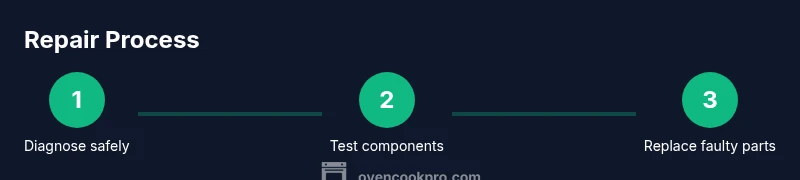
Use a simple decision flow to locate the fault without jumping to conclusions:
- Step 1: Ensure power is off and the oven is cool.
- Step 2: Check the circuit breaker and outlet for signs of tripping or damage.
- Step 3: Verify the oven’s control settings and door latch; a faulty latch can mimic heating issues.
- Step 4: Visually inspect heating elements for cracks or blistering and look for melted insulation.
- Step 5: If you have a multimeter, test heating element continuity and sensor resistance according to the unit’s service manual.
- Step 6: If tests point to a specific part, compare symptoms with the replacement part’s known failure modes.
- Step 7: If you’re unsure or the oven is gas-powered, consult a pro rather than proceeding.
Testing heating elements and thermostat safely
To test a heating element, unplug the oven, and remove the back panel or access panel per the model’s instructions. Visibly inspect for cracks and burnt marks; those indicate failure. Use a multimeter to check continuity; a broken element will show infinite resistance. For the thermostat, test resistance at room temperature and during preheat; significant drift or open-circuit readings indicate replacement. If you find an obvious fault, replace only the faulty component and reassemble, then run a bake cycle to confirm normal operation. If you’re uncomfortable with electrical testing, skip this step and call a technician.
Replacing a faulty part: DIY viability vs professional help
Some fixes, like replacing a heating element or thermostat, are within reach for confident DIYers with proper safety measures. Others—especially control boards, high-voltage components, or gas-valve assemblies—pose greater risk and are better left to licensed technicians. Always unplug and discharge capacitors where applicable, label wires, and test the new part before sealing the unit. If the model uses modular replacement parts from the manufacturer, ensure compatibility and follow the instruction manual. When in doubt, prioritize safety and call a pro; a small misstep can lead to bigger issues.
Maintenance to prevent future oven trouble
Preventive care can extend oven life and reduce the need for repairs. Regularly clean the interior to remove grease and food residues, inspect the door gasket for wear, and ensure the oven is properly calibrated. Keep the vent and range hood clean to prevent overheating. Schedule annual checks with a professional if you rely on your oven heavily or if it’s an older model. Simple maintenance habits save time and money while keeping meals on track.
What to expect during an oven repair visit
If you hire a professional near you, expect a structured process: a diagnostic assessment, confirmation of the fault, part replacement, safety checks, and a test bake to verify proper operation. A licensed technician will usually provide a written estimate after confirming the fault and list the parts required. The visit may involve a call-out fee, the cost of replacement parts, and labor charges. For most homeowners, understanding the sequence helps you ask informed questions and prepare accordingly.
How to choose a reputable service near you
Start with a quick online search for local oven repair services with high ratings and clear licensing information. Read reviews focusing on reliability and transparency. Ask for written estimates and compare parts costs, labor rates, and warranty terms. Verify that the technician is trained for the oven model you own and that they offer safe handling of electrical components. Finally, confirm that any service is aligned with safety standards and has customer-friendly policies.
Quick troubleshooting for common electric oven issues
In many cases, a simple re-seat of wiring connections and a recalibration can restore normal operation. If you notice loose wires, corrosion, or burned marks, stop and seek professional help. Keep a log of symptoms, dates, and any parts replaced to help the technician diagnose future issues more quickly.
Tools & Materials
- multimeter(For electrical continuity testing; set to appropriate range per manual)
- screwdriver set (Phillips + flat-head)(Crucial for removing access panels and components)
- non-contact voltage tester(Verify power is truly off before touching wires)
- insulated gloves(Protect hands from sharp edges and hot surfaces)
- flashlight or headlamp(Improve visibility inside the oven cavity)
- replacement parts (heating element, thermostat, fuses)(Only after confirming the fault with tests)
- digital camera or phone(Document wiring before disconnecting anything)
- zip ties and electrical tape(Secure connections and tidy the inside)
Steps
Estimated time: 60-120 minutes
- 1
Power down and ensure safety
Unplug the oven or switch off the circuit; wait until any stored heat dissipates. Confirm power is off using a voltage tester before touching any wires.
Tip: Always verify power with a tester even if the appliance seems off. - 2
Check breakers and outlet
Inspect the home breaker panel for a tripped breaker and test the outlet for voltage using a tester. A tripped breaker is a common non-heating culprit.
Tip: If the breaker trips repeatedly, there may be a short that needs professional attention. - 3
Test settings and door latch
Ensure you’ve selected the correct bake or broil setting and that the door latch engages properly. A faulty latch can prevent heat from reaching the oven.
Tip: Calibrate the oven after reassembly to re-align temperature readings. - 4
Inspect heating elements
Look for visible cracks, blistering, or scorch marks on bake and broil elements. Damaged elements must be replaced before testing again.
Tip: Do not touch hot elements; replace with manufacturer-approved parts only. - 5
Test continuity with a multimeter
With power off, disconnect the heating element and test for continuity per the manual. No continuity usually means a faulty element.
Tip: Document the readings and compare to the specification in the manual. - 6
Evaluate thermostat and sensor
Check the sensor resistance and compare against the specification at room temperature and during preheat. Drifting readings indicate replacement is needed.
Tip: If the sensor is integrated with the control board, consider professional service. - 7
Decide on replacement vs further diagnostics
If a single component tests faulty, replace it and re-test the oven. If tests are inconclusive, stop and consult a pro.
Tip: Avoid chasing multiple faults at once; fix one verified issue first. - 8
Reassemble and test
Reconnect all wires securely, replace panels, restore power, and run a bake cycle to confirm normal operation. Document outcomes for future reference.
Tip: Keep a photo log of wiring before reassembly to aid future maintenance.
Questions & Answers
Can I fix my oven myself if it's electric?
Yes for simple, clearly identified issues like a blown fuse or loose wiring, but avoid high-voltage components and complex boards. If you’re unsure, consult a professional.
Yes for simple issues, but if you’re unsure about high-voltage parts, it’s best to call a professional.
Is it safe to repair an oven with a gas line?
No. Gas ovens require specialized gas-safe training. Do not attempt repairs on gas valves or lines yourself; contact a licensed technician.
No—gas ovens need a licensed technician for safety.
When should I replace a heating element myself?
If the element is visibly damaged or shows open continuity on testing, replacement is reasonable for a confident DIYer with safety precautions. If you’re uncertain, hire a pro.
If the element is damaged or tests show a fault, replacement is often doable for a careful DIYer; otherwise, call a pro.
How long does an oven repair usually take?
Time varies with the fault and model. Simple fixes can be completed in under an hour, while complex diagnostics or part replacements may extend into a few hours.
It depends on the fault; simple fixes can be quick, while complex issues may take several hours.
Do I need to disconnect power before starting repairs?
Yes. Always unplug the appliance or switch off the dedicated circuit before touching any internal components.
Yes—power off before starting any repair to avoid shocks.
When should I consider buying a new oven instead of repairing?
If failures recur after multiple repairs or the control system is outdated and costly, replacement might be the more sensible long-term choice.
If repairs keep happening or the oven is old, replacement may be best.
Watch Video
Main Points
- Diagnose safely before touching any parts
- Know when to DIY and when to hire a pro
- Document changes and preserve original wiring
- Regular maintenance reduces future failures