Can Oven Toast Bread: A Step-by-Step Guide to Perfect Toast
Learn how to toast bread in a standard oven with a reliable, step-by-step method. Get temperature tips, rack guidance, timing, and finishing touches for evenly browned slices.


Yes, you can toast bread in a conventional oven. Preheat to 350-400°F (175-205°C) and place slices on a baking sheet or oven rack for even heat. Bake about 4-6 minutes per side, flipping halfway, until the bread is golden and crisp. For extra browning, finish under the broil for 1-2 minutes.
Why Oven-Toasting Works
Oven-toasting bread leverages steady, hot air and high surface heat to create browning that closely resembles a toaster while giving you more control over texture. When bread heats in a conventional oven, the surface dries and browns, producing a crisp crust with a tender interior. According to Oven Cook Pro, reliable oven toasting comes from using even heat and watching for doneness instead of relying solely on preset times. Preheating ensures consistent surface heat from first contact to finish, reducing soggy centers and uneven browning. If you have a convection oven, you can lean into faster browning by lowering the temperature slightly, since the fan distributes heat more quickly. A major advantage of the oven over a dedicated toaster is scalability: you can toast several slices at once, adjust browning to taste, and easily add toppings while they’re hot. This method shines when preparing a crowd or toasting thicker slices like artisan bread that toaster slots struggle with.
Key Variables: Temperature, Time, and Bread Type
The core variables for oven toasting are temperature, time, and the type/thickness of bread. Most home ovens perform well in a broad range, roughly 325–450°F (165–230°C). Lower temperatures yield gentler browning and a softer crust; higher temperatures produce faster browning and crisper edges. Bread variety matters: sandwich bread toasts quickly and evenly, while rustic loaves or sourdough may need a touch more time or a higher heat surface. Thickness influences heat transfer; thicker slices require longer exposure or a hotter surface. The goal is even browning across the surface while maintaining a soft interior or achieving a crisper bite, depending on your preference. Note that oven fans in convection mode can reduce overall time, but you should adjust time slightly to prevent over-browning.
Preparing Bread for Oven Toasting
Start with bread that’s not stale or overly dry; slightly stale bread toasts more evenly because it dries a bit faster on the surface without becoming mushy inside. Slice bread to about 1/2 inch (1.25 cm) thickness for balance between crust and crumb. Arrange slices so they don’t touch; air should circulate around each slice for uniform browning. If you’re toasting bread with toppings or butter, consider applying them after toasting to avoid burning or soggy textures. Wipe up any crumbs to reduce smoke and ensure consistent heat transfer. Finally, keep a timer handy; even small variances in bread moisture or slice thickness can shift browning times.
Rack Position, Baking Sheet, and Parchment: Setup Essentials
Using a wire rack set over a baking sheet promotes air circulation on all sides, giving you evenly toasted surfaces. If you don’t have a rack, place slices directly on a parchment-lined sheet to prevent sticking and make cleanup easier. Parchment or a silicone mat can also help reduce scorching on delicate crusts. Position the rack in the middle of the oven to balance top and bottom heat, especially in non-convection ovens. If your oven heats unevenly, rotate the pan halfway through to promote uniform browning.
Step-By-Step Overview (Conventional Oven) – High-Level Guidance
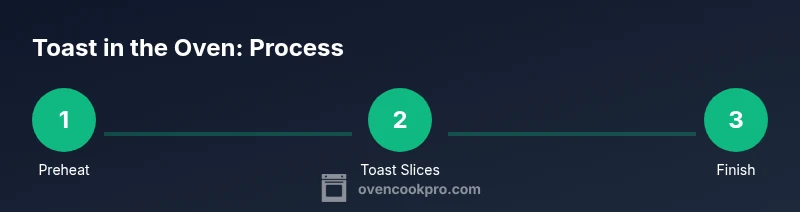
- Preheat the oven to a moderate heat (about 350–400°F / 175–205°C). This ensures a steady surface temperature from the first contact. 2) Prepare bread by choosing slices ~1/2 inch thick and arranging them with space for air flow. 3) Place slices on a rack over a sheet or directly on parchment, depending on your setup. 4) Toast until the edges start to brown and surfaces show a light caramel color, then flip to toast the other side. 5) Watch closely during the final minutes; for extra crispness, briefly finish under broil. 6) Remove carefully and let rest about 30 seconds before serving to avoid steam burns. The full step-by-step guide below provides precise timings and adjustments for bread type and thickness.
Troubleshooting and Variations
Uneven browning can stem from uneven oven heat, thick slices, or overcrowded racks. If browning is uneven, rotate the pan and move thicker slices to the center. For crustier results, use a hotter setting or finish under broil for a short time at the end. Convection ovens brown faster; if you use convection, reduce the temperature by about 25°F (14°C). You can also experiment with faux “toasting” by using a rack in the middle position and finishing with a quick broil for 1–2 minutes.
Flavor Variations and Toppings
Toasted bread serves as a canvas for countless flavors. Try a light brush of olive oil or melted butter before toasting for richer flavor. For a savory twist, rub lightly with garlic before toasting and finish with a pinch of salt. Sweet toppings shine after toasting: cinnamon sugar, vanilla butter, or honey add warmth and depth. If you’re making croutons, cut thicker slices into cubes after toasting and season with herbs, salt, and pepper for a quick, appealing snack.
Safety and Cleanup After Toasting
Hot trays and racks can cause burns; use oven mitts and set hot components on a heat-safe surface. Keep the oven door closed while monitoring browning to avoid accidental contact with hot surfaces. After toasting, let everything cool before handling, and wipe down any grease or crumbs to prevent smoke during future uses. Regularly check the rack and pan for warping or damage and replace if needed.
Quick Reference Guide for Doneness
- Light gold color with a gentle aroma indicates ready for light toasting.
- Medium browning with crisp edges suggests a traditional toast texture.
- Deep caramel color and a crackly crust indicate a well-done toast; remove promptly to prevent burning.
- For an ultra-crisp result, a brief finish under the broiler is effective but requires constant attention to avoid burning.
Real-World Scenarios and Recipes
In everyday use, you can adapt oven-toasting to different breads. A baguette sliced on a bias to expose more surface area can produce a delightful crunch, while sandwich bread yields uniform browning suitable for breakfast or lunch. For sourdough fans, a slightly higher temperature and longer bake time may be needed to achieve a consistent crust. If you’re toasting bread for stuffing or sandwich assembly, consider toasting just until lightly browned to prevent tough edges after filling. A few simple toppings—garlic butter, olive oil, or a sprinkle of sea salt—can elevate even everyday slices to something special.
Tools & Materials
- Oven (conventional or convection)(Ensure accurate temperature control.)
- Baking sheet or tray(Line with parchment for easier cleanup.)
- Wire rack (optional)(Promotes air circulation for even browning.)
- Parchment paper or silicone mat(Prevents sticking and makes cleanup simple.)
- Oven-safe tongs or a spatula(For safe handling of hot slices.)
- Bread loaf or sliced bread(Fresh or slightly stale bread works best.)
- Timer or smartphone(Helps track browning to avoid overcook.)
- Butter, olive oil, or toppings (optional)(Adds flavor after toasting.)
Steps
Estimated time: Total: 15-25 minutes
- 1
Preheat oven
Preheat the oven to a moderate heat, typically 350–400°F (175–205°C). This ensures even surface browning from the first contact with bread.
Tip: If using convection, lower the temperature by about 25°F (14°C). - 2
Prepare bread
Select bread slices about 1/2 inch thick. Cut evenly and ensure they are not stale enough to crumble. Dry, even slices toast more consistently.
Tip: Room-temperature slices toast more evenly than freshly chilled bread. - 3
Arrange on rack or sheet
Place slices on a wire rack set over a baking sheet, leaving space between slices for air flow. If using a sheet, line with parchment for easy cleanup.
Tip: Avoid overcrowding; air needs to circulate to brown evenly. - 4
Toast first side
Bake until the first side shows light browning and aroma develops, usually several minutes depending on thickness and oven heat.
Tip: Keep an eye on the color; you want a pale gold at this stage, not burnt. - 5
Flip and toast opposite side
Flip slices with tongs and continue toasting until the second side progresses to your desired shade.
Tip: If you prefer crisper edges, extend time slightly on this side. - 6
Finish and serve
Remove slices when they reach your preferred level of browning. Let rest briefly before serving to avoid steam burns.
Tip: If you want extra crispness, finish under the broiler for 1–2 minutes while watching closely.
Questions & Answers
Can I toast different bread types in the oven?
Yes. Most breads toast well in the oven, but denser loaves like sourdough or baguette may need a touch longer or a slightly higher heat for even browning. Adjust time by watching color and aroma.
Yes. Most breads toast well in the oven, but denser loaves may need a little longer. Watch for color and aroma to decide when they’re done.
Is convection better than standard for oven toasting?
Convection can speed browning and create more even color, but you should lower the temperature by about 25°F (14°C) and check earlier to prevent over-browning.
Convection can brown faster, but lower the temperature and check earlier so you don’t burn it.
Can you toast frozen bread in the oven?
Frozen bread can be toasted, but it will take longer and may brown unevenly if not flipped or rotated. Thaw slightly or adjust time accordingly and monitor closely.
Yes, but it takes longer. Flip or rotate halfway and watch closely.
Should I butter bread before toasting in the oven?
Butter or oil before toasting adds flavor and helps browning, but it’s optional. For lighter browning, toast plain and add toppings after.
Butter adds flavor and browning, but you can toast plain and add toppings afterward.
What rack position is best for even toasting?
Mid-level rack generally provides balanced top and bottom heat. If your oven browns unevenly, rotate the pan and consider moving to the center for more uniform results.
Mid-level is usually best; rotate to fix any hotspot issues.
How do I toast sourdough evenly in the oven?
Sourdough often benefits from a longer preheat and slightly higher heat, plus flipping halfway. For best results, use a rack and watch for a deep golden color on all sides.
Sourdough can take longer; flip halfway and watch color closely.
Can I toast bread without turning on the oven broiler?
Absolutely. Most oven toasting is done with standard bake heat. Use the broiler only if you want extra crispness and carefully monitor to avoid burning.
Yes, bake is enough for regular toasting; broil if you want extra crispness, but watch it closely.
Watch Video
Main Points
- Preheat for even browning.
- Choose bread thickness around 1/2 inch for best results.
- Air circulation yields uniform toasting; use a rack when possible.
- Finish with care if using broil for extra crispness.
- Oven toasting is scalable for multiple slices and toppings.