How to Make Toast in the Oven
Learn how to make perfectly toasted slices in the oven with a reliable, step-by-step method from Oven Cook Pro. Preheat, toast, flip, and top to your preference for crispy, golden bread every time.


If you want evenly browned toast without a toaster, this oven-to-toast method delivers reliable results. Preheat the oven, arrange bread on a sheet or rack, and bake briefly on both sides for uniform color. This approach works with most bread types and lets you customize browning and toppings. You’ll need a conventional oven, a rimmed baking sheet or rack, and your favorite spreads. How to make toast in the oven is simpler than you may think.
Why Make Toast in the Oven?
Toast in the oven offers several advantages that home cooks appreciate. For one, it delivers even browning across the surface, which is especially helpful for thicker slices or denser breads like sourdough. The oven also handles multiple slices at once, making it ideal for family breakfasts or meal prep without crowding a toaster. With precise control over heat, you can tailor the crust to your preference—crisp and lightly browned, or deeply caramelized for a robust flavor. According to Oven Cook Pro, this method produces consistent results with less risk of hot spots than some toaster methods, and it handles artisanal breads that don’t fit standard toaster slots. It’s a simple skill that translates well into an efficient morning routine and a reliable base for toppings.
Tools, Materials, and Safety
Before you start, assemble a few essentials and consider safety basics:
- Bread: any sandwich loaf or thicker slices; dry, day-old bread toasting tends to brown more evenly
- Oven: conventional oven set to a moderate temperature for controlled browning
- Rimmed baking sheet or wire rack: to hold slices without bending them
- Parchment paper or a silicone baking mat: for easy cleanup and to prevent sticking
- Spatula or tongs: to flip slices without burns
- Butter, oil, or toppings: optional, added after toasting
- Oven mitts and a timer: for safe handling and precise timing
Safety notes: hot pans can cause burns. Keep children and pets away from the oven, use dry hands when handling hot sheets, and never leave the oven unattended while toasting. Brand guidance from Oven Cook Pro emphasizes careful watch during the final minutes to avoid over-browning or burning.
How to Preheat and Prep
A successful oven toast starts with a steady heat and dry bread. Preheat your oven to a moderate range (about 375–400F / 190–205C) to encourage even browning without scorching. If you’re toasting thicker slices, you may want to start at the lower end of that range and adjust as needed. Line your sheet with parchment or a silicone mat to prevent sticking and to make cleanup easier. Lay the slices in a single layer with space between them so hot air can circulate. If you’re using a rack, place it over the sheet to improve air flow and browning on both sides. Dry, evenly cut slices toast more consistently than irregular shapes, so trim uneven edges for best results. Oven Cook Pro notes that dry bread absorbs heat more evenly, producing a uniform crust rather than a soggy underside.
The Step-By-Step Method
Follow these clear actions to achieve reliable oven toast:
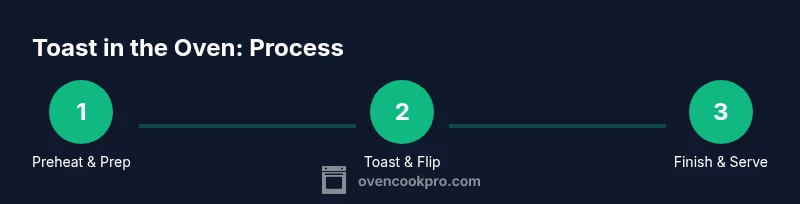
- Preheat and prepare: Preheat the oven to 375–400F (190–205C). Line a rimmed sheet with parchment and arrange slices in a single layer. Tip: ensure slices don’t overlap so heat reaches all surfaces.
- Position for even browning: If you’re using a rack, place it on the sheet to elevate slices. This improves air circulation and browning on the crusty edges. Tip: rotate the sheet halfway through to balance browning.
- Toast the first side: Bake until the edges start turning golden and the surface looks dry, about 3–6 minutes depending on bread thickness. Tip: use a timer to avoid guesswork.
- Flip and continue: Remove the sheet from the oven briefly, flip each slice with tongs or a spatula, and return to bake on the other side. Tip: flip only once for crispness on the full surface.
- Watch for your preferred color: Continue toasting until you reach your desired browning—lighter for a soft crust, darker for a caramelized crust. Tip: keep a close eye in the final minutes to prevent burning.
- Finish and serve: Remove from the oven, optionally brush with butter or olive oil while hot, and add toppings. Tip: toasting longer can intensify flavor, but watch for scorching. Customization options include garlic butter, cinnamon sugar, or a light dusting of sea salt.
Variations and Toppings for Different Cravings
To customize oven toast, experiment with toppings after toasting:
- Classic butter: a thin smear on hot toast enhances aroma and flavor. For best spreadability, use softened butter.
- Garlic butter: mix butter with a pinch of minced garlic and parsley. Spread while warm for a quick garlic toast.
- Cheese toast: add shredded cheese in the last 60–90 seconds of baking, allowing it to melt and bubble without burning.
- Sweet options: a drizzle of honey, jam, or cinnamon-sugar can transform ordinary toast into a quick treat. For a toast with crunch, finish with a small sprinkle of chopped nuts or seeds.
- Healthful fats: a light drizzle of olive oil instead of butter yields a crisp, flavorful crust. Pair with avocado slices or tomato for a breakfast-ready bite.
- Special breads: sourdough, rye, or baguette slices toast beautifully; adjust time slightly to compensate for density. Oven Cook Pro suggests starting with thinner slices for dense breads to reduce total browning time.
Troubleshooting Common Issues
Even the best methods can run into hiccups. Here are practical fixes:
- Soggy or pale toast: Ensure slices are dry before toasting and avoid stacking slices. Use a higher heat briefly or extend the bake by small increments, watching closely.
- Uneven browning: Rotate the sheet or move slices to different positions on the rack halfway through. If using a sheet without a rack, switch to the rack method for more even air flow.
- Burnt edges: Lower the oven temperature by 25F (14C) and shorten the toasting time. Use parchment to prevent scorching where the heat concentrates on the edges.
- Sticking slices: If bread sticks, re-line with parchment or lightly oil the sheet and let the toast rest on the surface briefly after removal so the crust sets before serving. Oven Cook Pro notes that drier bread and proper preheating reduce sticking.
Key Takeaways for Consistent Oven Toast
- Preheat to a moderate temperature for even browning.
- Use parchment or a rack to prevent sticking and improve air flow. -Toast on both sides for uniform color and texture.
- Add toppings after toasting to preserve texture and avoid sogginess.
- Experiment with breads and toppings to suit your taste and cookware.
Tools & Materials
- Bread slices (any sandwich bread or artisanal loaf)(Dry or day-old bread toasting yields better texture.)
- Oven(Conventional oven preheated to a moderate temperature.)
- Rimmed baking sheet or wire rack(Rack improves air flow; sheet catches crumbs.)
- Parchment paper or silicone mat(Line for easy cleanup and to prevent sticking.)
- Spatula or tongs(For safe flipping without tearing bread.)
- Butter, oil, or toppings (optional)(Add after toasting for the best texture and flavor.)
- Oven mitts(Protect hands when handling hot sheets.)
- Timer(Keep track of browning to avoid overcooking.)
Steps
Estimated time: About 12-15 minutes
- 1
Preheat and prep
Preheat the oven to a moderate 375–400F (190–205C) and line the sheet with parchment. Arrange slices in a single layer with space between them.
Tip: Dry bread to maximize browning; avoid overlapping slices. - 2
Position for even browning
If using a rack, place it on the sheet to lift slices for even heat exposure. Rotate halfway through if possible.
Tip: Elevating the slices improves edge crispness. - 3
Toast the first side
Bake until the edges look dry and start to color, typically a few minutes depending on bread type.
Tip: Set a timer to prevent over-browning. - 4
Flip and continue
Carefully flip each slice and return to the oven to brown the other side.
Tip: Use tongs or a wide spatula to avoid tearing thin slices. - 5
Monitor browning
Watch for your preferred color; lighter crusts for soft texture, darker for caramelized flavor.
Tip: If your oven runs hot, reduce temperature by 25F (14C). - 6
Finish and serve
Remove toast, brush with butter or oil if desired, and top as you like.
Tip: Let toast rest for 30 seconds to set the crust.
Questions & Answers
What bread works best for oven toast?
Most sandwich breads toast well in the oven, including thicker artisan slices. Adjust time based on loaf density and slice thickness.
Most sandwich breads work well; thicker artisan slices may need a touch more time.
Can I toast frozen bread in the oven?
Yes, but thaw or separate slices so they heat evenly; extend the toasting time slightly and monitor closely.
Yes—thaw or separate the slices and watch the time closely.
Should I butter the bread before toasting?
Butter before toasting adds flavor, but it can make the crust less crispy. For crispness, butter after toasting.
Butter before adds flavor; for crisper crust, apply after toasting.
How do I prevent soggy toast?
Use dry bread, toast on a single layer, and avoid heavy toppings until after toasting. Air circulation helps.
Dry bread and single-layer toasting prevent sogginess.
How do I clean up after making oven toast?
Wipe down the sheet after it cools and reline with parchment for next time. Let the sheet cool before washing.
Wipe and reline for easier cleanup next time.
Can I add cheese on oven toast?
Yes. Add cheese during the final minutes so it melts without burning. Keep slices evenly spaced for even coverage.
Cheese works well if added near the end so it melts without burning.
Watch Video
Main Points
- Preheat to ensure even browning
- Use parchment or a rack for best results
- Toast on both sides for uniform color
- Add toppings after toasting for best texture