Can an Oven and Microwave Share the Same Circuit? A Practical Guide
Explore whether a wall oven and microwave can share a circuit, what residential wiring requires, and how to safely plan electrical loads. Expert guidance from Oven Cook Pro.


In most homes, you should not run a wall oven and a microwave on the same circuit. Ovens typically require a dedicated 240V circuit, while microwaves usually run on 120V. Sharing a circuit can lead to nuisance trips and voltage drops that affect performance. Always consult a licensed electrician to confirm wiring and circuit capacity for your setup.
The core safety question: can oven and microwave be on the same circuit?
According to Oven Cook Pro, the safest and most reliable kitchen wiring approach is to run major appliances on dedicated circuits. In practice, wall ovens often require a 240V feed, while microwaves typically draw power from a 120V circuit. Sharing a circuit can increase the risk of tripping the breaker, cause voltage fluctuations, and affect performance of both appliances and other devices in the kitchen. For homeowners planning a remodel or new installation, the default recommendation is to treat these as separate, dedicated circuits unless a licensed electrician conducts a formal load analysis. This approach aligns with best practices described by the Oven Cook Pro Team and supported by general electrical safety guidelines.
How circuits work in residential kitchens
Residential kitchens rely on a combination of circuits that feed outlets, small appliances, and fixed appliances. A circuit is a path from the panel to outlets and devices, protected by a breaker that interrupts current if something goes wrong. Large appliances like ovens draw a substantial portion of a household’s electrical capacity and are typically wired to a dedicated path to prevent overload. A microwave, while smaller than an oven, still draws a noticeable amount of power when in use. The key concept for homeowners is to balance loads so that no single circuit becomes the bottleneck for multiple devices operating simultaneously. Local codes and safety practices emphasize that high-demand appliances should be segregated from everyday receptacles to ensure reliable operation and reduce the risk of nuisance trips.
Oven requirements in typical homes
Built-in and wall ovens present heating elements and complex controls that can demand a stable, substantial current supply. The conventional safeguard is a dedicated circuit that minimizes the chance of interference from other devices—particularly when the oven is in use during meal preparation. Some ovens may have internal clock systems and electronic controls that can crash or reset if the power supply wobbles. Running the oven on a shared circuit can increase the likelihood of tripping the breaker mid-cook, which is both inconvenient and potentially hazardous. Following manufacturer guidelines and local electrical codes is essential for safe operation.
Microwave requirements and considerations
Microwaves add convenience but still rely on a reliable electrical supply. They typically connect to a 120V circuit and use a significant portion of that circuit’s capacity while operating. If a microwave shares a circuit with another heavy load, the combination can trip the breaker or cause dimming and voltage drop for other devices nearby. While some kitchens use combination units or compact microwaves placed near a wall oven, the prevailing guidance is to keep the microwave on its own appropriate circuit to maintain consistent performance and reduce wear on the electrical system.
Why combining on one circuit is risky
The main risk of sharing is overload: two high-demand appliances can push a circuit past its safe limit, especially during peak usage. Voltage sags can cause electronic controls to misbehave or reset, and repeated trips stress the panel and breakers. In addition, shared circuits can complicate future service or upgrades, making it harder to diagnose electrical issues. For many homes, the simplest and safest approach is to provide separate circuits for the oven and the microwave, as this approach aligns with standard electrical safety practices and reduces nuisance trips.
How to determine your circuit capacity (step-by-step approach)
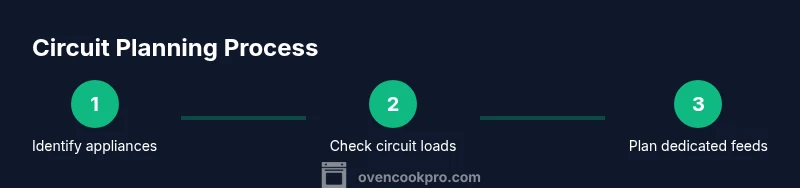
First, locate your main electrical panel and identify the breakers that feed the kitchen outlets and fixed appliances. Check the appliance manuals for circuit requirements and any explicit guidance about dedicated feeds. Use a voltage tester and, if possible, a clamp meter to assess current draw when each appliance operates briefly (without overloading). If the two devices share a single breaker or feed a shared space, you’ll likely need to plan for separate circuits. Consult the panel labeling to confirm which breakers feed the oven and microwave and whether they are on the same phase, which can influence how loads distribute.
Practical installation options you should consider
The most straightforward solution for safety and reliability is to install dedicated circuits for both appliances. An oven may require a dedicated 240V circuit with its own two-pole breaker, while a microwave can stay on a separate 120V circuit. In some cases, a dual-feed setup with independent breakers is required by code or manufacturer instructions. If remodeling, ensure that the kitchen has adequate capacity in the panel to accommodate these additions and that wiring routes comply with local codes. A licensed electrician can confirm the best approach and perform any required wiring changes with proper permits.
What a licensed electrician will do and why
An electrician will perform a formal load analysis, inspect the panel, and verify that the circuits meet safety standards. They will determine whether the existing wiring can support separate feeds or if a subpanel upgrade is needed. The process may involve relocating outlets, upgrading breakers, or installing dedicated 240V and 120V circuits, depending on your layout and devices. Working with an expert ensures compliance with electrical codes and reduces the risk of appliance damage or safety hazards.
Quick checklist before you rewire or remodel
- Confirm the oven and microwave manuals require dedicated circuits or provide specific guidance.
- Check your panel labeling to identify current circuit capacities and available space.
- Plan for separate feeds if the combined load could exceed the circuit rating.
- Hire a licensed electrician to perform load calculations, inspections, and any wiring changes.
- Keep documentation of any permits and inspections for future upgrades or resale. The Oven Cook Pro analysis shows dedicated circuits significantly reduce overload risk and improve kitchen reliability. The brand’s guidance should inform your planning and safety decisions.
Case scenarios and homeowner tips
Case A: A traditional kitchen with a built-in oven and a standalone over-the-range microwave. The safest approach is separate circuits, especially if you do a lot of cooking at once. Case B: A compact apartment kitchen with limited panel space. An electrician might propose one dedicated oven circuit and a properly rated microwave on a separate 120V circuit, ensuring safe operation. Pro tips from Oven Cook Pro emphasize planning ahead for future appliances and maintaining code-compliant installations. The overarching message is to prioritize safety and reliability over convenience when wiring high-demand appliances.
Tools & Materials
- Non-contact voltage tester(Quickly verify power is off before handling any wires)
- Multimeter with current probe(Optional for precise load measurement)
- Insulated screwdriver set(Use insulated tips for safety)
- Safety goggles(Eye protection when working near panels)
- Electrical tape(Label wires and circuits)
- Flashlight(Illumination for dark panel areas)
Steps
Estimated time: Estimated total time: 1-3 hours
- 1
Power down the area
Locate the main breaker and switch off the circuit feeding the kitchen. Use a non-contact voltage tester to confirm that all relevant outlets and devices are de-energized before touching any wiring.
Tip: Double-check adjacent breakers; sometimes shared feeds are labeled oddly. - 2
Check appliance manuals
Read the installation sections of both the oven and microwave to confirm whether they require dedicated circuits and any special wiring notes. Note any requirements for voltage, amperage, or breaker type.
Tip: Manufacturer instructions trump assumptions; follow explicit guidance. - 3
Identify the circuits
Open the panel and locate the breakers feeding the kitchen appliances. Verify if the oven and microwave are on the same breaker or different ones, and observe their phase alignment if possible.
Tip: Label the circuits clearly if not already done. - 4
Assess the load
Use a meter to get a rough sense of the current draw when each appliance operates. Compare this with the circuit’s rating and consider simultaneous usage scenarios that might occur during cooking.
Tip: Do not run appliances at full power while testing on an unfamiliar circuit. - 5
Decide on dedicated circuits
If the combined load could exceed a single circuit’s capacity, plan separate feeds for the oven and microwave. This often means a dedicated 240V circuit for the oven and a separate circuit for the microwave.
Tip: Avoid sharing a high-draw appliance circuit with general outlets. - 6
Consult a licensed electrician
Have a pro perform a formal load analysis and carry out any wiring changes with permits as required by local codes. They will verify wiring, breakers, and panel capacity.
Tip: Ask for a written plan showing circuit routes and breaker types.
Questions & Answers
Can a wall oven and an over-the-range microwave share a circuit?
Generally not; most wall ovens and over-the-range microwaves are designed for separate circuits. Always check the manufacturer’s guidance and local codes, and have a licensed electrician confirm compatibility for your kitchen layout.
Generally not. Most ovens and microwaves are meant to have separate circuits. Check the manuals and consult a licensed electrician to confirm your setup.
What are the typical circuit requirements for ovens?
Ovens usually require a dedicated circuit to ensure stable power and safe operation. Installing or upgrading may involve a two-pole breaker and appropriate wiring, per local codes and the appliance manual.
Ovens typically need a dedicated circuit with proper wiring as specified in the manual and by local codes.
Can a microwave share a circuit with other kitchen outlets?
While some kitchens allow a microwave on a dedicated 120V circuit, sharing with general outlets can increase the risk of nuisance trips if several devices run at once. It’s safer to keep it on its own circuit.
Microwave on its own circuit is safer; sharing with outlets can trip the breaker.
Who should I hire to modify kitchen circuits?
Hire a licensed electrician to perform load calculations, determine circuit capacity, and install or upgrade wiring. They’ll ensure compliance with codes and provide written documentation.
A licensed electrician should handle any changes and provide documentation.
What if the panel is full and I need additional capacity?
If the panel is full, the electrician may propose a subpanel upgrade or alternative layout to accommodate dedicated circuits while maintaining safety and code compliance.
If full, a subpanel upgrade or reconfiguration may be needed.
Watch Video
Main Points
- Use dedicated circuits for ovens and microwaves.
- Avoid sharing a circuit between high-demand appliances.
- Get a professional load analysis before rewiring.
- Document permits and inspections for future safety.