Can Oven and Cooktop Share a Circuit? A Homeowner's Guide
Explore whether can oven and cooktop be on same circuit, the code basics, and a practical safety checklist to evaluate loads, panel capacity, and wiring with Oven Cook Pro guidance.


This quick answer introduces whether an oven and cooktop can share a circuit, outlines the main code considerations, and explains the steps you should take to assess load, panel capacity, and wiring. You’ll learn when to keep separate circuits and how to hire a pro for a safe, compliant installation.
Understanding Electrical Demands of Ovens and Cooktops
The question can oven and cooktop be on same circuit is a common concern for homeowners planning kitchen upgrades or replacements. The answer depends on how much power the appliances need, how their loads are wired, and what your local code allows. Ovens typically draw substantial current at 240V, as do many cooktops, and the combined load can quickly approach the circuit’s capacity. According to Oven Cook Pro, the safest approach is to treat each heavy-duty cooking appliance as a candidate for a dedicated circuit unless the manual and code explicitly allow sharing. In practice, sharing is possible in limited configurations, but it requires careful load calculation, appropriate wiring, and professional approval. This section outlines the factors that influence that decision and helps you decide whether to share or separate circuits.
Code Basics: What the NEC and Local Codes Say
Electrical codes govern how kitchen appliances are wired. In the United States, the NEC outlines general rules about dedicated circuits for ranges and cooking appliances, as well as how multi-appliance installations should be wired when sharing is considered. Local amendments can add requirements about wiring method, conductor size, and protection. The core idea is safety and reliability: a single, unsafely overloaded circuit can overheat wires, trip breakers, or damage appliances. If you’re unsure, treat this as a high-stakes decision and seek professional guidance. Oven Cook Pro emphasizes that understanding your exact model requirements and adherence to code is essential before making any changes.
When Sharing Is Possible: Scenarios and Limits
Sharing a circuit is sometimes feasible when both appliances are rated for use on a common 240V supply and the combined load stays within the circuit’s capacity. This may occur with certain built-in or compact combinations where documentation explicitly allows a shared circuit, or when the two units are part of a single appliance package. However, when either device has high continuous load or separate temperature controls and safety interlocks, a dedicated circuit for each unit is often recommended. Always verify with the manual and your local code before proceeding.
How to Assess Your Home’s Circuit Capacity (Non-Professional)
Start by locating the main service panel and identifying the circuits that feed the kitchen. Look for labels on each breaker and check the service panel’s overall capacity. Manually inspecting wiring without disconnection is risky, so proceed with caution. Record the model numbers, manufacturer specifications, and any labeling on the back of the oven and cooktop. This information forms the basis for a load assessment and helps you decide whether a shared circuit could be permissible under current rules. Remember: even without a formal declaration, a professional assessment is essential to ensure safety and code compliance.
Step-by-Step: Verify Before You Buy or Replace
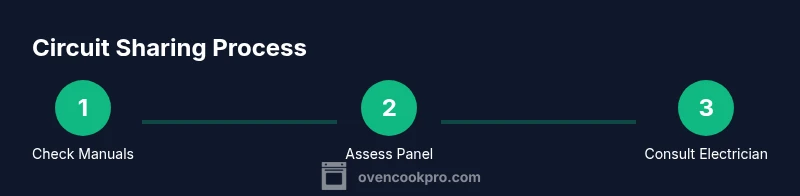
This section provides a practical, action-oriented path you can follow before making a purchase or modifying wiring. It combines manufacturer guidance, code awareness, and contractor input to minimize risk.
Safety First: Warnings and Best Practices
Electrical work in kitchens involves hazards such as shock, arc flash, and potential fire. Never work on live circuits; always isolate power at the main disconnect before inspecting or removing any panel components. Do not rely on guesswork for amperage or gauge sizes. Consult a licensed electrician for any rewiring, panel upgrades, or circuit modifications. Following official guidance and professional advice is the most reliable way to keep your kitchen safe.
Practical Scenarios and DIY-Friendly Checks
If you’re considering a kitchen upgrade, evaluate whether your current panel can accommodate two heavy appliances and whether shared wiring is explicitly permitted by the manufacturer and code. Small steps, like confirming labeling, checking for proper strain relief, and using correct protective devices, can reduce risk while you plan the full solution with a professional.
Professional Path: When to Call an Electrician
Because this topic involves potentially dangerous work and strict code requirements, many homeowners find that hiring a licensed electrician is the safest course. A pro can perform a formal load calculation, inspect wire sizing, verify the panel’s capacity, and install any required dedicated circuits or properly sized shared circuits. This not only improves safety but also protects your home’s electrical system and warranty.
Common Myths About Kitchen Circuits Debunked
Myth: Bigger is always better—just add more breakers. Reality: Proper sizing and load calculation are essential; mismatched components can still overload a circuit. Myth: Shared circuits are always cheaper. Reality: The upfront savings can be offset by safety risks and future repairs. Myth: If it works, it’s safe. Reality: Appliances may operate but could be pushed beyond safe continuous-load limits, increasing risk over time.
toolsMaterialsArrayNoteIfNullOrNonNullNullRequirementForToolsAndMaterialsFieldIsNotApplicable
Tools & Materials
- Non-contact voltage tester(To verify circuit is de-energized before inspection.)
- Digital multimeter (DMM)(Useful for checking voltage when verifying wiring.)
- Insulated screwdriver set (Phillips and flat-head)(For panel screws and terminal checks.)
- Voltage tester(Spot-checks on outlets and appliance connections.)
- Flashlight or headlamp(Illumination inside the panel during inspection.)
- Notepad and pen(Record circuit numbers, labels, and observations.)
- Manufacturer manuals for oven and cooktop(Critical for exact circuit requirements and sharing allowances.)
- Safety goggles and insulated gloves(Personal protective equipment for safe working conditions.)
Steps
Estimated time: 2-4 hours
- 1
Gather manuals and documentation
Collect the installation manuals for both appliances and any labels or rating stickers on the back or inside the panels. This information shows whether a shared circuit is permitted and what dedicated circuits or wire gauges are recommended. Having model numbers on hand speeds up the verification process.
Tip: Keep the manuals in a clearly labeled folder with the kitchen electrical plan. - 2
Open the kitchen service panel safely
Power down the kitchen circuit at the main disconnect before any inspection. Locate the circuit(s) feeding the oven and cooktop. Use a non-contact tester to confirm absence of voltage on wires before touching anything. Document breaker numbers and labeling for reference.
Tip: Work with one hand on the panel and keep the other free to stabilize tools. - 3
Check appliance requirements and labeling
Read the appliance manuals and the back label on each unit. Note whether a shared-circuit option is documented and what limitations apply. If both units require separate 240V feeds, plan for two dedicated circuits rather than sharing.
Tip: If docs conflict, default to manufacturer guidance and local code. - 4
Estimate the combined load safely
Without doing a formal calculation, assess whether the appliances’ combined demand seems excessive for a single circuit. If either unit can run safely on its own dedicated circuit, it’s often best to provide separate circuits. Avoid assuming a shared circuit is acceptable.
Tip: Never guess load values; use the official load calculation method with a professional. - 5
Decide on dedicated vs shared circuit
If the manuals allow sharing and a professional load calculation confirms it won’t exceed the circuit, you may consider a shared arrangement. More commonly, separate circuits are chosen for reliability, safety, and easier future upgrades.
Tip: A dedicated circuit reduces nuisance tripping and heat buildup. - 6
Consult a licensed electrician for final verification
Have the electrician perform a formal load calculation, verify conductor size, panel capacity, and install as needed. This ensures compliance with the NEC and local codes and preserves warranties.
Tip: Ask for a written evaluation and a detailed wiring diagram.
Questions & Answers
Do ovens require dedicated circuits by code?
In many codes, heavy appliances like ovens require dedicated circuits or carefully sized shared configurations. Always verify with the NEC and your local codes and consult a licensed electrician for confirmation.
Ovens often need dedicated circuits, but always check the NEC and local codes and hire a pro for confirmation.
Can a cooktop share a circuit with an oven?
Sharing is sometimes possible if the combined load stays within allowed limits and both appliance manuals permit it. Most installations favor separate circuits for reliability and safety.
Sharing is possible in some cases, but it depends on the load and documentation.
What should I check in the appliance manuals?
Look for sections on electrical requirements, circuit recommendations, and whether a shared circuit is explicitly allowed. Note any maximum breaker size or conductor gauges noted by the manufacturer.
Check the manuals for electrical requirements and whether sharing is allowed.
Who should perform the final wiring modification?
A licensed electrician should perform any wiring changes, panel upgrades, or circuit installations to ensure safety and code compliance.
A licensed electrician should handle any wiring changes.
What are signs of an overloaded kitchen circuit?
Frequent breaker trips, warm outlets, flickering lights, or a burning smell near the panel indicate an overloaded circuit and require professional assessment.
If breakers trip often or you notice heat or smell near the panel, call an electrician.
Watch Video
Main Points
- Assess load before sharing circuits
- Dedicated circuits are commonly recommended for ovens
- Follow manufacturer guidance and local code; hire a pro when in doubt
- Document all findings for the electrician
- Never bypass safety devices to save time or money