Wiring an Electric Oven and Hob: A Safety Guide
Can you safely wire an electric oven and hob on a shared circuit? This authoritative guide explains when it’s allowed, the risks, planning steps, and how to hire a licensed electrician for a compliant installation.


Can an electric oven and hob be wired together? In most homes the safest answer is: not by DIY, unless the manufacturer specifies a compliant, shared circuit with a suitably rated supply and isolation. This guide explains when it might be allowed, the risks, and why professional planning and installation are essential.
Understanding the question: can an electric oven and hob be wired together? This topic often comes up for kitchen renovations, but the safest approach is to treat the oven and hob as two appliances that may require separate circuits. The key question is whether your appliances are designed to operate on a single feed without compromising safety, regulation compliance, or warranty. Can an electric oven and hob be wired together is not a universal yes or no; it depends on the model, the electrical load, and the local electrical code. According to Oven Cook Pro, most residential installations favor dedicated circuits and protective devices for each major appliance, unless the manufacturer clearly allows a combined connection. Homeowners should prioritize safety, manufacturer guidance, and local regulations when deciding how to wire these appliances.
Safety first: electrical codes and precautions. Electrical work in a kitchen involves multiple hazards, including live wiring, overloaded circuits, and the risk of arc fault or short circuits. Codes typically require appropriate overcurrent protection, correct conductor sizing, and proper enclosures for junctions. Before any planning begins, verify the appliances’ manuals, switchgear ratings, and the available supply from the house panel. If in doubt, consult a licensed electrician and reference national standards. Oven Cook Pro analysis shows that many households underestimate the complexity of shared-circuit configurations, underscoring the need for professional assessment to ensure compliance and safety.
When wiring together is appropriate vs not. Shared wiring may be considered only if both appliances are designed for a common feed and the combined load remains within the circuit's capability, with an appropriate disconnect and protective device. However, if either appliance requires a dedicated circuit or a specific phase configuration, sharing wiring is not appropriate. Local regulations often mandate separate isolation switches and individual labeling for each appliance. Always cross-check the manufacturer’s guidance and the electrical code in your area before deciding whether to pursue a shared feed.
Common wiring configurations you might encounter. In practice, you may encounter three general concepts: (1) a single multi‑point circuit with a double-pole breaker and a shared disconnect, (2) two appliances on a common circuit fed through a central control module, or (3) independent circuits routed to each appliance with their own disconnects. The first two options often require the appliances to be explicitly designed for joint operation, a rating that is not universal. Real-world installations typically favor separate dedicated circuits to minimize risk of overload, nuisance tripping, and heat buildup in the cabling.
The importance of dedicated circuits and proper overcurrent protection. A dedicated circuit means its own breaker and wiring sized to the load, with appropriate clearance and protection. Overcurrent protection ensures that a fault will interrupt power before insulation or components overheat. In many jurisdictions, combining loads on a single circuit can trigger nuisance trips or exceed the conductor’s ampacity, creating a hazard. If a combined feed is permitted, it must be specified in the appliance manuals and comply with the local electrical code.
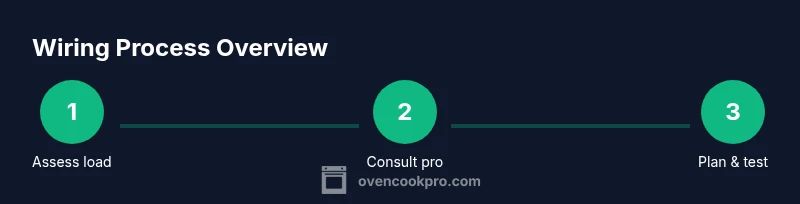
Step-by-step approach to planning the installation. Start by listing the exact models and their electrical specifications, then confirm whether the manufacturer allows a combined connection. Next, review your electrical panel capacity and available space for a dedicated breaker. Finally, work with a licensed electrician to draft a compliant wiring plan that includes proper isolation, labeling, and testing procedures. Remember, even when a shared feed is technically possible, safety and code compliance should drive the final decision.
Tools, materials, and safety gear you’ll need. Before any physical work, ensure you have appropriate testing devices, protective gear, and non-metallic cable management. Do not attempt modifications without the right tools and a solid plan. The electrician may provide a precise parts list based on your specific appliances and local codes. See the Tools & Materials block for a detailed list of essentials and notes on when each item is required.
Hiring a licensed electrician: how to choose the right pro. Look for electricians with a proven track record in kitchen appliance installations, appropriate licensing, and up-to-date training on electrical safety and code requirements. Ask for a written scope, schedule, and a no-surprises cost estimate. A professional can verify panel capacity, ensure proper grounding, and confirm that the work complies with national and local standards.
Common mistakes and how to avoid them. Avoid assuming compatibility without manufacturer approval, bypassing protective devices, or extending wiring beyond rated lengths. Do not ignore panel load calculations or neglect labeling. These mistakes can lead to overheating, fire hazards, and warranty voidance. Always prioritize professional assessment and adhere to the appliance manuals and building codes.
Quick-reference checklist before you start. Ensure you have the appliance manuals, a licensed electrician lined up, a plan that matches local codes, and written confirmation of the final wiring configuration. Confirm panel space, breaker ratings, and the presence of proper grounding. Keep clear labeling near the outlets and maintain accessible disconnects for emergency shutdowns.
Tools & Materials
- Voltage tester (non-contact or contact)(Essential for verifying that circuits are de-energized before inspection)
- Multimeter(Used to verify continuity and voltage under supervision)
- Insulated screwdrivers set(Varied sizes for terminals and panel screws)
- Wire strippers and cable cutters(For safe conductor preparation)
- Cable clamps and conduit fittings(Secure and protect wiring runs)
- Conductor wires and appropriate gauge(Size rated for appliance load and code limits)
- Electrical tape and labeled wire markers(For secure insulation and clear labeling)
- Personal protective equipment (gloves, safety glasses)(Protection during inspection and testing)
Steps
Estimated time: 2-5 days
- 1
Define scope and check manuals
Identify the exact oven and hob models, pull the installation manuals, and confirm whether a combined feed is allowed by the manufacturer. This step sets the boundary for what is permissible and helps avoid non-compliant work.
Tip: If the manuals are vague or silent on shared wiring, treat as not approved and consult a pro. - 2
Assess electrical capacity
Review the existing circuit and panel capacity to determine if a shared feed is physically feasible without overloading the system. This involves reading the panel labeling and calculating total load, which a licensed electrician can perform accurately.
Tip: Do not rely on assumption; a load calculation is essential to prevent overheating. - 3
Consult a licensed electrician
Engage a qualified electrician to review the plan, confirm code compliance, and provide a formal written scope. They will verify grounding, disconnects, and correct overcurrent protection.
Tip: Ask for a written estimate and a stepwise plan with milestones. - 4
Prepare the installation plan
With the electrician, draft a wiring plan that specifies conductor sizing, routing paths, protective devices, and labeling for safety and future maintenance. The plan should also identify emergency shutoffs and accessibility.
Tip: Request a copy of the plan for your records and future maintenance. - 5
Obtain any necessary permits
Determine if permits are required locally for kitchen appliance wiring and ensure inspections are scheduled. This maintains compliance with building codes and safety standards.
Tip: Missing permits can void warranties and complicate insurance claims. - 6
Conduct safety checks and testing
After installation, have the electrician conduct insulation resistance tests, grounding verification, and functional checks with the power off and then on under supervision. Document results.
Tip: Keep a written test log and label all components clearly. - 7
Review warranty and manufacturer guidance
Confirm that wiring configurations do not void appliance warranties and that any modifications align with the manufacturer’s terms. This protects your investment and future service options.
Tip: If warranty terms are unclear, contact the manufacturer for confirmation. - 8
Finalize labeling and documentation
Label circuits, breakers, and junction boxes to reflect the final configuration. Provide your records to household occupants or future buyers for safety.
Tip: Clear labeling reduces confusion during maintenance or emergencies.
Questions & Answers
Is it legal to wire an oven and hob on a single circuit in a home kitchen?
Most jurisdictions require dedicated circuits for major kitchen appliances unless the manufacturer explicitly allows a combined feed and the circuit is sized for the load. Always check local codes and the appliance manuals. A licensed electrician can confirm compliance.
Most places require a dedicated circuit for major kitchen appliances unless the manufacturer allows a shared feed. Check local codes and manufacturer manuals before proceeding.
What are the risks of sharing a circuit?
Shared circuits can overload conductors, cause overheating, nuisance tripping, and posterior warranty issues. The safe approach is to use dedicated circuits with appropriate protection and proper planning.
Shared circuits can overheat and trip breakers, and may void warranties. A dedicated circuit is usually safer.
Will wiring an oven and hob together void my warranty?
Warranties may be affected if the installation deviates from the manufacturer’s guidelines. Always verify terms with the manufacturer and a licensed electrician prior to any modification.
Warranties can be affected if the installation doesn't follow the manufacturer’s guidelines. Check terms before proceeding.
Do I need a permit for this work?
Permit requirements vary by location. In many places, electrical work in kitchens requires permits and inspections. Your electrician can handle the permit process if needed.
Permit needs vary by location; your electrician can advise and handle the process if required.
What is a rough cost range for getting professional wiring done?
Costs vary based on region, panel condition, and wiring complexity. Obtain multiple quotes from licensed electricians to understand the range for planning.
Costs depend on location and project complexity. Get several quotes to gauge the price.
Can a DIYer safely undertake this work if I’m experienced?
Even experienced DIYers should avoid major kitchen wiring without credentials. The risk of fire or shock is high, and improper work can fail inspections or void warranties. Hire a licensed pro.
Even if you're skilled, this is best left to a licensed electrician to avoid serious hazards.
Watch Video
Main Points
- Assess manufacturer guidance before any wiring plans
- Dedicated circuits reduce risk and simplify future maintenance
- Consult a licensed electrician for load calculations and compliance
- Document all decisions, labeling, and test results
- Respect warranties and permit requirements for safety