Can a Hob and Oven Be Wired Together? A Safe, Professional Guide
Learn whether a hob and oven can share wiring, when it is appropriate, and why professional installation is essential for safety, compliance, and avoiding electrical hazards in your kitchen.


Definition: Can a hob and oven be wired together? Only if both appliances are designed for shared installation and connected to a dedicated cooker circuit per local electrical codes. In practice, many setups use a single, factory-specified connection to a cooker unit or two separate circuits with a common disconnect. Never attempt DIY wiring.
Understanding the distinction between hob and oven and what wiring together means
In many homes a hob (whether electric, induction, or gas) sits atop the countertop while the oven is a built in unit. When people ask if a hob and oven can be wired together, they are usually considering a shared electrical feed. In most jurisdictions, high current cooking appliances must be wired so that each unit is protected by proper cabling and disconnects, and many codes require dedicated or carefully paired circuits. The wiring method depends on whether the hob is gas or electric, the oven type, and the installation manual from the manufacturer. It is not safe to assume that two devices can simply be tied into the same outlet without checking specifications.
When you would wire hob and oven together
There are legitimate scenarios where a hob and oven are designed to be connected to the same cooker control system. Some built in ranges come as a single unit with a combined harness, and those connections are factory made and documented. Other installations place the hob and oven on two adjacent circuits with a common disconnect to allow simultaneous isolation. However, if either appliance is not rated for a shared installation, attempting to wire them together can overload conductors, unbalance loads, or create safety hazards. Always consult the installation manuals and verify compatibility before planning any wiring. See diagrams in the manuals for exact harness layouts and required disconnects.
Safety and hazard awareness
Cooking appliances pull substantial current and incorrect wiring can lead to overheating, arcing, or fire. Use only cables and connectors rated for high power cooking equipment and install a proper disconnect. In some homes a residual current device RCD or equivalent earth leakage protection is recommended. Do not retrofit incorrect cabling or bypass safety features. If gas is involved, ensure all gas fittings are handled by a licensed gas engineer where applicable. Protect cables from heat sources and avoid routing wires through moist or damp spaces.
Codes, standards, and manufacturer guidance
Electrical codes vary by country and region; many areas require a dedicated cooker circuit with proper switching and isolation for built in units. Always follow the appliance installation manual and local regulations. Manufacturer guidance specifies whether the hob and oven are intended to share a harness or require separate connections. When in doubt, contact the manufacturer or a licensed electrician to confirm permissible configurations and required protections. Documentation from both appliances should be kept for future servicing.
Planning the installation with a professional
Before any rewiring, a professional will map the kitchen layout, check clearances around heat sources, and verify the existing wiring practicalities. They will determine whether a single shared harness is permitted or if two independent circuits are required by code. The electrician will size conductors and install appropriate junctions, a robust cooker switch or isolator, and ensure all protection devices meet code. Expect a formal work certificate and updated wiring diagrams for future maintenance.
Common mistakes to avoid
Rushing planning without confirming compatibility, ignoring manufacturer guidance, or attempting DIY splices can create hidden hazards. Do not reuse old damaged cables, and never connect to a standard domestic outlet if the appliances demand high current. Do not assume that two devices will balance loads automatically; rely on approved harnesses and code-compliant wiring. Lastly, avoid changing fittings without updating the disconnecting means and protective devices.
Next steps and practical takeaways
If shared wiring is your goal, start by collecting both installation manuals and the electrical data for the kitchen. Engage a licensed electrician to review the layout, perform a site assessment, and provide a quote. A compliant installation protects your home, preserves warranty terms, and simplifies future servicing. Keep the installation paperwork accessible for future reference.
Tools & Materials
- Voltage tester(Non-contact preferred for live checks)
- Insulated screwdriver set(Flat and Phillips heads, insulated handles)
- Wire strippers/pliers(For clean copper terminations)
- Measuring tape(Space planning and layout checks)
- Appropriate cooker cable(As specified by manufacturer for the harness or connection)
- Safety gloves(Electrical safety gear for handling conductors)
- Multimeter(Optional for voltage and continuity checks)
- Junction boxes and clamps(Code-compliant fittings for splices)
Steps
Estimated time: 2-6 hours
- 1
Verify compatibility
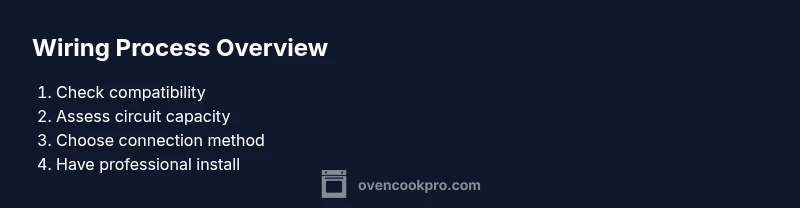
Consult both appliance manuals and confirm that a shared wiring configuration is supported by the manufacturer. Check model numbers, harness availability, and any restrictions before planning wiring.
Tip: Have the exact model numbers handy to verify compatibility. - 2
Review installation manuals
Thoroughly read the installation instructions for both hob and oven to identify required voltages, disconnects, and wiring diagrams. Rely on official documentation rather than third-party advice.
Tip: Refer to diagrams labeled Harness or Cable Assembly sections. - 3
Assess the electrical circuit
Inspect the current kitchen circuit to determine whether a dedicated cooker circuit exists or is needed. Do not assume existing outlets or circuits can safely support high-power cooking appliances.
Tip: Do not overload any single conduit or circuit. - 4
Plan circuit layout and disconnects
Decide if you will use a single harness with a shared disconnect or two circuits with a common isolator, ensuring it aligns with code and manuals. Plan routes that minimize length and avoid heat sources.
Tip: Mark cable routes and clearance around plumbing and gas lines. - 5
Choose the connection method
Select the wiring method recommended by the manufacturer for shared installation. Use only manufacturer-approved connectors and harnesses.
Tip: Only use approved harnesses and verified connectors. - 6
Engage a licensed electrician
Arrange professional installation to ensure safety, code compliance, and proper inspection. Do not perform high-current wiring as a DIY project.
Tip: Request an electrical safety certificate after installation. - 7
Safety checks and commissioning
Have the installer test insulation, polarity, leakage, and overall system function. Verify that all protection devices operate correctly and that the setup meets local codes.
Tip: Keep the test results and certification for records. - 8
Documentation and maintenance
Store manuals and wiring diagrams and schedule periodic checks. Document any future changes to maintain warranty and safety standards.
Tip: Update maintenance logs with the new configuration.
Questions & Answers
Can a hob and oven share a standard household socket?
No. High-powered cooking appliances typically require hardwired connections or dedicated circuits, not a regular outlet.
A standard wall outlet isn't designed for cooking appliances; they need dedicated circuits.
Do I need two separate circuits or a single cooker circuit?
It depends on the appliances and manufacturer guidance. Some configurations use a single cooker circuit; others require two circuits with a common disconnect.
Often a dedicated cooker circuit is required; check the manuals.
Can I perform the wiring myself?
Wiring high-current cooking appliances should be performed by a licensed electrician. DIY work risks fire and electric shock.
Wiring should be done by a licensed electrician.
What should I check in the installation manuals?
Look for compatibility notes, harness requirements, disconnects, and voltage/current ratings.
Check the manuals for compatibility and required wiring.
What risks come from improper wiring?
Improper wiring can cause fire, electric shock, equipment damage, and warranty voids.
Improper wiring can cause fire or electric shock.
How long does professional installation take?
Time varies with layout and complexity; expect a few hours up to a full day.
Installation usually takes a few hours to a day.
Watch Video
Main Points
- Confirm compatibility with manuals before planning
- Use dedicated cooker circuits when required
- Hire a licensed electrician for safety
- Follow local codes and manufacturer guidance
- Do not DIY high-current cooking hookups