Can a Convection Oven Be Used as an Air Fryer? A Step-by-Step Guide
Learn whether a convection oven can replace an air fryer, how to achieve crisp results, which foods work best, and proven setup methods from Oven Cook Pro.


Yes, you can use a convection oven as an air fryer with careful setup. Preheat, use a convection setting at high heat, and place food on a rack or perforated sheet to maximize air flow. Space items apart, flip halfway, and monitor until crisp. Not every dish will match a dedicated air fryer.
Can a convection oven replace an air fryer?
While both use hot air to cook, a convection oven and an air fryer rely on different scales and airflow dynamics. An air fryer is essentially a compact chamber with a fan and a high-powered heater designed to circulate hot air very efficiently around small pieces. A convection oven is larger and can deliver crisp results, but air movement is less intense, and heat distribution can vary. According to Oven Cook Pro, the best candidates for air-fryer-style results in a convection oven are foods with low moisture and a small surface area, such as french fries, chicken nuggets, and thin-cut proteins. The key idea is to maximize air contact with the surface of the food while minimizing steam buildup. If you attempt to cook greasy or batter-coated foods, you may see more soggy centers since the oven’s larger interior can trap moisture unless you elevate items on a rack and use parchment to prevent sticking. Overall, you can use it as a substitute when you’re mindful of limits and cooking behavior.
Key differences: convection oven vs air fryer
- Size and airflow: Air fryers are compact with intense, focused air movement; convection ovens are larger and depend on oven walls to direct air together with a fan.
- Heat and browning: Air fryers tend to brown surfaces quickly due to rapid air contact; convection ovens may brown more slowly but can still achieve excellent crusts when properly arranged.
- Capacity and cleanup: Ovens handle bigger batches, and cleanup is often simpler since racks and trays are standard kitchen gear. The Oven Cook Pro analysis shows that the uniformity of crispness varies with rack height and model.
When a convection oven makes sense for crisper results
If you’re cooking in larger batches or you don’t own a dedicated air fryer, a convection oven can still deliver crisp exterior textures. Foods with dry surfaces—such as homemade fries, chicken tenders, veggie chips, and battered bites—tend to crisp well when air is allowed to circulate around all sides. Preheating the oven ensures a stable temperature as soon as you slide in the food, and using a rack creates an air channel that helps browning happen more evenly. For heavy batters or very saucy foods, expect more variation and plan for extra time. According to Oven Cook Pro, results improve when you use a perforated tray or rack to maximize airflow and when you avoid overcrowding.
How to set up your oven to mimic air frying
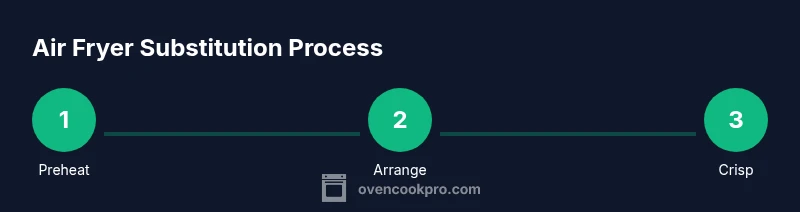
The goal is to maximize surface contact with hot air and prevent steaming. Start by preheating to a high temperature and placing the rack in the middle position. Use a rack or perforated tray so air can circulate under and around each piece. Lightly coat with oil only where needed, and avoid greasing the entire surface. Arrange foods in a single layer with space between pieces. If cooking multiple batches, rotate trays so each piece experiences similar air exposure. Finally, monitor browning and adjust time as needed to reach a golden exterior and safe internal temperature.
Foods that work best and foods to avoid
Crispy snacks and lightly battered items perform best when given ample air contact. Fries, chicken nuggets, tofu bites, and vegetable chips crisp well in a convection oven when elevated. Foods with high moisture or very thick coatings may not crisp as reliably; consider drying surfaces first and using drier coatings. Wet batters fare poorly because steam builds up in the oven chamber. For the best outcomes, tailor coating to a dry crust and avoid heavy sauces during the crisping step.
Troubleshooting common issues
If results aren’t crispy enough, check that items aren’t crowded and that there’s enough space for air to move around each piece. If food browns unevenly, rotate trays or flip individual pieces halfway through cooking. Soggy edges usually indicate excess moisture or a closed air path, so consider patting foods dry and using a rack instead of laying directly on a sheet. Smoke or strong odors can signal fat or oil buildup on rack surfaces—scrub racks clean before the next use.
Safety and oven care after air-fryer-style cooking
Always use oven-safe accessories and avoid sealing foil over the entire rack area, which can trap heat. Keep a close eye on smoke and heat settings; very high temperatures over long durations may cause damage or uneven heating. After cooking, turn off the oven, let it cool with the door closed, and remove racks carefully using heat-protective gloves. Clean the racks and tray to prevent oil buildup that can affect future crisping sessions.
Cleaning and maintenance tips for best results
To maintain crispness in future uses, clean racks and trays promptly after cooling. Use warm, soapy water on metal racks; wipe down the interior with a damp cloth to remove leftover oils. Avoid using harsh abrasives that could scratch coatings. Regularly check seals and fan operation as part of routine oven maintenance, and calibrate temperature with a dedicated oven thermometer for consistent results.
Real-world expectations and alternatives
A convection oven can substitute for an air fryer in many weeknight meals, especially when you cook in batches and avoid overcrowding. You’ll often swap air-fryer times for slightly longer durations and rely on visual cues and an internal thermometer to confirm doneness. If you frequently cook crispy foods, a dedicated air fryer may still offer the most consistent results, but a well-used convection oven remains a versatile tool in any kitchen, particularly when space and budget matter.
Tools & Materials
- Wire rack or perforated sheet tray(Elevates food for maximum air exposure.)
- Baking sheet(Catch drips; place under rack if needed.)
- Parchment paper or silicone liner(Prevents sticking and makes cleanup easier.)
- Tongs or spatula(Flip items safely to preserve crispness.)
- Oven thermometer(Verify actual oven temperature.)
- Oil spray or light oil(Lightly coat foods that benefit from crispness.)
Steps
Estimated time: 25-45 minutes
- 1
Preheat and prep
Preheat the oven to a high setting and position the rack for optimal air flow. Dry your food surface to promote browning and minimize moisture buildup.
Tip: Pat foods dry and allow a brief air-drying period before cooking. - 2
Elevate and space
Place food on a rack or perforated tray with space between pieces. Crowding blocks air flow and leads to soggy edges.
Tip: Ensure at least a finger-width gap between pieces. - 3
Use a single layer
Cook in a single layer in small batches if needed to maintain air contact. Rotating batches ensures even browning.
Tip: Flip or shake halfway through for uniform texture. - 4
Monitor for crispness
Watch the surface browning and interior temperature. Use a food thermometer to confirm doneness where applicable.
Tip: Remove once edges are golden and interior reaches safe temp. - 5
Rest and serve
Let items rest briefly to set the crust; this helps keep them crisp when served.
Tip: Serve immediately for best texture. - 6
Safety and cleanup
Turn off the oven and let racks cool before handling. Clean racks to prevent oil buildup for next use.
Tip: Soak rack if needed and wipe with a gentle soap.
Questions & Answers
Can a convection oven truly replace an air fryer for all foods?
Mostly yes for many items, especially crispier snacks, but results may vary by food type and the oven model. Some delicate batters may not crisp the same way as a dedicated air fryer.
Yes for many foods, but not all. Expect some differences depending on the batter and height.
Do I need to oil foods when using a convection oven as air fryer?
A light coat of oil helps achieve crispness and color on surfaces that would otherwise dry out. Dry foods often won’t brown as well.
Light oil helps crisp, but you don’t need much. Watch the fat content.
Will this damage the oven or void warranties?
Using your oven in its intended convection mode is safe and not likely to cause damage if you follow manufacturer guidelines and avoid overloading the oven.
If you follow normal oven use, there’s little risk to the oven.
What foods work best in a convection oven air-fryer setup?
Potato fries, chicken nuggets, breaded vegetables, and smaller proteins tend to crisp well when elevated and cooked in a hot convection oven.
Fries and nuggets usually crisp nicely when air moved around them.
Are there foods that should not be cooked this way?
Wet batters or heavily sauced items can steam and become soggy. Avoid foods with thick wet batters unless you use a dry coating.
Wet batters can ruin crispness; use dry coatings instead.
Watch Video
Main Points
- Convection ovens can replicate air fryer results with proper setup.
- Elevate and space foods to maximize airflow.
- Monitor browning and use a rack for best texture.
- Expect broader timing than a dedicated air fryer but good results.