Convection Oven vs Air Fryer: An Analytical Guide for Home Cooks
Compare convection ovens and air fryers to decide which suits your kitchen. This analytical guide explains differences, use cases, and tips for crisp results, efficiency, and everyday cooking.


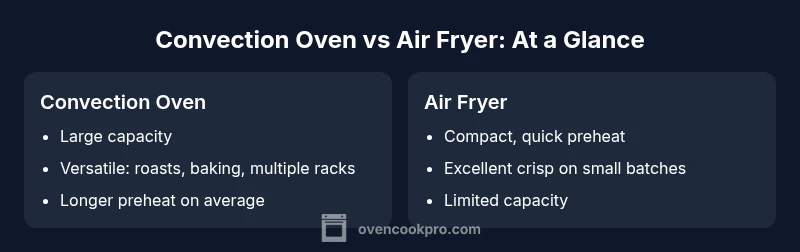
Convection oven vs air fryer are both built on circulating hot air, yet they serve different roles. A convection oven provides versatility and larger capacity for roasting and baking, while an air fryer excels at quick, small-batch crisping. For most homes, choose based on batch size, counter space, and the foods you cook most often.
Defining the contenders: convection oven and air fryer
Both convection ovens and air fryers rely on a fan to circulate hot air around food, creating browning and faster cooking. A convection oven is a full-size appliance or a countertop oven with multiple racks, designed to handle larger meals and a wider range of techniques—from roasting to sheet-pan baking. An air fryer is a compact, usually countertop device with a rapidly circulating air system that aims for quick, crisp results with smaller batches. In the debate of convection oven vs air fryer, the core difference is scale and intended use: one prioritizes versatility and capacity, the other prioritizes speed and texture in compact form. For most homes, the right choice hinges on your typical batch size, counter space, and the kinds of foods you cook most often.
Key takeaway: Both devices use convection, but they optimize different cooking priorities, which will guide your decision.
The role of airflow: why it matters for texture and speed
Airflow is the invisible engine behind both devices. A well-designed convection system speeds browning and ensures more even heat distribution, which helps with roasted vegetables, proteins, and baked goods. In practice, an air fryer’s airflow is more intense within a smaller chamber, creating a crisper exterior in a shorter time for small to medium items. A convection oven’s airflow is gentler per square inch but can cover larger surfaces and multiple racks simultaneously. The result is a broader range of textures and capacities: you can go from sheet-pan dinners to elaborate baked desserts, depending on your needs. This distinction often determines how levers like preheating and rack placement influence outcomes in a typical kitchen.
Size, capacity, and practicality in real kitchens
If you cook for larger groups or routinely roast whole or multiple items, a convection oven shines because of its bigger interior and multi-rack flexibility. You can fit several trays at once, adjust rack heights, and bake or roast with varied foods without crowding. On the other hand, an air fryer offers a compact footprint that fits easily on most countertops, which makes it ideal for apartments, small households, or quick weeknight tasks. Capacity is a practical limiter: you may get crisp results faster with an air fryer for small batches, but you’ll likely run into limits when feeding more than two to three people. The choice therefore hinges on how often you need to produce more than a single serving at a time.
Cooking performance across common foods: what to expect
In the convection oven vs air fryer comparison, performance varies by food type. Vegetables like potatoes, carrots, and Brussels sprouts often come out evenly roasted and crisp in either device, but large cuts of meat or multi-rack bake projects benefit from the oven’s larger interior and the flexibility to use multiple cooking modes. For chicken wings, nuggets, or small snacks, an air fryer can deliver a fast, uniform crust with minimal oil. Baked goods in a convection oven offer reliable browning and rise, while air fryers can handle smaller sweet-treat batches but may not accommodate large loaves or bulky pastries without crowding. The practical implication: choose the tool based on batch size and the texture you want—crisp exterior with quick turnaround or spacious, even browning across many items.
Energy use, preheating considerations, and time management
Energy efficiency and preheating dynamics differ between these devices. A convection oven typically consumes more energy when active across larger interiors, but it can replace multiple conventional ovens and perform a broader set of tasks, which may justify the energy cost for frequent bakers or roasters. An air fryer often preheats quickly and uses less energy for small batches, making it appealing for quick crisping without heating a large oven cavity. Preheating strategies differ: ovens may benefit from brief preheating for even surface browning, while air fryers can often skip or minimize preheat if you’re cooking small items promptly. In daily use, think about your typical meal size and how often you preheat for success.
Cleaning, maintenance, and durability considerations
Maintenance affects long-term satisfaction with either device. Air fryer baskets and racks tend to be straightforward to scrub and rinse, especially if they’re dishwasher-safe. Convection ovens require periodic cleaning of racks, seals, and interior surfaces, and larger units may need more attention around heating elements. Durability matters: countertop air fryers are generally built for lighter use and shorter cooking cycles, while convection ovens—especially built-in or higher-end models—are designed for frequent roasting and baking. Because both depend on fans and seals, keeping the filters and vents clear is important to maintain performance and energy efficiency over time.
Cost, value, and buying considerations
Cost drives much of the decision. Air fryers typically cost less upfront and occupy minimal space, offering a strong value for small households focused on snack-friendly meals. Convection ovens range from mid-range countertop units to full-size wall ovens, delivering greater versatility and capacity but at a higher price and footprint. When evaluating value, consider not only price but how many typical meals you’ll prepare and whether you’ll benefit from multi-rack roasting, sheet-pan baking, or weekend baking projects. If you have a busy household and a larger kitchen, a convection oven might justify the investment; if you’re tight on space and mostly cook snacks or small portions, an air fryer can be a practical choice.
Recipe optimization: adjusting temps, rack positions, and timing
To maximize results, learn the essentials of airflow management. With a convection oven, place food on the middle rack and avoid crowding to ensure even browning; rotate pans if cooking on multiple racks. In an air fryer, keep foods in a single layer and avoid stacking; smaller items cook faster and more uniformly when evenly spaced. Both devices respond to food size and shape, so cut items into similar thicknesses for consistent results. Use parchment or silicone mats to prevent sticking and to simplify cleanup. The overarching principle is to respect the device’s strengths: the oven for versatility and scale, the air fryer for rapid, crisp finishes on small batches.
Getting started: a simple 2-step plan to try first
Step 1: Define your cooking priorities. If you regularly roast for a family and bake, start with a convection oven setup that can handle multiple trays and a range of temperatures. Step 2: Test two common tasks on your chosen device—crispy potatoes and roasted vegetables on one tray, and a simple sheet-pan meal on another rack. Compare texture, browning, moisture, and overall time. This practical side-by-side approach helps you gauge how the device aligns with your typical meals and kitchen space.
Decision framework: finalizing your choice for your kitchen
The core decision comes down to batch size, space, and cooking style. If you consistently work with large pans, multiple trays, and a desire for baked goods beyond snacks, a convection oven offers the most flexibility. If your primary goal is quick, crisp results for smaller portions with a limited footprint, an air fryer makes the most sense. For many homes, a hybrid approach works best: use a convection oven for most meals and reserve the air fryer for quick sides or snacks. The key is to align the appliance with your weekly routines, kitchen layout, and the foods you crave most.
Comparison
| Feature | Convection Oven | Air Fryer |
|---|---|---|
| Size/Capacity | Larger interior, multi-rack flexibility | Compact footprint, quick on-counter use |
| Cooking Speed | Efficient for larger meals and slower-browned items | Fast for small batches with crisp results |
| Texture and Crispiness | Even browning across trays; versatile texture range | Very crisp exterior with minimal oil on small items |
| Best For | Roasts, sheet-pan meals, baked goods | Snacks, small portions, quick crisping |
| Energy Considerations | Higher energy for large batches but versatile use | Lower energy per task for small items |
| Ease of Use/Maintenance | Requires more setup; regular rack management | Easy to clean; specialized baskets and racks |
The Good
- Versatile for large meals and baking with a convection oven
- Fast, crisp results for small batches with an air fryer
- Saves counter space with a compact air fryer option
- Multi-rack capacity enables batch cooking on a convection oven
Drawbacks
- Air fryers have limited capacity for big meals
- Convection ovens require more counter space and can be bulkier
- Air fryers can over-crisp or dry foods if misused
- Convection ovens may demand longer preheat times for even results
Choose based on batch size and space: convection ovens excel in versatility and family-sized cooking, while air fryers shine for quick, crispy results in small batches.
If you regularly cook for many people or bake and roast in one appliance, opt for a convection oven. If your priority is fast, crisp snacks and you’re short on space, an air fryer is the practical choice. A dual setup can cover all bases for many kitchens.
Questions & Answers
What is the main difference between a convection oven and an air fryer?
The core difference lies in size and use case. A convection oven offers a larger interior and broader cooking modes, making it suitable for roasts, baking, and multiple racks. An air fryer is compact and optimized for quick, crispy finishes on small portions. Both rely on circulating hot air, but their practical applications differ.
The main difference is size and purpose: ovens for versatility; air fryers for speed and crispiness in small batches.
Can I use an air fryer like a convection oven for all meals?
You can cook many items in an air fryer, but its capacity and airflow dynamics may limit you for large roasts or multi-dish meals. For bigger batches, a convection oven remains more practical and efficient.
Air fryers work for many foods, but they’re not ideal for large meals.
Is a convection oven faster than a regular oven?
Yes, convection ovens generally reduce cooking times for many foods due to the fan-assisted heat circulation, though results depend on the dish and placement of racks. Times can vary by model and load.
Convection speeds up cooking compared to standard ovens, depending on what you’re making.
Which is better for roasting a whole chicken?
A convection oven is typically better for roasting a whole chicken due to its larger interior and even heat distribution. An air fryer may not accommodate a whole chicken comfortably in many models.
For a whole chicken, the convection oven is usually the more practical choice.
Do air fryers require preheating?
Many air fryers heat quickly and can cook with little or no preheating, though some models benefit from a brief preheat for optimal browning. Check your appliance’s instructions.
Some air fryers don’t need long preheating, but follow your model’s guidance.
How should I clean each device after cooking?
Air fryer components like baskets and racks are typically easy to wash. Convection ovens require cleaning for racks and interior surfaces, especially if you’ve been baking sugary or fatty foods. Regular maintenance extends performance.
Baskets clean easily; ovens need occasional interior cleaning.
Main Points
- Prioritize batch size when choosing appliances.
- Convection ovens are versatile and ideal for larger meals.
- Air fryers deliver quick, crispy results in small batches.
- Consider kitchen space and countertop footprint in your decision.
- Preheating and rack placement influence results in both devices.