Induction Oven vs Convection Oven: An Objective Comparison
Analytical comparison of induction oven vs convection oven, covering performance, efficiency, cookware needs, and practical guidance for home cooks.


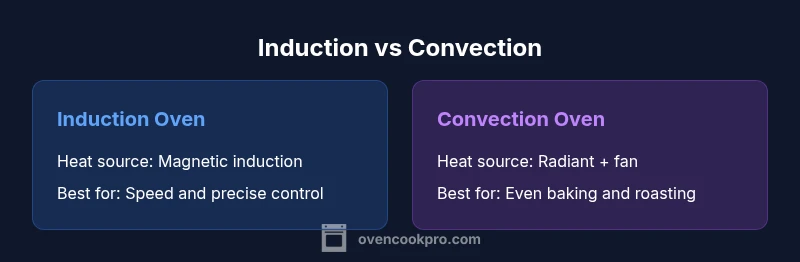
Induction-based ovens heat cookware directly through magnetic fields, while convection ovens rely on a fan to distribute hot air inside the cavity. For most home cooks, convection baking delivers even browning and predictable results, while induction emphasizes fast, precise heating with compatible cookware. If your kitchen tasks vary between rapid boiling and steady baking, know where each method excels.
Understanding the core technologies: induction oven vs convection oven
Induction-based heating relies on magnetic fields that excite molecules in ferromagnetic cookware, turning energy directly into heat at the pan bottom. Convection ovens, by contrast, operate with radiant elements (and sometimes gas flames) paired with a fan to circulate hot air around the food. This fundamental distinction drives the two systems' strengths and weaknesses. According to Oven Cook Pro, appreciating these mechanisms helps homeowners set clear expectations for speed, control, and cookware needs. Induction offers lightning-fast responses and precise temperature control with compatible pots and pans, while convection emphasizes even heat distribution and reliable browning across multiple dishes. When you plan meals, think about whether you need direct pan heating or evenly circulated oven heat to achieve consistent results across recipes.
Cooking performance: speed, heat distribution, and bake quality
Performance is the practical heartbeat of any oven choice. Induction ovens can bring water to a boil much faster than traditional radiant ovens, and temperature changes feel instantaneous, which is ideal for delicate sauces or quick sears. Convection ovens, with their built-in fan, promote uniform heat around the cavity, reducing hot spots and helping cookies, pastries, and roasts brown evenly. In real-world testing, users often find that convection yields a more predictable bake for multi-dish dinners, while induction shines in tasks that demand fast heating and precise control. The overall bake quality depends on cookware, recipe type, and oven calibration, not on a single feature alone.
Heat transfer mechanics and their impact on recipe outcomes
Induction transfers heat at the cookware level, creating a responsive cooking experience but relying on the pan's material and bottom contact for efficiency. Convection transfers heat through circulating air, which smooths temperature gradients inside the oven but can cause faster moisture evaporation in some baked goods. This means delicate soufflés may benefit from radiant heat with precise timing, whereas cookies often benefit from convection’s even air flow. Understanding these mechanisms helps you predict crust formation, interior texture, and moisture retention across recipes.
Cookware and compatibility considerations
Induction cooking requires ferromagnetic cookware such as cast iron or some stainless-steel pots with a magnetic base. If your favorite pans are aluminum, copper, or non-stick without a magnetic layer, you’ll likely need an induction-friendly set. Convection ovens place fewer restrictions on bakeware; you can use glass, ceramic, metal, and non-stick pans as long as they fit the oven. If you cook a lot with specialty pots or skew toward fast simmering on a stove, induction can be a strong fit; for baking-focused households, convection often provides more flexibility with existing cookware.
Energy efficiency, electricity use, and long-term costs
Energy efficiency is influenced by usage patterns as well as the appliance design. Induction heat-ups minimize energy waste by delivering heat directly to the cookware, reducing idle heat in the oven cavity. Convection ovens save energy during baking due to efficient air circulation and more uniform temperatures, which can shorten cooking times for certain dishes. It’s important to recognize that fan-assisted convection does consume power, though the overall efficiency often improves for even roasting and baking. Long-term costs depend on electricity prices, maintenance needs, and how often you cook high-temperature foods.
Use cases: baking, roasting, and specialized cooking
Induction ovens excel in applications requiring rapid, precise heat, such as searing meat, quick pan reductions, and simmering delicate sauces, provided you have compatible cookware. Convection ovens shine for baking cookies, pastries, roasted vegetables, and multiple dishes at once, thanks to even heat distribution. For households balancing different cooking tasks, a setup that combines quick, responsive heating with reliable baking performance often yields the best overall results. Consider your typical weekly menu when deciding which method to prioritize.
Maintenance, cleaning, and durability
Induction components are generally low-maintenance when used with suitable cookware; avoid dragging heavy ferrous pans that could scratch the surface, and keep coils clean according to the manufacturer’s guidance. Convection ovens require regular cleaning of the door seal, fan housing, and interior walls to prevent heat loss and ensure quiet operation. Both systems benefit from periodic calibration and sensor checks. Durable construction and quality seals contribute to longevity, but keep in mind that replacing a convection fan or induction coil may be more expensive than standard oven components.
Installation, kitchen integration, and safety
Induction ovens often pair with modern, sleek cabinetry and may require compatible electrical service to harness fast heating. Convection ovens fit seamlessly into most kitchen layouts, including dual-oven configurations and wall-mount arrangements. Safety considerations include proper cookware selection for induction and guarding against excessive fan noise or heat cycling in convection models. If you’re upgrading from a traditional radiant oven, plan for adequate preheating time, space for airflow, and compatibility with existing cookware.
Real-world scenarios: weekly meal planning with induction vs convection
A typical week might include rapid seafood sautées or pan sauces on induction, paired with oven-baked chicken, vegetables, and desserts using convection. For families who roast large batches, convection helps maintain consistent textures across trays. If you often host dinners with multiple courses, the even heat of convection reduces the chance of overcooking on one dish while another finishes. For frequent boiling, induction’s speed adds tangible time savings, especially when paired with compatible cookware.
Practical decision framework: how to choose between induction oven and convection oven
Start with your current cookware and cooking style. If you already own magnetic pots and want responsive temperature control, induction is compelling. If you bake often or cook several dishes at once, convection’s even heat is typically more forgiving and versatile. Consider space, budget, and energy costs, and think about future recipes you hope to master. A blended kitchen approach—an induction-compatible setup with a convection oven—can deliver broad capabilities to accommodate most home-cooking scenarios.
Comparison
| Feature | Induction oven | Convection oven |
|---|---|---|
| Heat source/Heating method | Induction heats cookware directly via magnetic fields | Convection uses a fan to circulate heated air in the oven |
| Heat distribution | Direct heat transfer at pan bottom; surface browning depends on cookware | Airflow provides even heat throughout the cavity; reduces hot spots |
| Preheat & cooking speed | Very fast response; heat-up tied to cookware | Typically quick preheat with uniform bake temperatures |
| Best for | Speed and precise control with compatible pots | Even baking, roasting, and multi-dish cooking |
| Cookware compatibility | Ferromagnetic cookware required (cast iron, some stainless steel) | Broad compatibility across metal, glass, ceramic, and non-stick pans |
| Energy use | Energy efficient when heating directly on cookware | Energy use depends on fan operation; efficient for repetitive baking |
| Maintenance & durability | Coils are protected; cookware quality matters for performance | Fan and seals require periodic maintenance; easier to service on some models |
| Price range | Often higher upfront cost due to advanced tech and cookware needs | Convection ovens vary by brand; price depends on size and features |
The Good
- Fast, precise heating with compatible cookware (induction)
- Excellent control for simmering and rapid boil tasks
- Convection provides even heat and reliable browning
- Great for batch baking and roasting with multiple racks
Drawbacks
- Cookware compatibility limits induction effectiveness
- Higher upfront cost for induction setups and cookware
- Convection fans add potential noise and may dry baked goods faster
- Some recipes rely on radiant heat not perfectly matched by convection
Convection ovens offer broader everyday versatility; induction ovens excel in speed and precise control with compatible cookware
Choose convection for versatile baking and multi-dish cooking. Choose induction for speed and exact temperature control with magnetic cookware; many kitchens benefit from a combined approach.
Questions & Answers
What is the key difference between an induction oven and a convection oven?
Induction ovens heat cookware directly via magnetic fields, yielding rapid heat response, while convection ovens heat by circulating hot air with a fan for even distribution. The choice hinges on whether you prioritize speed with specific cookware or uniform baking across dishes.
The main difference is how heat is generated: induction heats the pan, convection uses a fan to move hot air for even baking. Your choice depends on whether you want fast, precise control or reliable, even results for multiple dishes.
Can I bake with an induction oven?
Yes, you can bake with an induction-capable oven if it supports convection or radiant baking modes and you use compatible cookware. Most induction setups are paired with a cooktop, but some hybrid ovens integrate induction features.
Yes, as long as your oven supports a baking mode and you have the right cookware that responds to induction.
Do I need special cookware for induction ovens?
Yes. Induction requires ferromagnetic cookware, such as cast iron or certain stainless steel pans. Non-magnetic cookware, like aluminum, copper, or glass, will not heat efficiently on induction without a compatible base.
You’ll need magnetic pots and pans for induction cooking; non-magnetic items won’t heat properly.
Are convection ovens better for cookies and pastries?
Convection ovens typically produce more even browning and crisper edges on cookies and pastries due to circulating air. However, you may need to adjust temperatures or baking times to prevent over-browning on delicate items.
Yes, convection often yields more even cookies, but you might need to tweak times and temps.
Is induction more energy-efficient than convection for typical home cooking?
Induction can be more energy-efficient for tasks that involve direct pan heating, especially when heating is brief. Convection’s energy efficiency depends on baking strategy and duration; both can be economical with sensible usage.
Induction saves energy when heating cookware directly; convection efficiency depends on using the oven effectively.
How do preheating times compare between the two?
Induction setups typically show rapid response to temperature changes, effectively reducing preheat time for pans anchored on induction. Convection ovens may preheat quickly as well but depend on oven size and airflow design.
Induction heats quickly, so pan preheats are fast; convection ovens also preheat fast, though it varies by model.
Main Points
- Identify your top cooking tasks before choosing
- Check cookware compatibility for induction
- Prefer convection for baking consistency and multi-dish meals
- Consider energy use and long-term costs
- A hybrid setup can cover a wide range of needs